


Prognostic model for survival of patients with abdominal aortic aneurysms treated with endovascular aneurysm repair
- PMID: 36380101
- PMCID: PMC9666454
- DOI: 10.1038/s41598-022-24060-5
Prognostic model for survival of patients with abdominal aortic aneurysms treated with endovascular aneurysm repair
Abstract
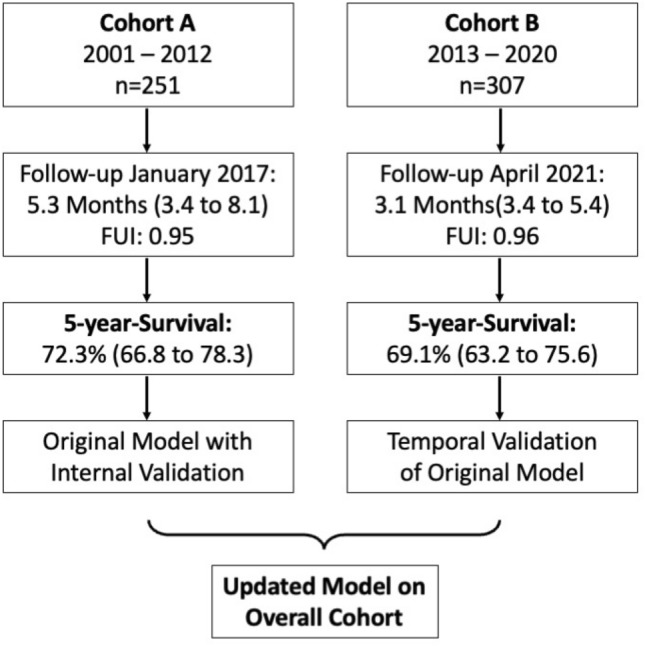
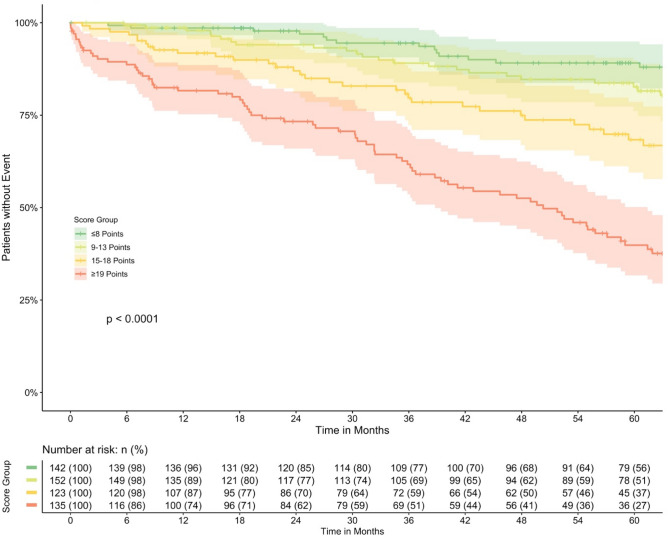
The role of endovascular aneurysm repair (EVAR) in patients with asymptomatic abdominal aortic aneurysm (AAA) who are unfit for open surgical repair has been questioned. The impending risk of aneurysm rupture, the risk of elective repair, and the life expectancy must be balanced when considering elective AAA repair. This retrospective observational cohort study included all consecutive patients treated with standard EVAR for AAA at a referral centre between 2001 and 2020. A previously published predictive model for survival after EVAR in patients treated between 2001 and 2012 was temporally validated using patients treated at the same institution between 2013 and 2020 and updated using the overall cohort. 558 patients (91.2% males, mean age 74.9 years) were included. Older age, lower eGFR, and COPD were independent predictors for impaired survival. A risk score showed good discrimination between four risk groups (Harrel's C = 0.70). The 5-years survival probabilities were only 40% in "high-risk" patients, 68% in "moderate-to-high-risk" patients, 83% in "low-to-moderate-risk", and 89% in "low-risk" patients. Low-risk patients with a favourable life expectancy are likely to benefit from EVAR, while high-risk patients with a short life expectancy may not benefit from EVAR at the current diameter threshold.
© 2022. The Author(s).
Conflict of interest statement
The authors declare no competing interests.
Figures

References
-
- Dubost C, Allary M, Oeconomos N. Treatment of aortic aneurysms; removal of the aneurysm; Re-establishment of continuity by grafts of preserved human aorta. Mem. Acad. Chir. 1951;77:381–383. - PubMed
-
- Volodos NL, Shekhanin VE, Karpovich IP, Troian VI, Gur’ev IA. A self-fixing synthetic blood vessel endoprosthesis. Vestn. Khi.r Im. II Grek. 1986;137:123–125. - PubMed
Publication types
MeSH terms
LinkOut - more resources
Full Text Sources
Research Materials
Miscellaneous
