


Clinical perspectives on the menstrual pictogram for the assessment of heavy menstrual bleeding
- PMID: 36382010
- PMCID: PMC9651972
- DOI: 10.1093/hropen/hoac048
Clinical perspectives on the menstrual pictogram for the assessment of heavy menstrual bleeding
Abstract
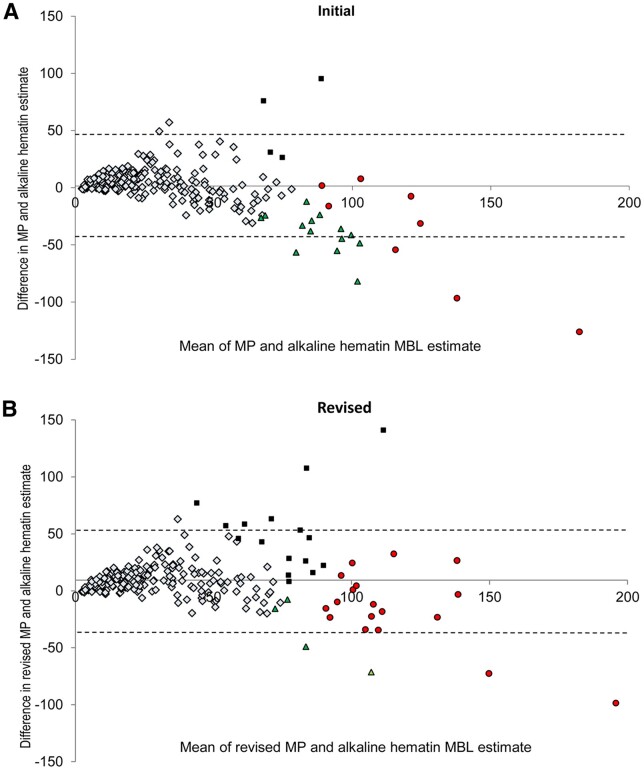
Heavy menstrual bleeding (HMB) has an estimated prevalence of 18-32% but is known to be under-reported due to poor recognition and estimation of menstrual blood loss (MBL). HMB can negatively impact quality of life, affecting social interactions, work productivity and sexual life. Abnormal menstrual bleeding may have an underlying structural or systemic cause, such as endometrial and myometrial disorders; however, for some, there is no identified pathological cause. Several methods are available for assessing MBL, including the alkaline hematin (AH) method and the menstrual pictogram (MP). The AH method is considered to be the most accurate way to monitor MBL; however, it is associated with inconvenience and expense, therefore limiting its value outside of research. The MP requires the user to select an icon from a chart that reflects the appearance of a used sanitary product; the icon is associated with a blood volume that can be used to determine MBL. Validation studies have demonstrated that the results of the MP and AH method are well correlated, showing that the MP can measure MBL with sufficient accuracy. Additionally, the MP is more convenient for users, less expensive than the AH method, may be used in regions where the AH method is unavailable and may also be used as part of a digital application. Overall, the MP offers a convenient approach to monitor MBL both in research and clinical practice settings.
Keywords: abnormal uterine bleeding; alkaline hematin method; heavy menstrual bleeding; menstrual blood loss; menstrual pictogram; uterine fibroids.
© The Author(s) 2022. Published by Oxford University Press on behalf of European Society of Human Reproduction and Embryology.
Figures

References
-
- Barr F, Brabin L, Agbaje O.. A pictorial chart for managing common menstrual disorders in Nigerian adolescents. Int J Gynaecol Obstet 1999;66:51–53. - PubMed
-
- Bitzer J, Serrani M, Lahav A.. Women’s attitudes towards heavy menstrual bleeding, and their impact on quality of life. Open Access J Contracept 2013;4:21–28.
-
- Cheong Y, Cameron IT, Critchley HOD.. Abnormal uterine bleeding. Br Med Bull 2017;123:103–114. - PubMed
-
- David M, Pitz CM, Mihaylova A, Siedentopf F.. Myoma-associated pain frequency and intensity: a retrospective evaluation of 1548 myoma patients. Eur J Obstet Gynecol Reprod Biol 2016;199:137–140. - PubMed
Publication types
LinkOut - more resources
Full Text Sources
Miscellaneous