Clinical Outcomes of Rotational Atherectomy in Heavily Calcified Lesions: Evidence From the Largest Cardiac Center in Thailand
- PMID: 36382162
- PMCID: PMC9615607
- DOI: 10.5334/gh.1162
Clinical Outcomes of Rotational Atherectomy in Heavily Calcified Lesions: Evidence From the Largest Cardiac Center in Thailand
Abstract
Background: Evidence regarding the clinical outcomes of rotational atherectomy (RA) in middle-income countries is limited. We analyzed the clinical outcomes of patients with heavily calcified coronary lesions who underwent RA-assisted percutaneous coronary intervention (PCI) and explored the risks for developing major adverse cardiovascular and cerebrovascular events (MACCE).
Methods: This is a single-center, retrospective cohort analysis that enrolled consecutive patients who underwent RA-assisted PCI at the largest tertiary hospital in Thailand. The primary endpoint is the incidence of MACCE during the first-year follow-up. MACCE consists of cardiac death, ischemic stroke, definite stent thrombosis, target lesion revascularization, and target vessel revascularization.
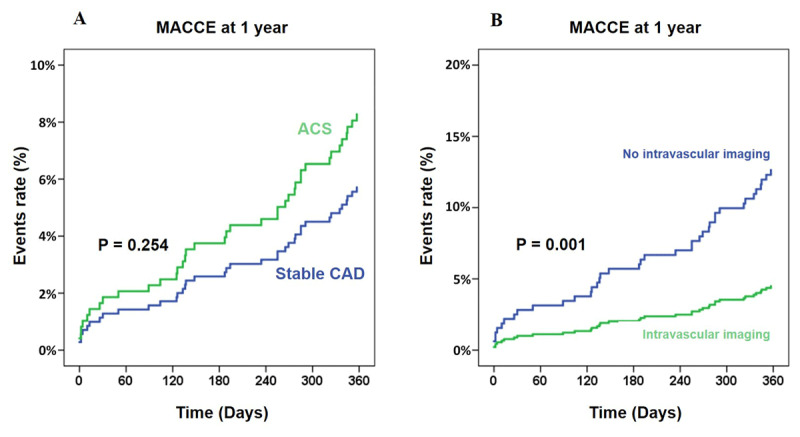
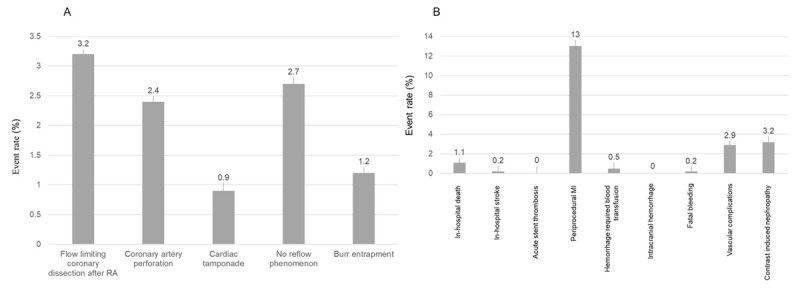
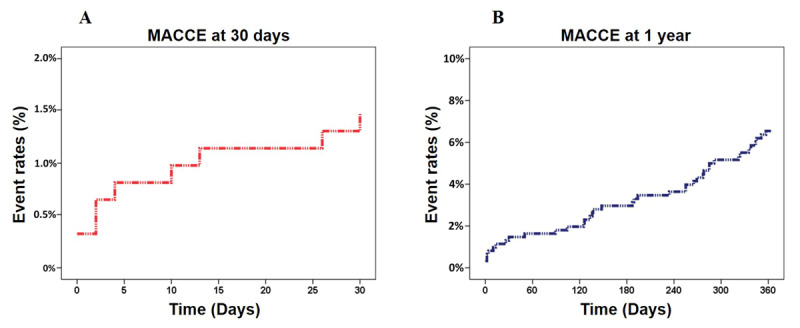
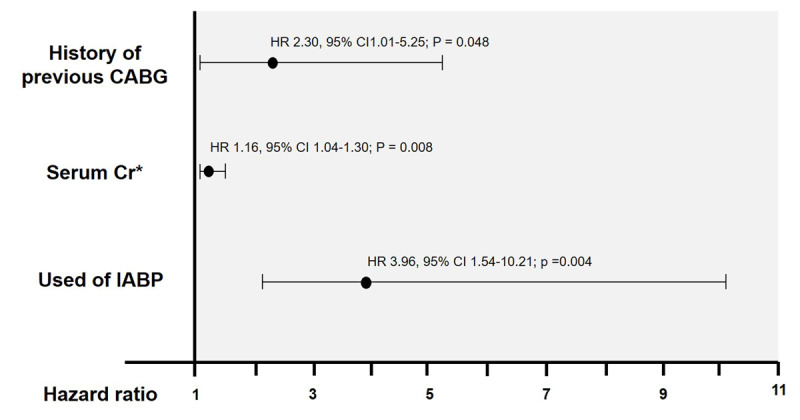
Results: From January 2015 to December 2018, 616 patients (663 lesions) were enrolled. The mean age was 72.8 ± 9.7 years, 292 (47.4%) patients were female and 523 (84.9%) completed one-year follow-up. Drug-eluting stents were deployed in 606 (91.4%) lesions. The RA success rate - defined as when the operator successfully passed the burr across the target lesion - was 99.4% and the angiographic success rate was 94.8%. 130 (21.4%) procedures developed periprocedural complications. The cumulative MACCE rate at 30-days was 1.5% and at 1-year was 6.3%. The in-hospital mortality rate was 1.1% and the cardiac death rate was 1.6%. Independent risk factors for developing MACCE included the use of an intra-aortic balloon pump (hazard ratio [HR] 3.96, 95% confidence interval [CI] 1.54-10.21; P = 0.004), a history coronary artery bypass graft (HR 2.30, 95% CI 1.01-5.25; P = 0.048), and increased serum creatinine (HR 1.16, 95% CI 1.04-1.30; P = 0.008).
Conclusions: RA is an effective revascularization technique for heavily calcified lesions. This study demonstrates a high success rate and good short- to intermediate-term results of RA-assisted PCI in middle-income countries which are similar to high-income countries. Nevertheless, the rate of periprocedural complications remains high.
Keywords: Debulking the calcified lesion; major adverse cardiovascular and cerebrovascular events; percutaneous coronary intervention.
Copyright: © 2022 The Author(s).
Conflict of interest statement
The authors have no competing interests to declare.
Figures
References
-
- Bourantas CV, Zhang YJ, Garg S, Iqbal J, Valgimigli M, Windecker S, et al. Prognostic implications of coronary calcification in patients with obstructive coronary artery disease treated by percutaneous coronary intervention: a patient-level pooled analysis of 7 contemporary stent trials. Heart. 2014; 100(15): 1158–64. DOI: 10.1136/heartjnl-2013-305180 - DOI - PubMed
-
- Salazar C, Escaned J, Tirado G, Gonzalo N. Undilatable Calcific Coronary Stenosis Causing Stent Underexpansion and Late Stent Thrombosis: A Complex Scenario Successfully Managed With Intravascular Lithotripsy. JACC Cardiovasc Interv. 2019; 12(15): 1510–2. DOI: 10.1016/j.jcin.2019.02.010 - DOI - PubMed
MeSH terms
LinkOut - more resources
Full Text Sources
Medical
Miscellaneous