


Epidemiologic patterns of biliary tract cancer in the United States: 2001-2015
- PMID: 36384474
- PMCID: PMC9670575
- DOI: 10.1186/s12885-022-10286-z
Epidemiologic patterns of biliary tract cancer in the United States: 2001-2015
Abstract
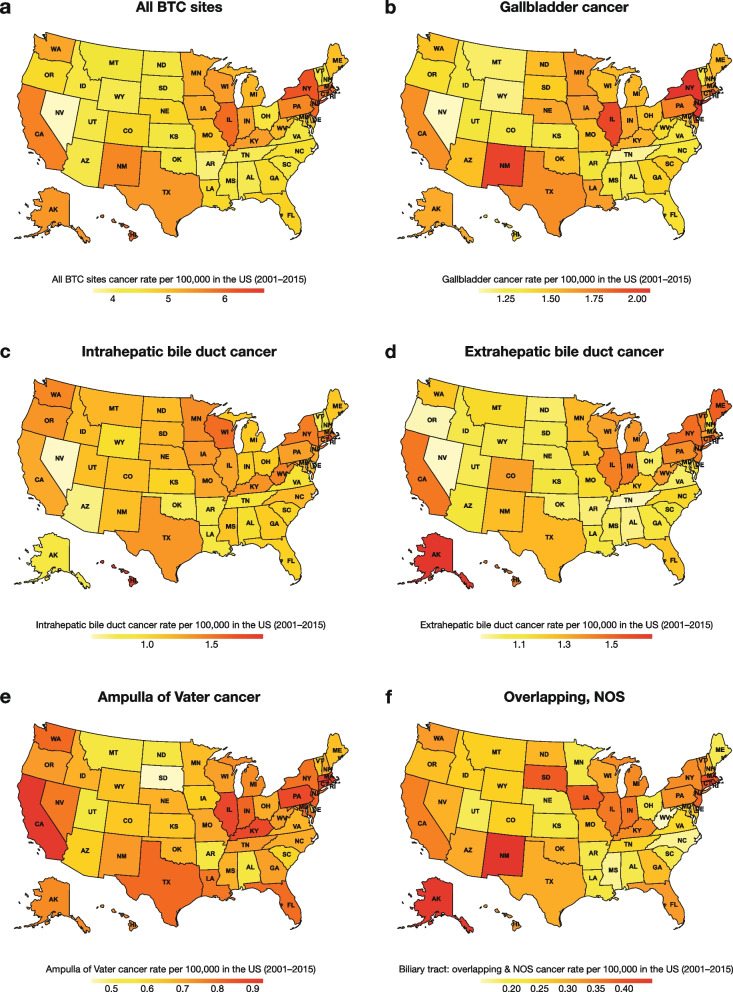
Background: Biliary tract cancer (BTC) includes intrahepatic cholangiocarcinoma (ICC), extrahepatic cholangiocarcinoma, gallbladder cancer, and ampulla of Vater cancer (AVC). Although BTC is rare in the US, incidence is increasing and elevated in certain populations. This study examined BTC epidemiology in the US by age, sex, race/ethnicity, geographic region, and anatomic site.
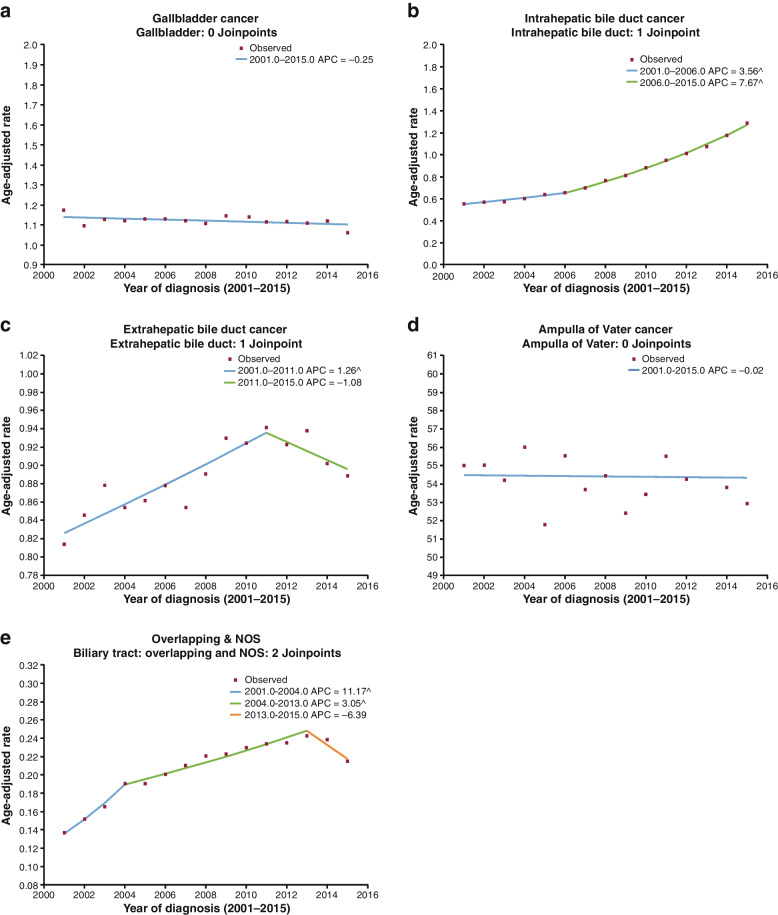
Methods: BTC incidence, prevalence, mortality, and survival from 2001 to 2015 were evaluated using the National Cancer Institute's Surveillance, Epidemiology, and End Results Program and the Centers for Disease Control and Prevention's National Program of Cancer Registries databases. Incidence and mortality rates were calculated and reported as age-standardized rates. Data were assessed by age, anatomic sites, geographic region, and race/ethnicity, and a joinpoint regression model was used to predict trends for age-adjusted BTC incidence and mortality rates.
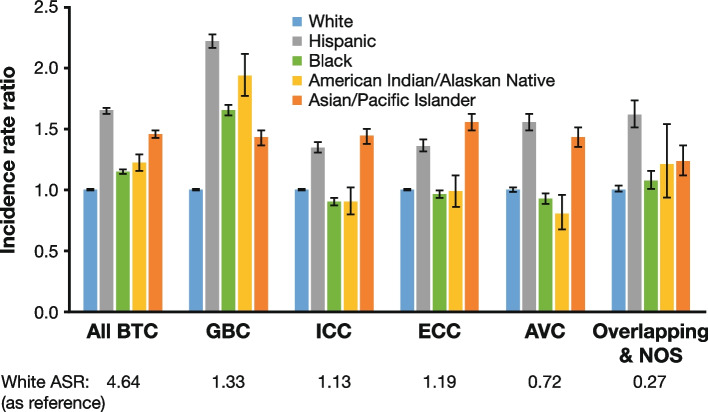
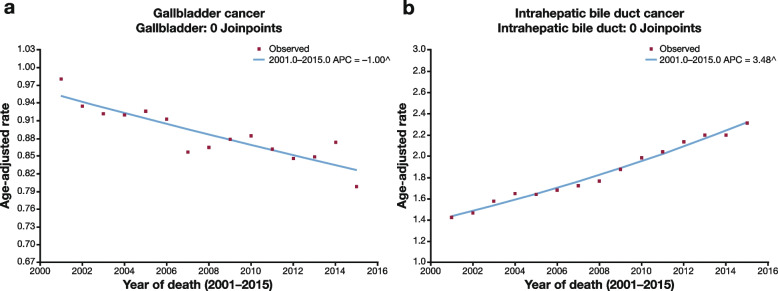
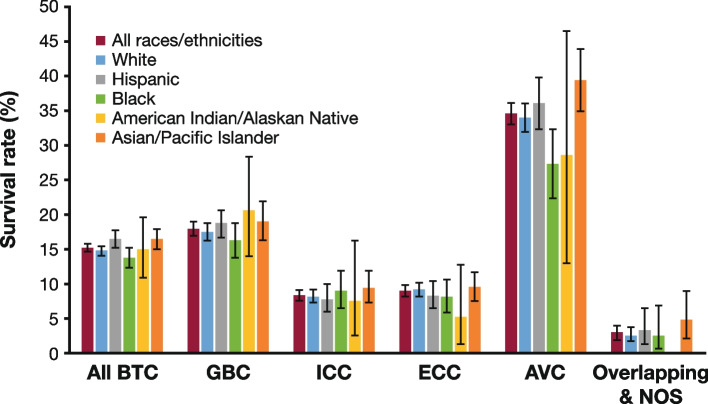
Results: BTC incidence increased during the study period (annual percent change = 1.76, 95% confidence interval [1.59-1.92]), with the highest increase in ICC (6.65 [6.11-7.19]). Incidence of unspecified BTC initially increased but has recently begun to drop. Hispanic, Asian/Pacific Islander, Black, or American Indian/Alaska Native race/ethnicity was associated with higher BTC mortality rates than White race/ethnicity. Patients with ICC had the highest mortality rate (age-standardized rate = 1.87/100,000 person-years [1.85-1.88]). Five-year survival was 15.2% for all BTC, ranging from 8.5% (ICC) to 34.5% (AVC), and patients with distant disease at diagnosis had lower survival (3%) compared with those with regional (19.1%) or locally advanced disease (31.5%).
Conclusions: BTC incidence increased, survival was low across all subtypes, and mortality was greatest in patients with ICC. This underscores the serious, increasing unmet need among patients with BTC. Treatment options are limited, although clinical studies investigating immunotherapy, targeted therapies, and alternative chemotherapy combinations are ongoing. Epidemiological insights may improve patient care and inform the integration of novel therapies for BTC.
Keywords: Ampulla of Vater cancer; Biliary tract cancer; Extrahepatic cholangiocarcinoma; Gallbladder cancer; Intrahepatic cholangiocarcinoma.
© 2022. The Author(s).
Conflict of interest statement
J.K. declares that they have no competing interests. B.Y. and K.B. are employees and stockholders of AstraZeneca. S.M.K was an employee of AstraZeneca during the initial conceptual development of the study through the second draft of the manuscript, is currently an employee of Sanofi, and is currently a stockholder of AstraZeneca and Sanofi. R.T.S. serves as an advisory board member for Agios, Clovis, Debiopharm, Exelixis Pharmaceuticals, Incyte, Merck, QED, and Seattle Genetics, and has received research funding from Exelixis Pharmaceuticals, Merck, Pieris, Rafael Pharmaceuticals, and Taiho.
Figures
References
-
- American Cancer Society. Cancer Facts & Figures. 2022. https://www.cancer.org/content/dam/cancer-org/research/cancer-facts-and-.... Accessed 28 Oct 2022.
MeSH terms
LinkOut - more resources
Full Text Sources
Medical
