


Isolation and evaluation of the efficacy of bacteriophages against multidrug-resistant (MDR), methicillin-resistant (MRSA) and biofilm-producing strains of Staphylococcus aureus recovered from bovine mastitis
- PMID: 36384653
- PMCID: PMC9670557
- DOI: 10.1186/s12917-022-03501-3
Isolation and evaluation of the efficacy of bacteriophages against multidrug-resistant (MDR), methicillin-resistant (MRSA) and biofilm-producing strains of Staphylococcus aureus recovered from bovine mastitis
Abstract
Background: Staphylococcus aureus (S. aureus) is one of the major causes of bovine mastitis with significant economic losses around the worldwide. The emergence of multidrug-resistant (MDR), methicillin-resistant (MRSA) and biofilm-producing strains of S. aureus challenges the treatment strategies based on the antibiotic application. Today, alternative or combinational treatment options such as bacteriophage application has received much attention. The goal of the present study was to focus on isolation and evaluation of the efficacy of bacteriophages with specific lytic activity against S. aureus strains with low cure rates (MDR, MRSA and biofilm-producing strains).
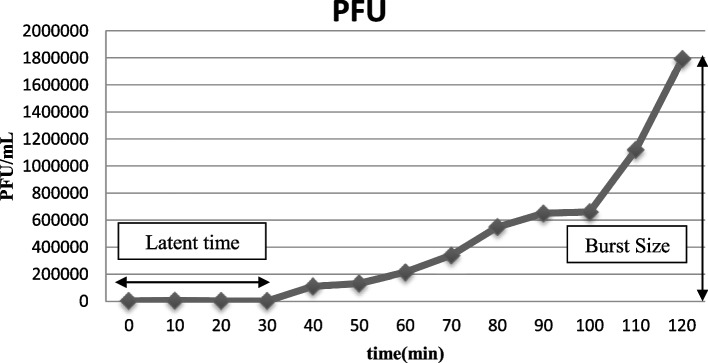
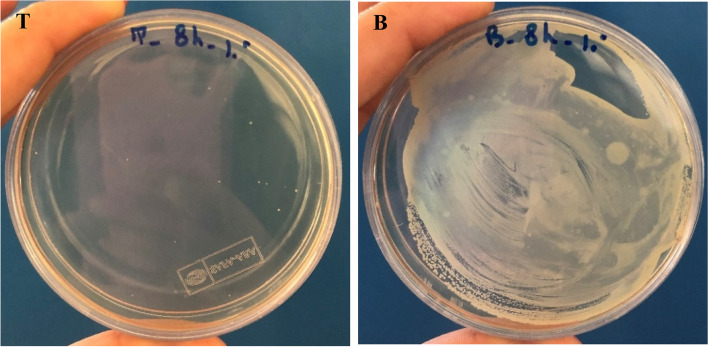
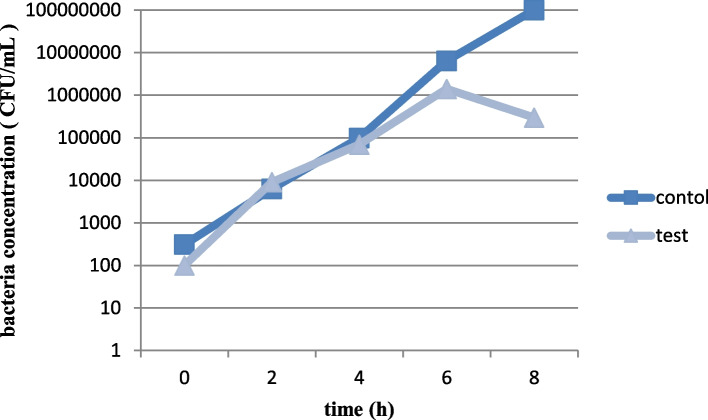
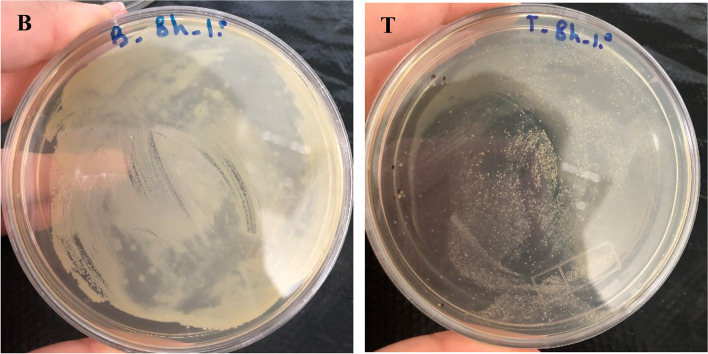
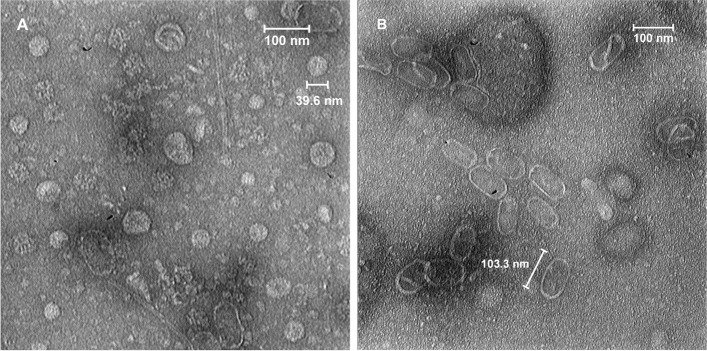
Results: In the present study, two phages belonging to the Podoviridae family with specific lytic activity against S. aureus were isolated from the sewage of dairy farms and designated as Staphylococcus phage M8 and Staphylococcus phage B4. Latent period and burst size for Staphylococcus phage M8 (70 min, 72 PFU/cell) and Staphylococcus phage B4 (30 min, 447 PFU/cell) were also defined. Our results revealed the susceptibility of MDR (4/20; 20%), MRSA (4/13; 30.8%) and biofilm-producing (1/10; 10%) strains to Staphylococcus phage M8. Moreover, one biofilm-producing strain (1/10; 10%) was susceptible to Staphylococcus phage B4. Furthermore, both phages kept their lytic activity in milk. They reduced the S. aureus population by about 3 logs in cultured milk after 8 h of incubation.
Conclusion: In conclusion, it seems that both phages had the potential to serve as biological control agents alone or in combination with other agents such as antibiotics against infections induced by S. aureus. However, further studies are needed to investigate the efficacy of these phages in vivo.
Keywords: Alternative treatment; Bacteriophage; Bovine Mastitis; Hard-to-treat; Podoviridae; Staphylococcus aureus.
© 2022. The Author(s).
Conflict of interest statement
The authors declare that they have no competing interests.
Figures



References
MeSH terms
Substances
Grants and funding
LinkOut - more resources
Full Text Sources
Medical
