


Burden of illness in people with medically refractory epilepsy who suffer from daily to weekly seizures: 12-month follow-up of participants in the EPISODE study
- PMID: 36388190
- PMCID: PMC9650114
- DOI: 10.3389/fneur.2022.1012486
Burden of illness in people with medically refractory epilepsy who suffer from daily to weekly seizures: 12-month follow-up of participants in the EPISODE study
Abstract
Background: A small group of people with epilepsy suffers from frequent seizures despite the available pharmacological and non-pharmacological interventions. The impact of epilepsy on these people extends beyond health-related quality of life (HRQoL), impacting a person's broader well-being and ability to participate in society. This study describes the burden of medically refractory epilepsy in people who suffer from daily to weekly seizures, in terms of HRQoL, well-being, and societal costs.
Methods: Data from the EPISODE study on (cost-) effectiveness of seizure dogs for adults with severe medically refractory epilepsy were used, collected in 25 patients during the first 12 months before they were partnered with a certified seizure dog. Data comprised seizure diaries covering 365 days and five three-monthly surveys, including the EQ-5D-5L, QOLIE-31-P, and ICECAP-A to measure HRQoL and well-being. A societal perspective was applied to estimate costs using the iMCQ and iPCQ questionnaires about healthcare use, informal care, and productivity losses.
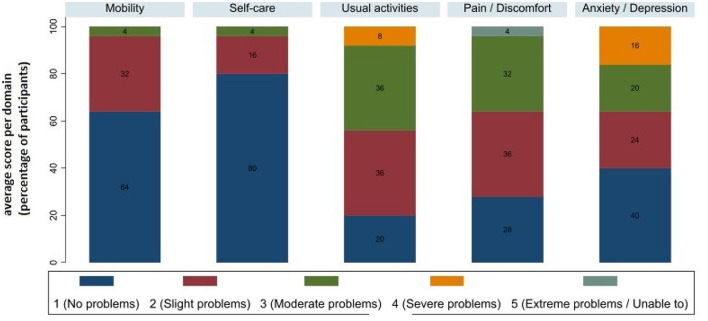
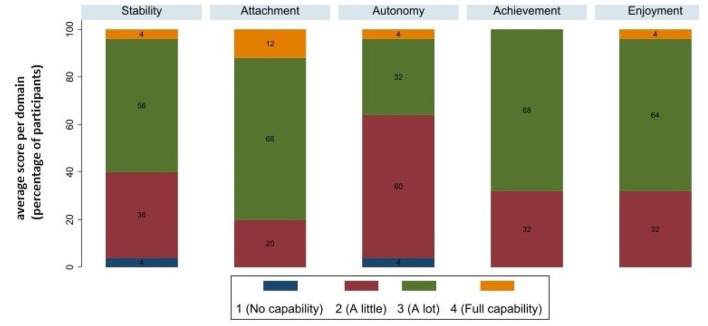
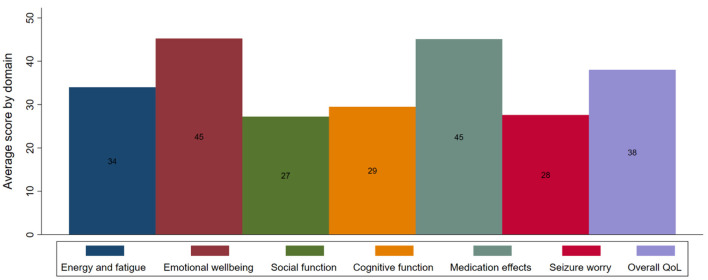
Results: Daily seizure frequency and survey data were collected in 25 patients. A minimum of 114 observations was available for each instrument included in the survey. A total of 80% of participants experienced seizures on three or more days per week, with a median ranging from 1 to 17 seizures per seizure day. The mean EQ-5D-5L utility score was 0.682 (SD 0.235), which is considerably lower than the age-adjusted general population average. The mean QOLIE-31-P and ICECAP-A scores were 55.8 (SD 14.0) and 0.746 (SD 0.172), respectively. The average annual total cost amounted to €39,956 (range €3,804-€132,64). Informal care accounted for the largest share of costs (50%); those who received informal care reported, on average, 26 h per week (SD 30).
Conclusions: Severe medically refractory epilepsy is associated with a considerable burden of illness at the patient and societal level. People with this condition have significantly reduced HRQoL and well-being and are limited in their ability to work while having substantial medical costs and a strong dependency on informal care.
Keywords: burden of illness; cost-of-illness; health-related quality of life; refractory epilepsy; resource use and costs; seizure dog; well-being.
Copyright © 2022 van Hezik-Wester, de Groot, Kanters, Versteegh, Wagner, Ardesch, Brouwer and van Exel.
Conflict of interest statement
The authors declare that the research was conducted in the absence of any commercial or financial relationships that could be construed as a potential conflict of interest.
Figures
References
-
- Salomon J, Vos T, Hogan DGM, Naghavi M, Mokdad A, Begum N, et al. . Common values in assessing health outcomes from disease and injury: disability weights measurement study for the Global Burden of Disease Study 2010. The Lancet. (2012) 380:9859:2129–43. 10.1016/S0140-6736(12)61680-8 - DOI - PMC - PubMed
LinkOut - more resources
Full Text Sources
