Epidemic characteristics of Mycoplasma pneumoniae infection: a retrospective analysis of a single center in Suzhou from 2014 to 2020
- PMID: 36388772
- PMCID: PMC9652570
- DOI: 10.21037/atm-22-4304
Epidemic characteristics of Mycoplasma pneumoniae infection: a retrospective analysis of a single center in Suzhou from 2014 to 2020
Abstract
Background: Mycoplasma pneumoniae (M. Pneumoniae) is a common pathogen of respiratory tract infections, but there is still a lack of detailed investigation on the large sample of M. Pneumoniae infection in the all age population. And patients with severe M. Pneumoniae pneumonia (SMPP) still have a certain risk of death. How to identify the clinical characteristics and population of patients with SMPP as soon as possible is still an urgent problem in clinical practice.
Methods: Demographic characteristics, patient clinical information, and laboratory data of 81,131 patients with respiratory tract infections (RTIs) in the Affiliated Suzhou Hospital of Nanjing Medical University from 2014 to 2020 were retrospectively collected from all patient records. The serum particle agglutination (PA) test was used to determine M. Pneumoniae infection by detecting specific antibodies. The white blood cell count, the proportion of neutrophils and lymphocytes, C-reactive protein (CRP) and lactate dehydrogenase (LDH) levels between children and adults with SMPP were compared by Student's t-test; other clinical features were analyzed by χ2 test or Fisher's exact test.
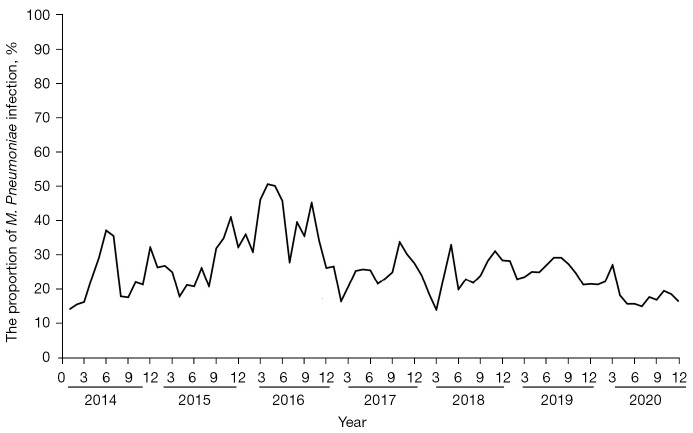
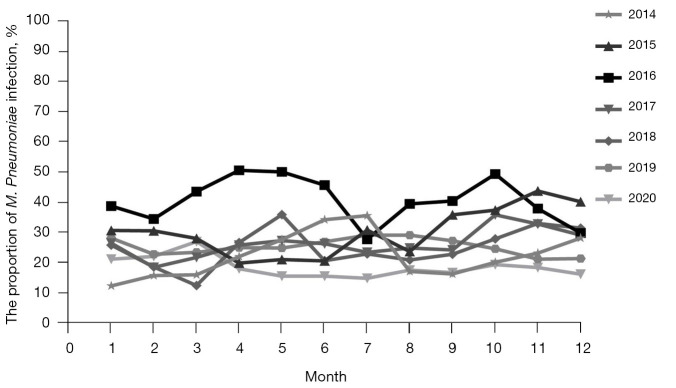
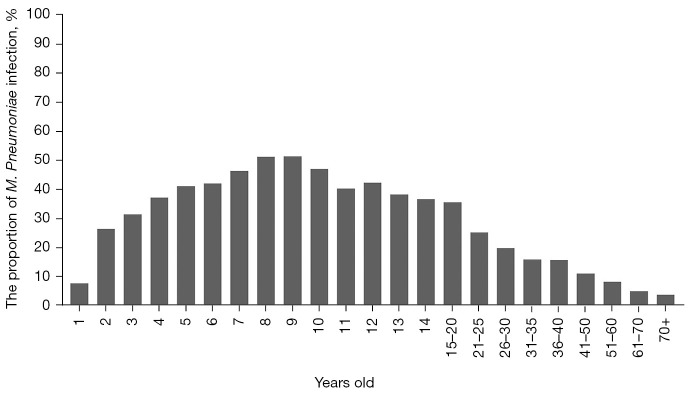
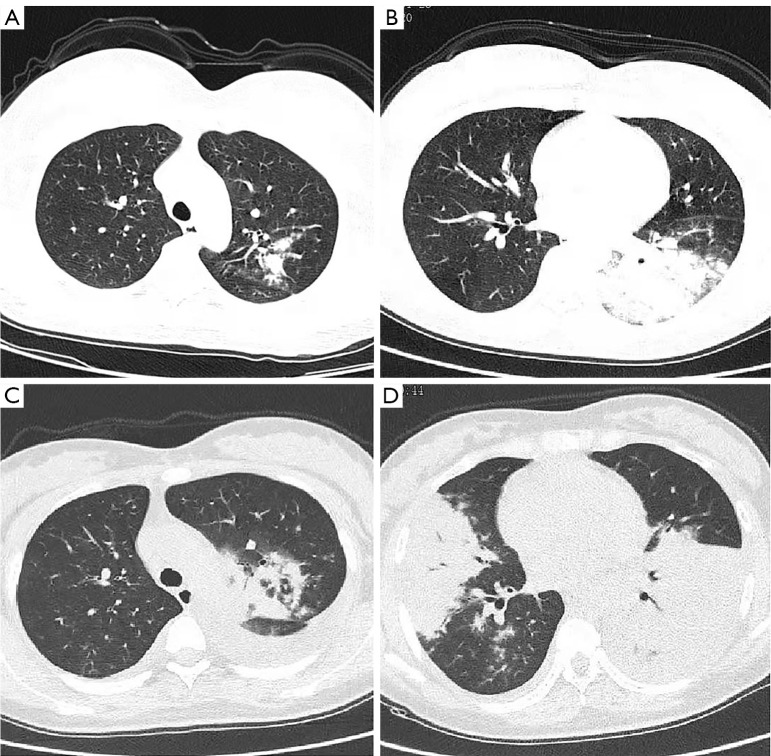
Results: A total of 81,131 patients with RTIs were included, and 21,582 (26.60%) M. Pneumoniae immunoglobulin M (IgM)-positive patients were detected. From 2014 to 2020, the annual proportions of M. Pneumoniae RTIs were 23.60%, 28.18%, 38.08%, 27.05%, 23.44%, 25.26%, and 18.33%, respectively. In terms of seasonal distribution, April-June and September-November were the peak seasons of M. Pneumoniae infection each year. Children and women have a high proportion of M. Pneumoniae infection. The peak age of M. Pneumoniae infection was between 4 and 14 years old. There were 301 cases of SMPP, including 281 children and 20 adults (8 cases of pregnant women). Children and pregnant women accounted for a high proportion of SMPP. Children with SMPP had more extrapulmonary symptoms, multilobar infiltrates, and increased CRP and LDH levels compared with adults.
Conclusions: M. Pneumoniae infection has seasonal, sex, and age distribution trends. Children and pregnant women accounted for a high proportion of SMPP. Extrapulmonary symptoms, multilobar infiltrates, and increased CRP and LDH levels may be helpful to identify SMPP in children than in adults.
Keywords: Mycoplasma pneumoniae (M. Pneumoniae); children; pregnant women; respiratory tract infection (RTI); severe Mycoplasma pneumoniae pneumonia (SMPP).
2022 Annals of Translational Medicine. All rights reserved.
Conflict of interest statement
Conflicts of Interest: All authors have completed the ICMJE uniform disclosure form (available at https://atm.amegroups.com/article/view/10.21037/atm-22-4304/coif). The authors have no conflicts of interest to declare.
Figures
References
LinkOut - more resources
Full Text Sources
Research Materials
Miscellaneous