


Telephone and Smartphone-Based Interventions for Cognitive and Cardio-Metabolic Health in Middle-Aged and Older Adults: A Systematic Review
- PMID: 36393902
- PMCID: PMC9661915
- DOI: 10.2147/CIA.S352137
Telephone and Smartphone-Based Interventions for Cognitive and Cardio-Metabolic Health in Middle-Aged and Older Adults: A Systematic Review
Abstract
Purpose: Dementia and cardio-metabolic diseases share many risk factors. Management of these risk factors could contribute to successful aging, including the prevention of cardio-metabolic disease and dementia. The increasing use of smartphones offers an opportunity for remote preventive interventions. We provided a systematic review of telephone and smartphone-based interventions targeting the prevention of cognitive decline, dementia cardio-metabolic diseases or their risk factors among adults aged over 50 years.
Patients and methods: We searched Pubmed and the International Clinical Trials Registry Platform for experimental studies. We used the Cochrane risk-of-bias tool (Version 2) for randomized trials or TREND (Transparent Reporting of Evaluations with Nonrandomized Designs) checklists to assess study quality for completed studies.
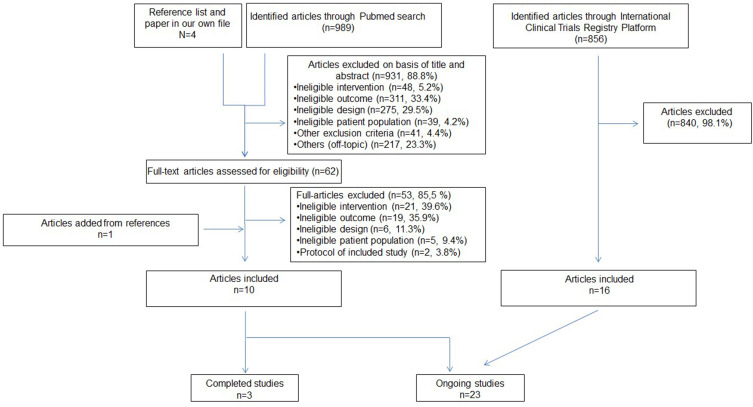
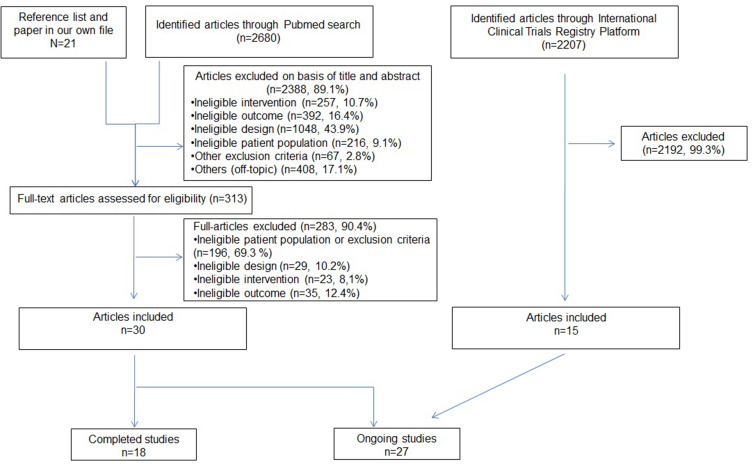
Results: We analyzed 21 completed (3 for cognition, 18 for cardio-metabolic outcomes) and 50 ongoing studies (23 for cognition, 27 for cardio-metabolic outcomes). Smartphone interventions were used in 26 studies (3 completed, 23 ongoing). Other interventions involved telephone vocal support and text messaging. Few studies were at low risk of bias. There were heterogeneous cognitive and cardio-metabolic outcomes. The highest quality studies found no significant effects on cognition, and inconsistent results for HbA1c, blood pressure or physical activity. The lower quality-studies found effects on global cognition, working memory, memory and language and inconsistent results for clinical, biological or behavioral cardio-metabolic outcomes.
Conclusion and implications: Despite the large number of commercially available mobile health applications, the magnitude of the scientific evidence base remains very limited. Based on published studies, the added value of telephone and smartphone tools for the prevention of cardio-metabolic diseases, cognitive decline or dementia is currently uncertain, but, there are several ongoing studies expected to be completed in the coming years.
Keywords: aging; cardio; cognition; dementia; smartphone; telephone; vascular outcomes.
© 2022 Andre et al.
Conflict of interest statement
Dr Sandrine Andrieu reports grants from CHU, Université Paul Sabatier, UMR1295, Toulouse, during the conduct of the study; personal fees from Roche, outside the submitted work. The authors declare no other conflicts of interest relevant to the current work.
Figures
References
-
- World Health Organization. The Global strategy and action plan on ageing and health. WHO. Available from: http://www.who.int/ageing/global-strategy/en/. Accessed November 20, 2017.
-
- Non communicable diseases. Available from: https://www.who.int/news-room/fact-sheets/detail/noncommunicable-diseases. Accessed February 14, 2022.
Publication types
MeSH terms
LinkOut - more resources
Full Text Sources
Medical
