. 2022 Nov 17;15(1):431.
doi: 10.1186/s13071-022-05555-6.

Systemic veterinary drugs for control of the common bed bug, Cimex lectularius, in poultry farms

Affiliations

Systemic veterinary drugs for control of the common bed bug, Cimex lectularius, in poultry farms

Maria A González-Morales et al. Parasit Vectors. .

Abstract

Background: The common bed bug, Cimex lectularius L., is a hematophagous ectoparasite that was a common pest in poultry farms through the 1960s. Dichlorodiphenyltrichloroethane (DDT) and organophosphates eradicated most infestations, but concurrent with their global resurgence as human ectoparasites, infestations of bed bugs have been reappearing in poultry farms. Although the impact of bed bugs on chicken health has not been quantified, frequent biting and blood-feeding are expected to cause stress, infections and even anemia in birds. Bed bug control options are limited due to the sensitive nature of the poultry environment, limited products labeled for bed bug control and resistance of bed bug populations to a broad spectrum of active ingredients. Veterinary drugs are commonly used to control endo- and ectoparasites in animals. In this study, we evaluated the effects of two common veterinary drugs on bed bugs by treating the host with systemic antiparasitic drugs.

Methods: We conducted dose-response studies of ivermectin and fluralaner against several bed bug strains using a membrane feeding system. Also, different doses of these drugs were given to chickens and two delivery methods (topical treatment and ingestion) were used to evaluate the efficacy of ivermectin and fluralaner on bed bug mortality.

Results: Using an artificial feeding system, both ivermectin and fluralaner caused high mortality in insecticide-susceptible bed bugs, and fluralaner was found to be effective on pyrethroid- and fipronil-resistant bed bugs. Ivermectin was ineffective in chickens either by the topical treatment or ingestion, whereas bed bugs that fed on chickens which had ingested fluralaner suffered high mortality when feeding on these chickens for up to 28 days post treatment.

Conclusions: These findings suggest that systemic ectoparasitic drugs have great potential for practical use to control bed bug infestations in poultry farms. These findings also demonstrate the efficacy of fluralaner (and potentially other isoxazolines) as a potent new active ingredient for bed bug control.

Keywords: Chicken; Cimex lectularius; Fluralaner; Ivermectin; Poultry; Systemics.


Conflict of interest statement

The authors declare that they have no competing interests.

Figures
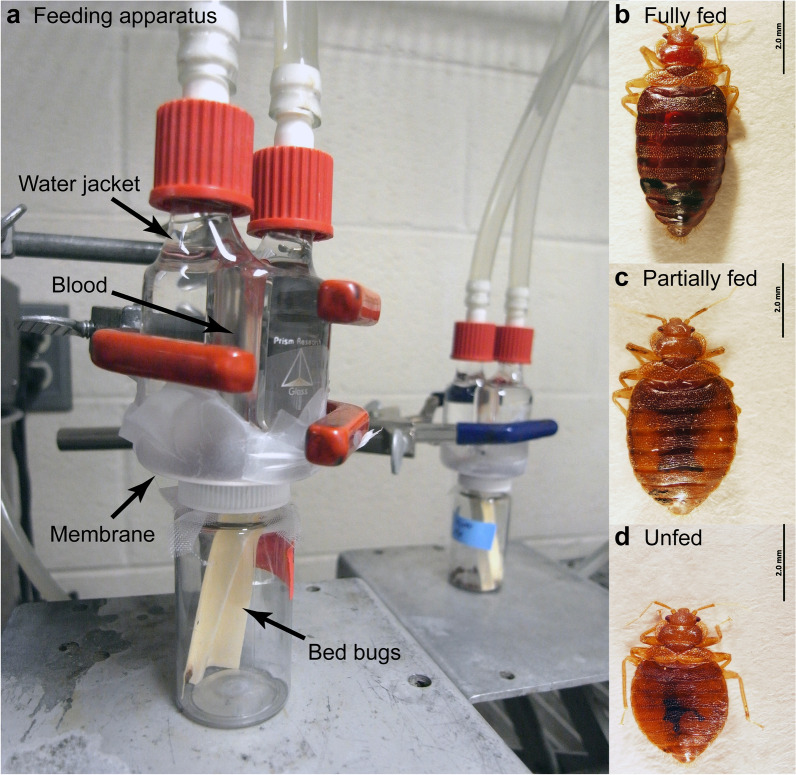
Fig. 1
Fig. 1
a Artificial feeding system used to feed bed bugs insecticide-supplemented human blood. Blood was placed into the internal chamber of a custom-fabricated glass feeder heated with a circulating water bath and held in place by plant grafting tape. Bed bugs were placed in PET plastic vials containing cardboard to provide harborage and capped with plankton screen through which bed bugs could feed. bc Only fully engorged individuals (b, determined visually) were retained, while partially fed (c) and unfed (d) adult males were discarded
Fig. 2
Fig. 2
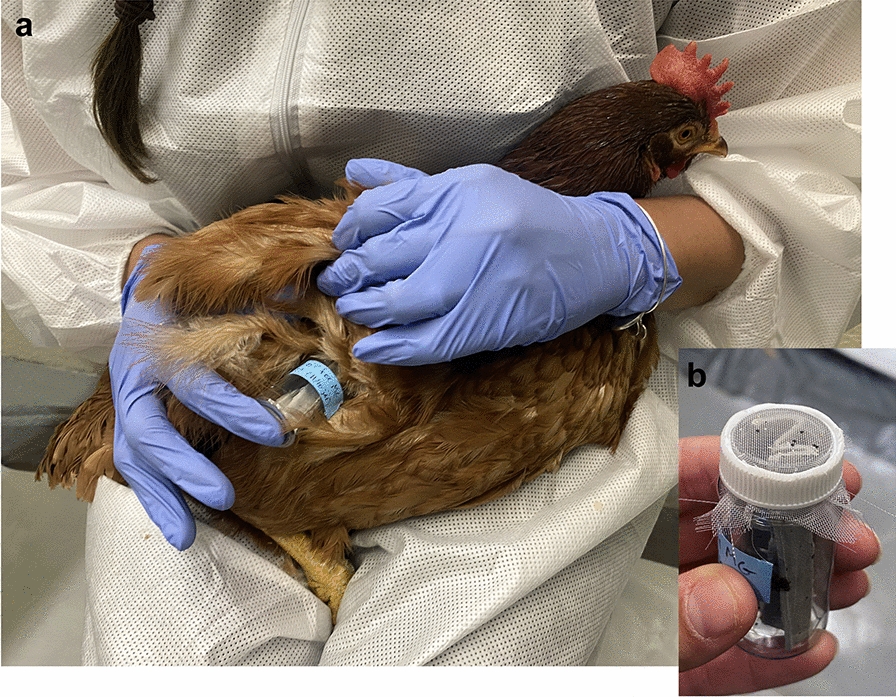
Feeding bed bugs on chickens. a Birds were held on the lap of a researcher. b A plastic vial containing a cardboard harborage and up to 15 adult male bed bugs. The cardboard also served as a ramp that provided access to a plankton screen cap through which bed bugs could feed on the bird’s lateral inguinal region. Each group of bed bugs was allowed 10 min to feed
Fig. 3
Fig. 3
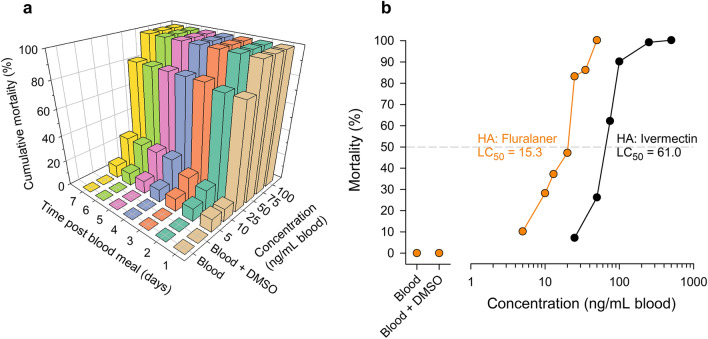
In vitro dose–response curves for bed bugs. a Three-dimensional dose–response and time-course representation of mortality of the insecticide-susceptible HA adult male bed bugs fed fluralaner-supplemented human blood. Fully fed bed bugs were monitored for 7 days. b In vitro fluralaner and ivermectin log dose–response curves for HA adult male bed bugs. Fluralaner and ivermectin were separately dissolved in DMSO and mixed with human blood to obtain various concentrations of insecticides in 0.1% DMSO in blood. Blood and Blood + DMSO represent the control treatments: there was no mortality in control bed bugs. Mortality at 7 days post-ingestion of chicken blood by bed bugs is reported. At least three replicates of 10 adult male bed bugs per replicate were performed per concentration. The LC50 estimates were based on probit analyses. DMSO, Dimethyl sulfoxide; HA, Harlan strain bed bugs; LD50, lethal dose that killed 50% of bed bugs
Fig. 4
Fig. 4
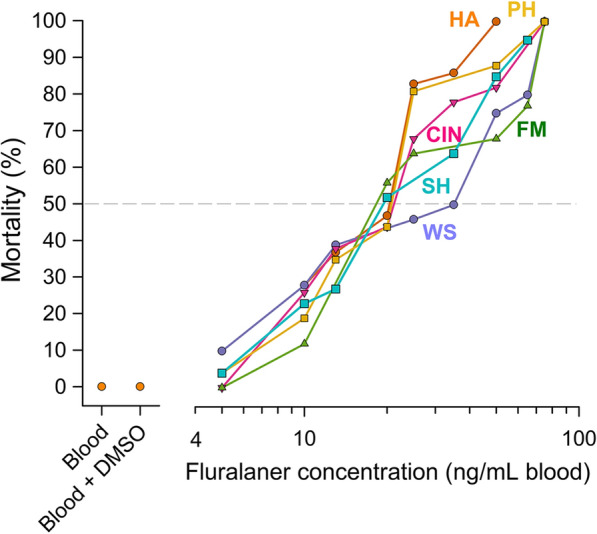
In vitro fluralaner log dose–response curves for male bed bugs from six populations, including five field-collected strains and the reference insecticide-susceptible strain (HA). Fluralaner was dissolved in DMSO. See Table 2 for abbreviations of bed bug strains
Fig. 5
Fig. 5
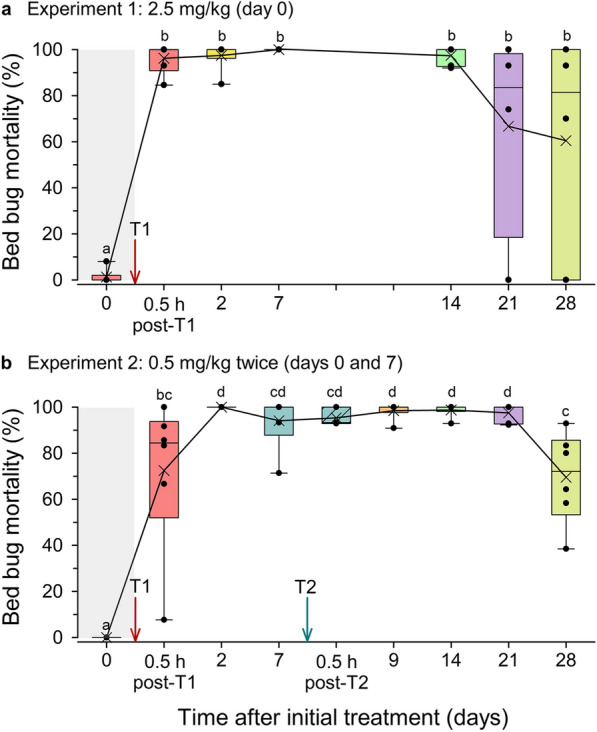
In vivo assays with chickens treated with fluralaner by oral gavage. a Experiment 1: chickens treated with 2.5 mg/kg body mass on day 0. b Experiment 2: Chickens treated with 0.5 mg/kg body mass on day 0 and again on day 7. Each experiment consisted of 6 birds. A maximum of 15 bed bugs were fed on each bird at each time point, with each time point therefore represented by 78–87 bed bugs (out of a maximum of 90 bed bugs) that fed to repletion. A linear mixed model (based on restricted maximum likelihood) was conducted within each experiment followed by Tukey’s honestly significant difference test to separate means (represented within box plots by X). Means with different lowercase letters (above box plots) are significantly different at P < 0.05. T1, Treatment 1
Fig. 6
Fig. 6
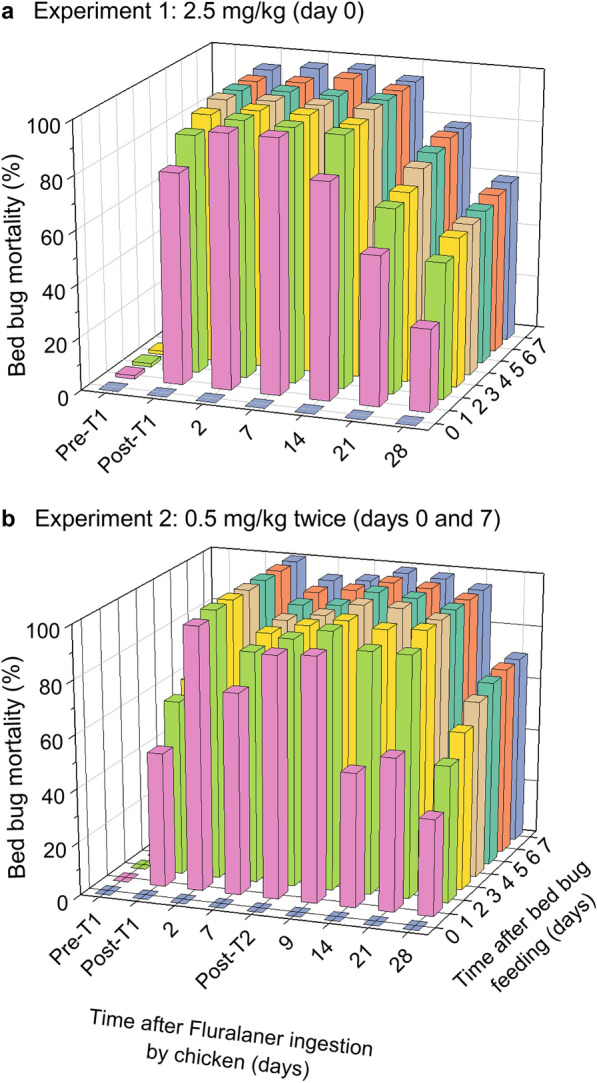
Three-dimensional representation of the in vivo assays shown in Fig. 5. In addition to the cumulative mortality on day 7 after initial treatment (shown in Fig. 5), the time-course of mortality of HA strain bed bugs is shown on days 1–7 after they fed on treated birds. a Experiment 1: chickens treated with 2.5 mg/kg body mass on day 0. b Experiment 2: chickens treated with 0.5 mg/kg body mass on day 0 and again on day 7. Each experiment included 6 birds. At each time point a maximum of 15 bed bugs were fed on each bird, with each time point therefore represented by 78–87 bed bugs (out of a maximum of 90 bed bugs) that fed to repletion

References

    1. Usinger RL. Monograph of Cimicidae (Hemiptera, Heteroptera) College Park: Entomological Society of America; 1966.
    1. Kulash WM. DDT for control of bedbugs in poultry houses. Poult Sci. 1947;26:44–47. doi: 10.3382/ps.0260044. - DOI
    1. Szalanski A. Poultry industry. In: Doggett SL, Miller DM, Lee C-Y, editors. Advances in the biology and management of modern bed bugs. Wiley: Hoboken; 2018. pp. 375–382.
    1. Axtell R. Arthropod pests of poultry. In: Williams R, Broce A, Scholl P, editors. Livestock entomology. New York: Wiley; 1985. pp. 269–295.
    1. Lehane MJ. The biology of blood-sucking in insects. 2. Cambridge: Cambridge University Press; 2005.