


What Is the Common Ground for Modern Psychotherapy? A Discussion Paper Based on EACLIPT's 1st Webinar
- PMID: 36397744
- PMCID: PMC9667344
- DOI: 10.32872/cpe.8403
What Is the Common Ground for Modern Psychotherapy? A Discussion Paper Based on EACLIPT's 1st Webinar
Abstract
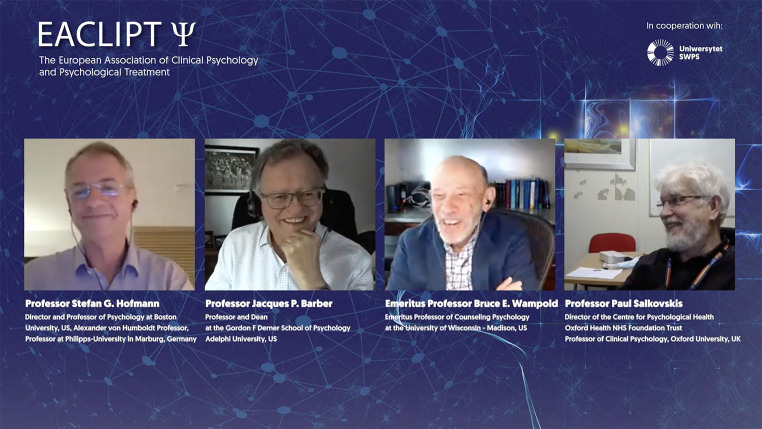
Psychotherapy as it is implemented today, can be seen as the composition of unconnected groups of practitioners and scientists pursuing different theories. The idea of finding a common "umbrella" for all evidence-based treatments in the field of psychotherapy is gaining more interest. Based on this background, experts in clinical psychology from various backgrounds led a fundamental discussion about modern psychotherapy and its basic mechanisms. Process-Based Therapy (PBT) was presented by Stefan Hofmann as a possible novel approach to clinical research and practice. In this article we present the different perspectives of the four panelists on PBT and in how far the model builds a common ground for different treatment approaches. Learning mechanisms and the therapeutic alliance were almost unanimously considered as indispensable factors in a global model of psychotherapy. In conclusion, the panelists emphasized a much-needed focus on characteristics and competencies of therapists themselves e.g., in communication, listening and empathy. These core competencies should be trained and promoted independently of the therapeutic approach.
Keywords: EACLIPT webinar; Process-Based Therapy; common ground; panel discussion; psychotherapy.
Conflict of interest statement
Winfried Rief is Editor-in-Chief of Clinical Psychology in Europe but played no editorial role for this particular article.
References
-
- EACLIPT Task Force On “Competences of Clinical Psychologists”. (2019). Competences of clinical psychologists. Clinical Psychology in Europe, 1(2), e35551. 10.32872/cpe.v1i2.35551 - DOI
-
- Hayes, S. C., & Hofmann, S. G. (2018). Process-based CBT: The science and core clinical competencies of cognitive behavioral therapy. New Harbinger Publications.
Publication types
LinkOut - more resources
Full Text Sources