


The link between liver fat and cardiometabolic diseases is highlighted by genome-wide association study of MRI-derived measures of body composition
- PMID: 36402844
- PMCID: PMC9675774
- DOI: 10.1038/s42003-022-04237-4
The link between liver fat and cardiometabolic diseases is highlighted by genome-wide association study of MRI-derived measures of body composition
Abstract
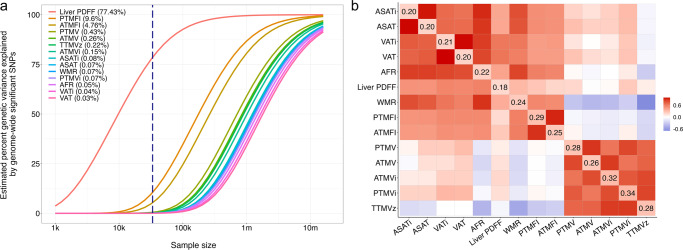
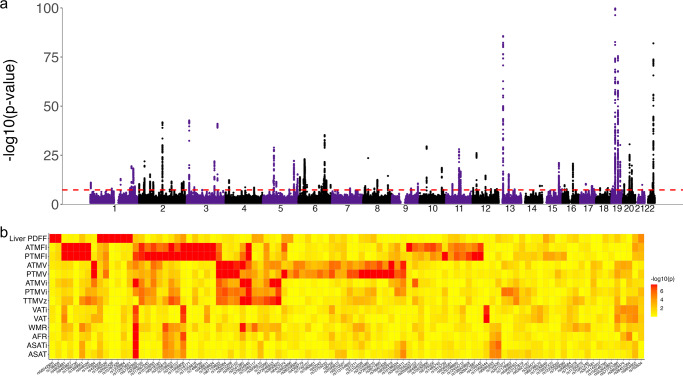
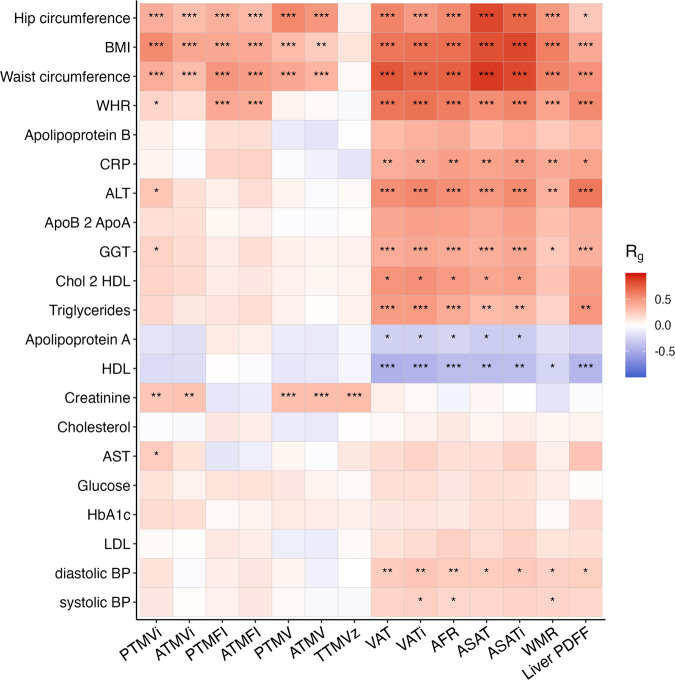
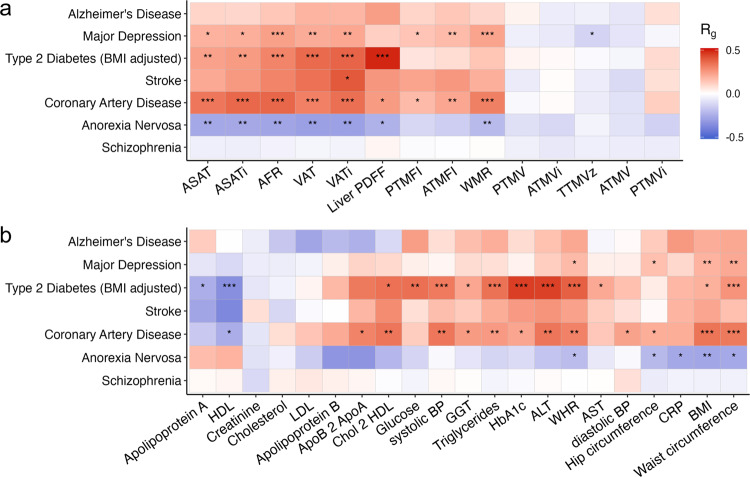
Obesity and associated morbidities, metabolic associated fatty liver disease (MAFLD) included, constitute some of the largest public health threats worldwide. Body composition and related risk factors are known to be heritable and identification of their genetic determinants may aid in the development of better prevention and treatment strategies. Recently, large-scale whole-body MRI data has become available, providing more specific measures of body composition than anthropometrics such as body mass index. Here, we aimed to elucidate the genetic architecture of body composition, by conducting genome-wide association studies (GWAS) of these MRI-derived measures. We ran both univariate and multivariate GWAS on fourteen MRI-derived measurements of adipose and muscle tissue distribution, derived from scans from 33,588 White European UK Biobank participants (mean age of 64.5 years, 51.4% female). Through multivariate analysis, we discovered 100 loci with distributed effects across the body composition measures and 241 significant genes primarily involved in immune system functioning. Liver fat stood out, with a highly discoverable and oligogenic architecture and the strongest genetic associations. Comparison with 21 common cardiometabolic traits revealed both shared and specific genetic influences, with higher mean heritability for the MRI measures (h2 = .25 vs. .13, p = 1.8x10⁻⁷). We found substantial genetic correlations between the body composition measures and a range of cardiometabolic diseases, with the strongest correlation between liver fat and type 2 diabetes (rg = .49, p = 2.7x10⁻²²). These findings show that MRI-derived body composition measures complement conventional body anthropometrics and other biomarkers of cardiometabolic health, highlighting the central role of liver fat, and improving our knowledge of the genetic architecture of body composition and related diseases.
© 2022. The Author(s).
Conflict of interest statement
The authors declare the following competing interests: O.A.A. has received speaker’s honorarium from Lundbeck and is a consultant to HealthLytix. J.L. and O.D.L. are employed by and stockholders in AMRA Medical, and R.S. was previously employed by AMRA medical. T.H.K. received consultancy fees from Intercept and Engitix and speaker fees from Novartis, Gilead and AlfaSigma. A.M.D. is a Founder of and holds equity in CorTechs Labs, Inc., and serves on its Scientific Advisory Board. He is a member of the Scientific Advisory Board of Human Longevity, Inc. and receives funding through research agreements with General Electric Healthcare and Medtronic, Inc. The terms of these arrangements have been reviewed and approved by UCSD in accordance with its conflict of interest policies. The remaining authors declare no competing interests.
Figures
References
Publication types
MeSH terms
Grants and funding
LinkOut - more resources
Full Text Sources
Medical
Miscellaneous
