


Nurses' competence in recognition and management of delirium in older patients: development and piloting of a self-assessment tool
- PMID: 36402941
- PMCID: PMC9675220
- DOI: 10.1186/s12877-022-03573-8
Nurses' competence in recognition and management of delirium in older patients: development and piloting of a self-assessment tool
Abstract
Background: Delirium is a common condition in elderly inpatients. Health care professionals play a crucial role in recognizing delirium, initiating preventive measures and implementing a multicomponent treatment strategy. Yet, delirium often goes unrecognized in clinical routine. Nurses take an important role in preventing and managing delirium. This study assesses clinical reasoning of nurses using case vignettes to explore their competences in recognizing, preventing and managing delirium.
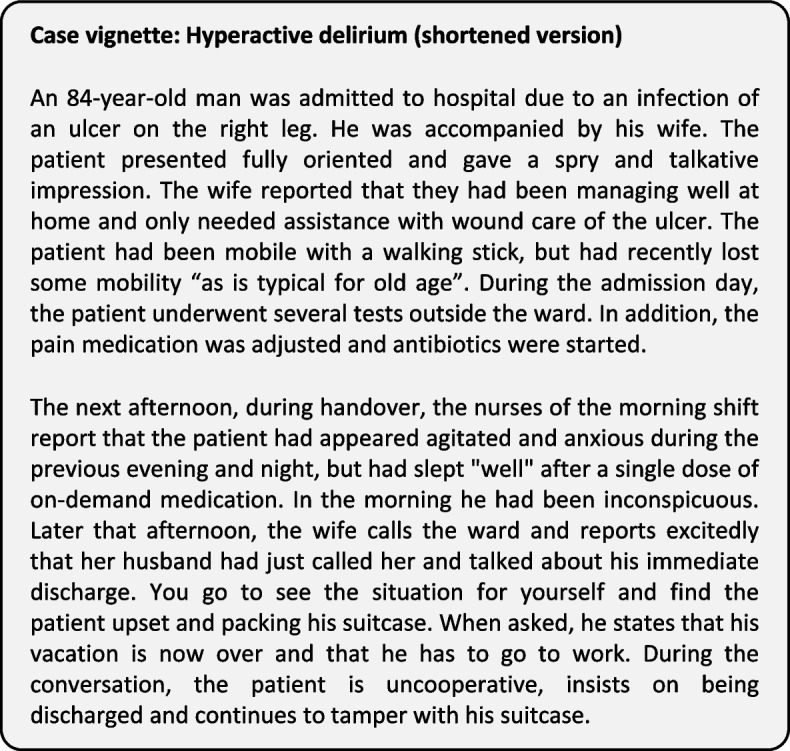
Methods: The study was conducted as an online survey. The questionnaire was based on five case vignettes presenting cases of acutely ill older patients with different subtypes of delirium or diseases with overlapping symptoms. In a first step, case vignettes were developed and validated through a multidisciplinary expert panel. Scoring of response options were summed up to a Geriatric Delirium Competence Questionnaire (GDCQ) score including recognition and management tasks The questionnaire was made available online. Descriptive analyses and group comparisons explores differences between nurses from different settings. Factors explaining variance in participants' score were evaluated using correlations and linear regression models.
Results: The questionnaire demonstrated good content validity and high reliability (kappa = 0.79). The final sample consisted of 115 nurses. Five hundred seventy-five case vignettes with an accuracy of 0.71 for the correct recognition of delirium presence or absence were solved. Nurses recognized delirium best in cases describing hyperactive delirium (79%) while hypoactive delirium was recognized least (44%). Nurses from geriatric and internal medicine departments had significantly higher GDCQ-score than the other subgroups. Management tasks were correctly identified by most participants.
Conclusions: Overall, nurses' competence regarding hypoactive delirium should be strengthened. The online questionnaire might facilitate targeting training opportunities to nurses' competence.
Keywords: Clinical reasoning; Delirium; Delirium management; Delirium recognition; Educational intervention; Geriatric; Nursing; Older adult; Vignette-based questionnaire.
© 2022. The Author(s).
Conflict of interest statement
The authors declare that they have no competing interests.
Figures
References
-
- Young J, Murthy L, Westby M, Akunne A, O’Mahony R. Diagnosis, prevention, and management of delirium: summary of NICE guidance. BMJ. 2010;341:c3704. - PubMed
Publication types
MeSH terms
LinkOut - more resources
Full Text Sources
Medical
