


Daily cannabis use is associated with sleep duration differentially across ages
- PMID: 36404265
- PMCID: PMC10122692
- DOI: 10.1016/j.sleh.2022.10.006
Daily cannabis use is associated with sleep duration differentially across ages
Abstract
Objective: To assess the relationship between frequency of cannabis use and sleep duration across age in a large US population (235,667 people).
Methods: Multinomial logistic regression was used to evaluate the association between the frequency of cannabis use and sleep duration using cross sectional data from the 2016-2018 Behavioral Risk Factor Surveillance System.
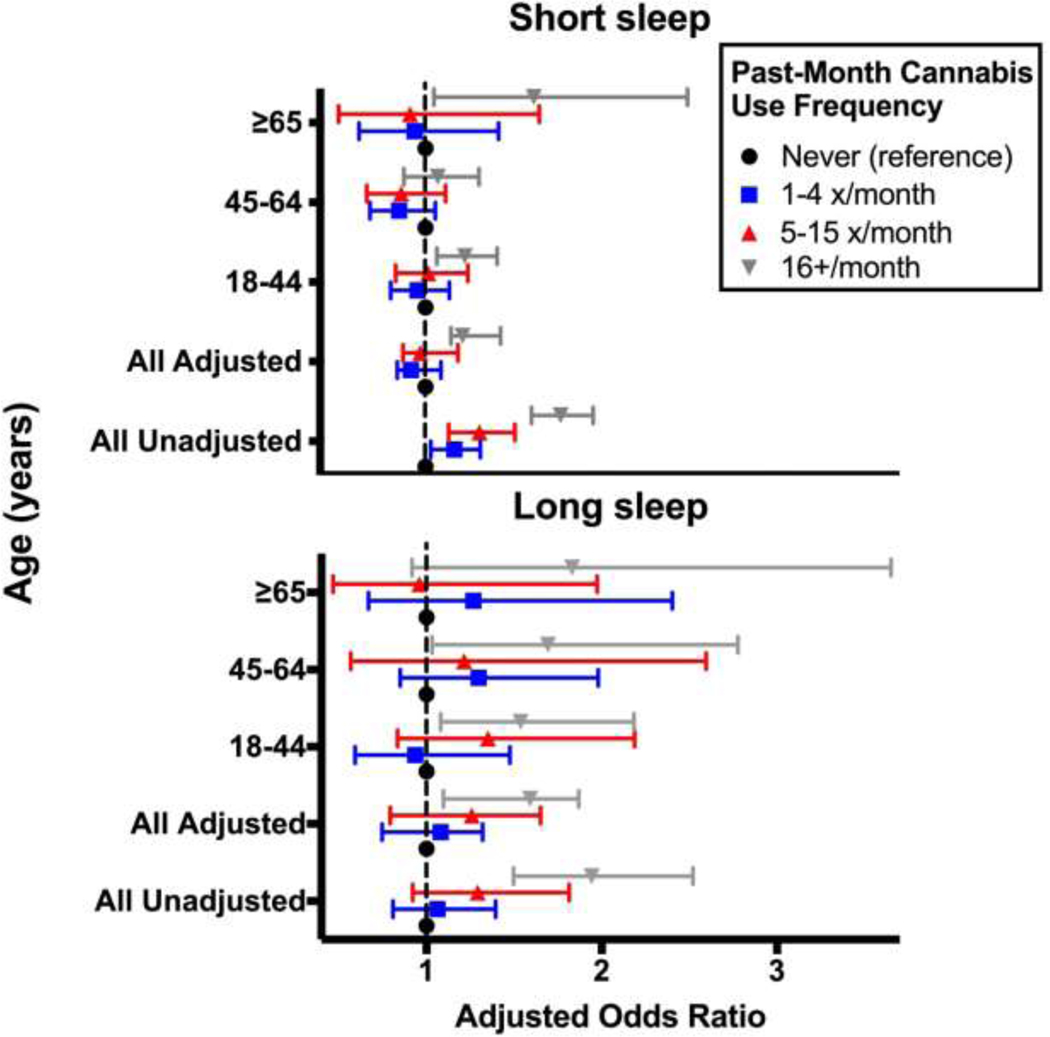
Results: When adjusted for sociodemographic factors, health related variables, and stratified by age we found that young adults (18-44 years) who reported daily-use (≥16 uses a month) had an increased risk ratio (RR [95% CI]) for either short or long sleep (1.22 [1.06-1.40] and 1.52 [1.07-2.16]); midlife adults (45-64 years) who reported daily-use had an increased prevalence of long sleep (1.71 [1.03-2.82]); and older adults (≥65 years) who reported daily-use had an increased prevalence of short sleep (1.61 [1.05-2.49]).
Conclusions: Compared to those who reported no cannabis use, individuals who reported daily cannabis use demonstrated a greater prevalence for either short or long sleep duration.
Keywords: Aging; Cannabinoid; Disturbed sleep; Marijuana.
Copyright © 2022 National Sleep Foundation. Published by Elsevier Inc. All rights reserved.
Figures
References
-
- Schulenberg JE, Patrick ME, Johnston LD, O’Malley PM, Bachman JG, Miech RA. Monitoring the Future National Survey Results on Drug Use, 1975–2020. Volume II, College Students & Adults Ages 19–60. Institute for Social Research. 2021.
Publication types
MeSH terms
Grants and funding
LinkOut - more resources
Full Text Sources
Medical
