


Fused Deposition Modeling PEEK Implants for Personalized Surgical Application: From Clinical Need to Biofabrication
- PMID: 36404782
- PMCID: PMC9668577
- DOI: 10.18063/ijb.v8i4.615
Fused Deposition Modeling PEEK Implants for Personalized Surgical Application: From Clinical Need to Biofabrication
Abstract
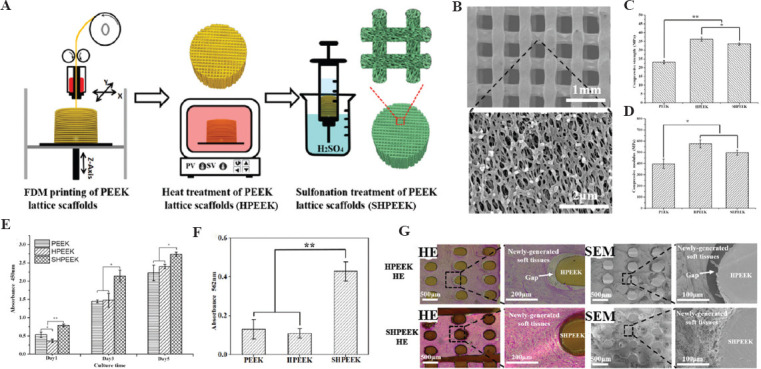
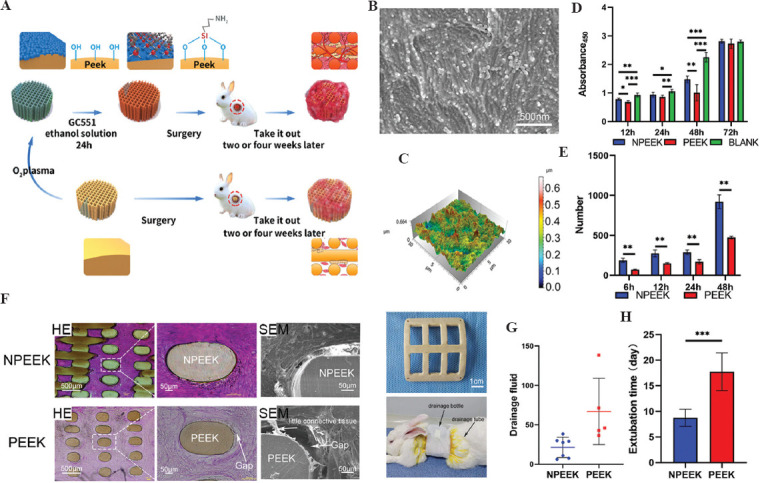
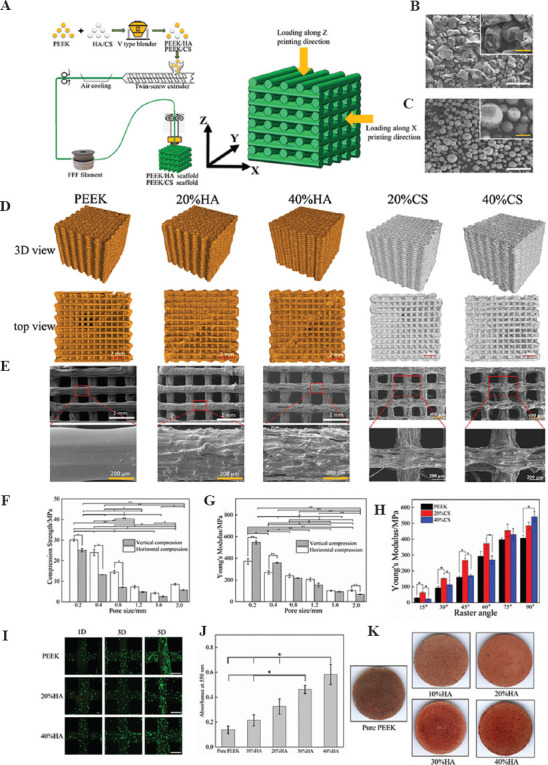
Three-dimensional printing (3DP) technology is suitable for manufacturing personalized orthopedic implants for reconstruction surgery. Compared with traditional titanium, polyether-ether-ketone (PEEK) is the ideal material for 3DP orthopedic implants due to its various advantages, including thermoplasticity, thermal stability, high chemical stability, and radiolucency suitable elastic modulus. However, it is challenging to develop a well-designed method and manufacturing technique to meet the clinical needs because it requires elaborate details and interplays with clinical work. Furthermore, establishing surgical standards for new implants requires many clinical cases and an accumulation of surgical experience. Thus, there are few case reports on using 3DP PEEK implants in clinical practice. Herein, we formed a team with a lot of engineers, scientists, and doctors and conducted a series of studies on the 3DP PEEK implants for chest wall reconstruction. First, the thoracic surgeons sort out the specific types of chest wall defects. Then, the engineers designed the shape of the implant and performed finite element analysis for every implant. To meet the clinical needs and mechanical requirements of implants, we developed a new fused deposition modeling technology to make personalized PEEK implants. Overall, the thoracic surgeons have used 114 personalized 3DP PEEK implants to reconstruct the chest wall defect and further established the surgical standards of the implants as part of the Chinese clinical guidelines. The surface modification technique and composite process are developed to overcome the new clinical problems of implant-related complications after surgery. Finally, the major challenges and possible solutions to translating 3DP PEEK implants into a mature and prevalent clinical product are discussed in the paper.
Keywords: Chest wall reconstruction; Fused deposition modeling; Polyether-ether-ketone; Three-dimensional printing.
Copyright: © 2022 Wang et al.
Conflict of interest statement
No conflicts of interest were reported by all authors.
Figures
References
-
- Ambrosi A, Pumera M. 3D-printing technologies for electrochemical applications. Chem Soc Rev. 2016;45:2740–55. https://doi.org/10.1039/c5cs00714c. - PubMed
-
- Hu G, Kang J, Ng LW, et al. Functional inks and printing of two-dimensional materials. Chem Soc Rev. 2018;47:3265–300. https://doi.org/10.1039/c8cs00084k. - PubMed
-
- Layani M, Wang X, Magdassi S. Novel Materials for 3D Printing by Photopolymerization. Adv Mater. 2018;30:e1706344. https://doi.org/10.1002/adma.201706344. - PubMed
-
- Hirt L, Reiser A, Spolenak R, et al. Additive manufacturing of metal structures at the micrometer scale. Adv Mater. 2017;29:1604211. https://doi.org/10.1002/adma.201604211. - PubMed
-
- Liaw CY, Guvendiren M. Current and emerging applications of 3D printing in medicine. Biofabrication. 2017;9:024102. https://doi.org/10.1088/1758-5090/aa7279. - PubMed
Publication types
LinkOut - more resources
Full Text Sources