


Endoscopic removal of a massive trichobezoar in a pediatric patient by using a variceal ligator cap: A case report and literature review
- PMID: 36405578
- PMCID: PMC9673752
- DOI: 10.3389/fmed.2022.1020648
Endoscopic removal of a massive trichobezoar in a pediatric patient by using a variceal ligator cap: A case report and literature review
Abstract
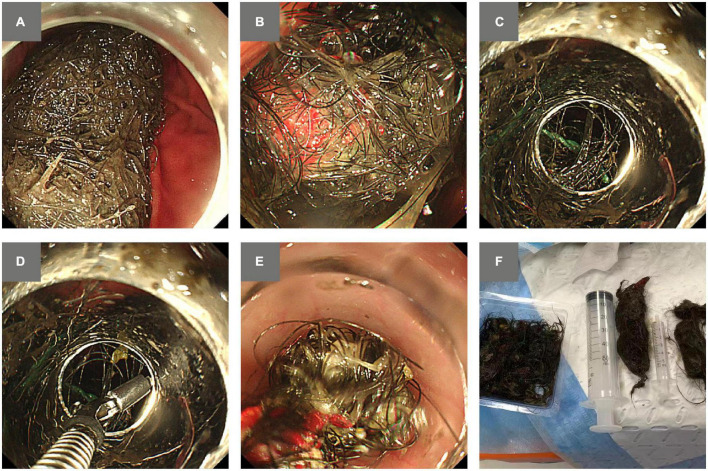
A trichobezoar is commonly formed in the gastrointestinal tract by ingestion of an individual's own hair. A trichobezoar formed by hair and artificial materials constitutes a rare etiology scarcely reported in the current literature. A mixture with hair-like synthetic fibers not only increases the risk for trichobezoar formation but also makes it more difficult for endoscopic removal. Herein, we report on a case in which a trichobezoar, caused by the consumption of human hair and synthetic yarn, was successfully removed endoscopically with a variceal ligator cap without further complications for the patient. This case report aims to raise awareness among endoscopists that using a variceal ligator cap may be a suitable option in the management of large trichobezoars containing synthetic fibers.
Keywords: case report; endoscopy; pediatric; removal; trichobezoar.
Copyright © 2022 Lu, Berglund, Xia, Jain, Gu and Ji.
Conflict of interest statement
The authors declare that the research was conducted in the absence of any commercial or financial relationships that could be construed as a potential conflict of interest.
Figures
References
-
- Vaughan ED, Jr., Sawyers JL, Scott HW, Jr. The Rapunzel syndrome. An unusual complication of intestinal bezoar. Surgery. (1968) 63:339–43. - PubMed
Publication types
LinkOut - more resources
Full Text Sources
Miscellaneous
