


Post COVID-19 pandemic recovery of intracity human mobility in Wuhan: Spatiotemporal characteristic and driving mechanism
- PMID: 36405767
- PMCID: PMC9650583
- DOI: 10.1016/j.tbs.2022.11.003
Post COVID-19 pandemic recovery of intracity human mobility in Wuhan: Spatiotemporal characteristic and driving mechanism
Abstract
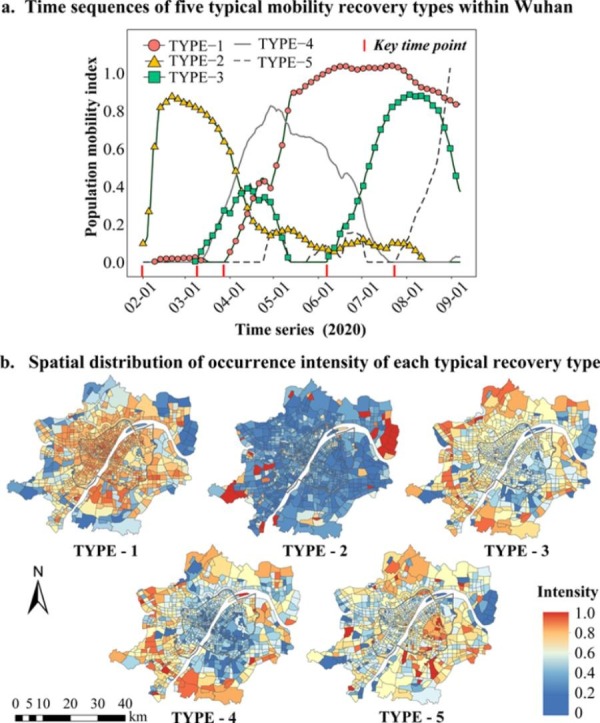
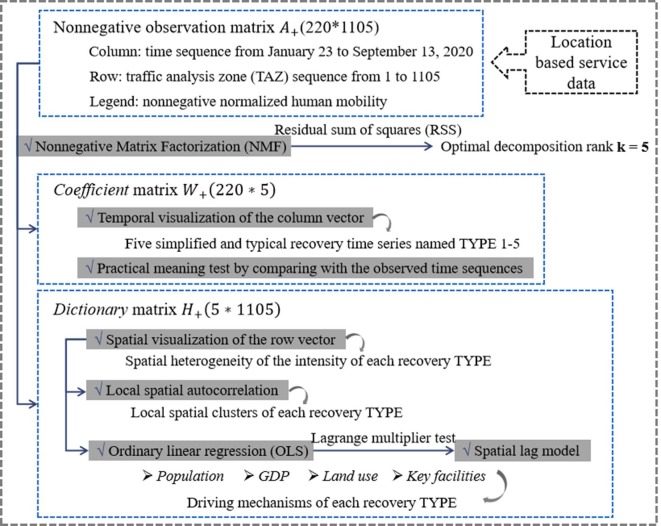
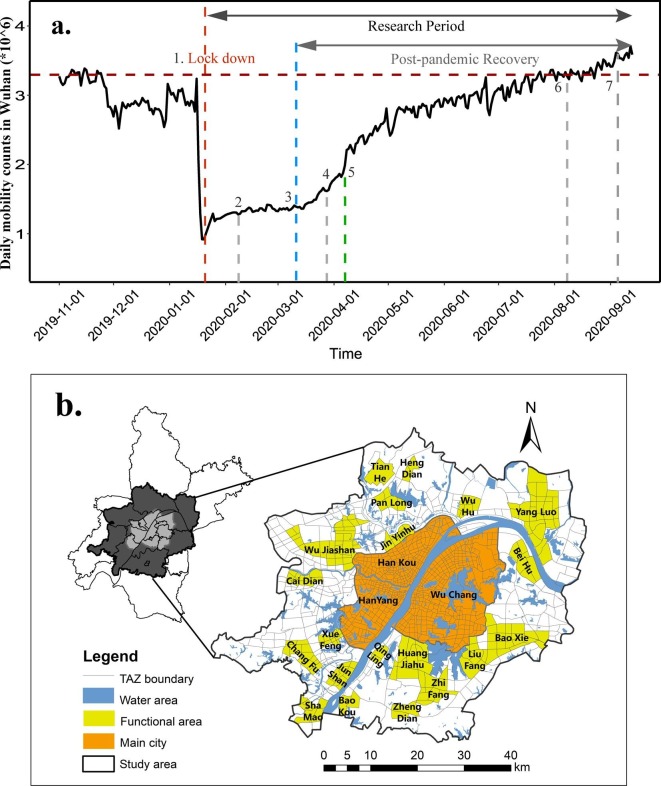
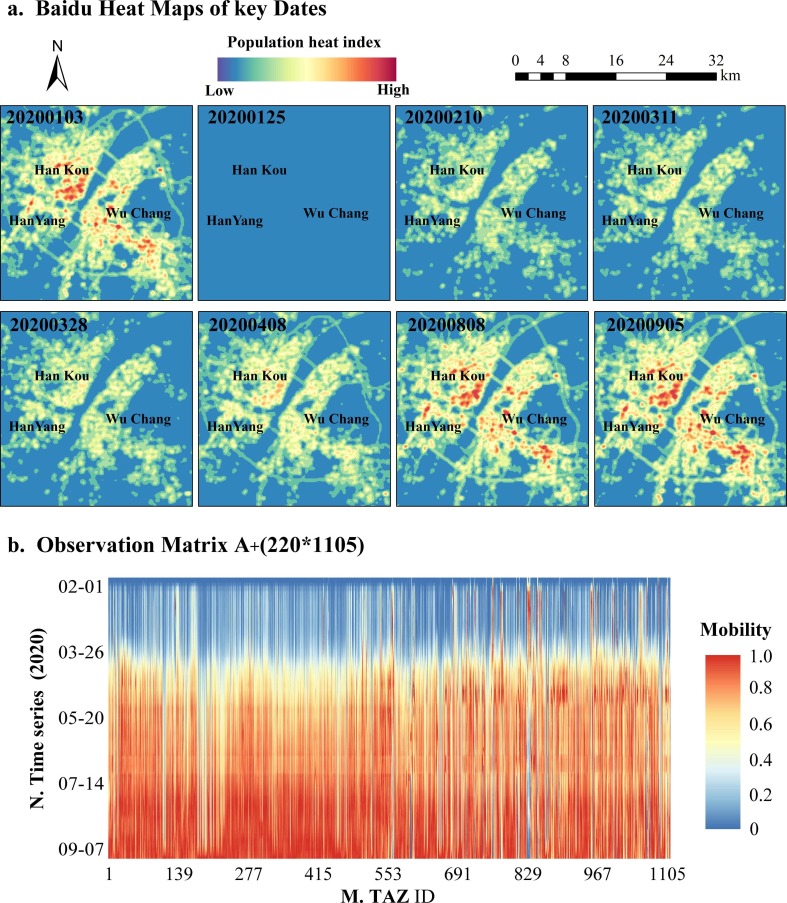
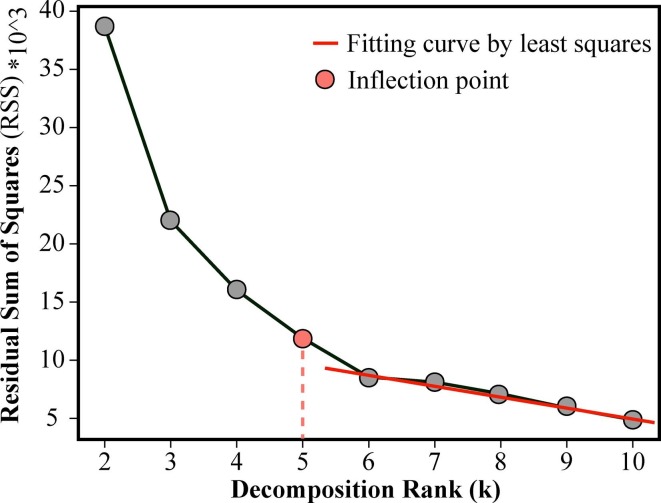
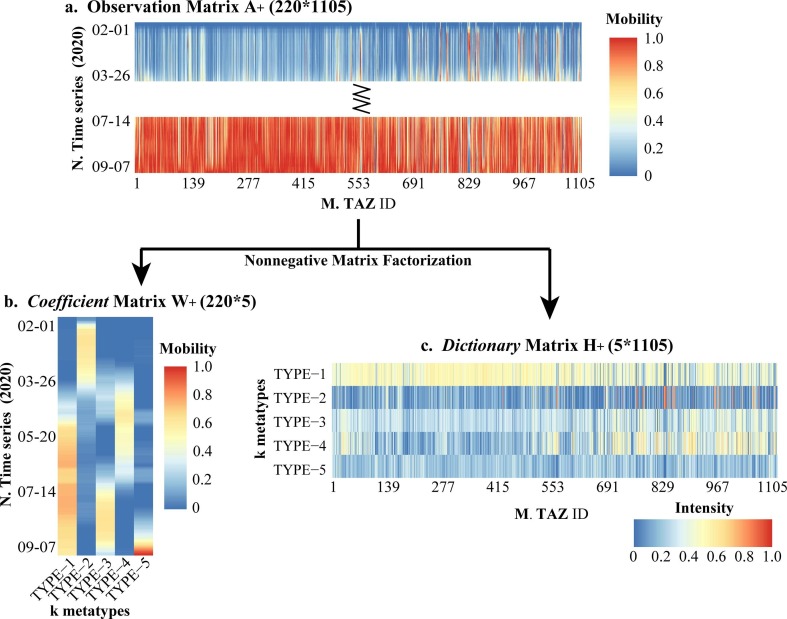
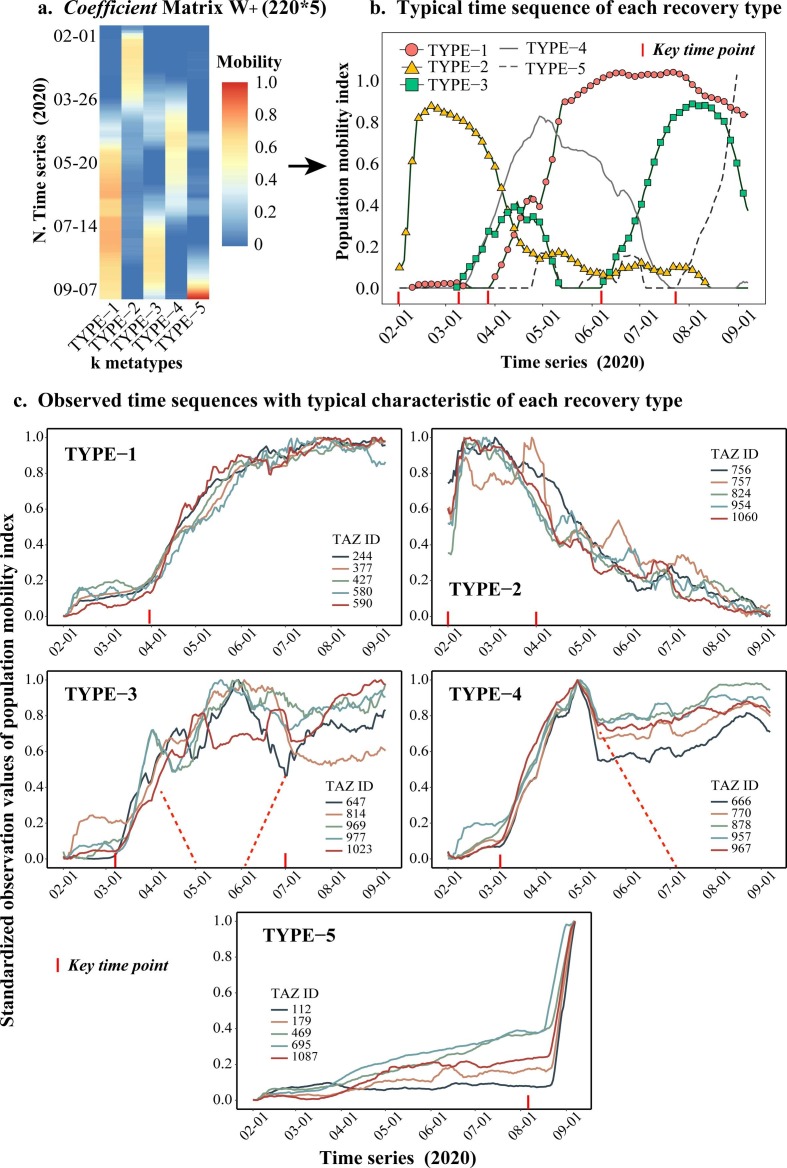
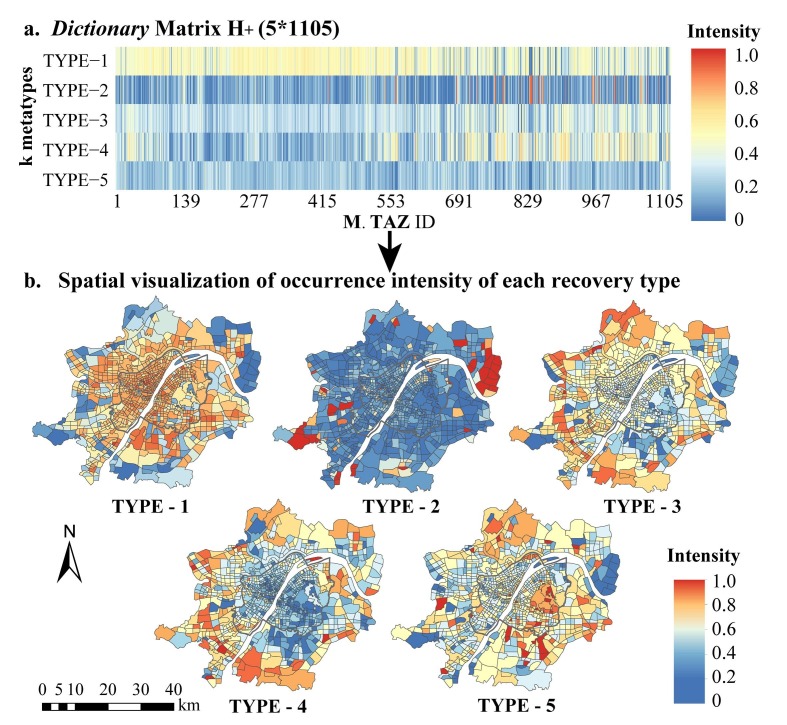
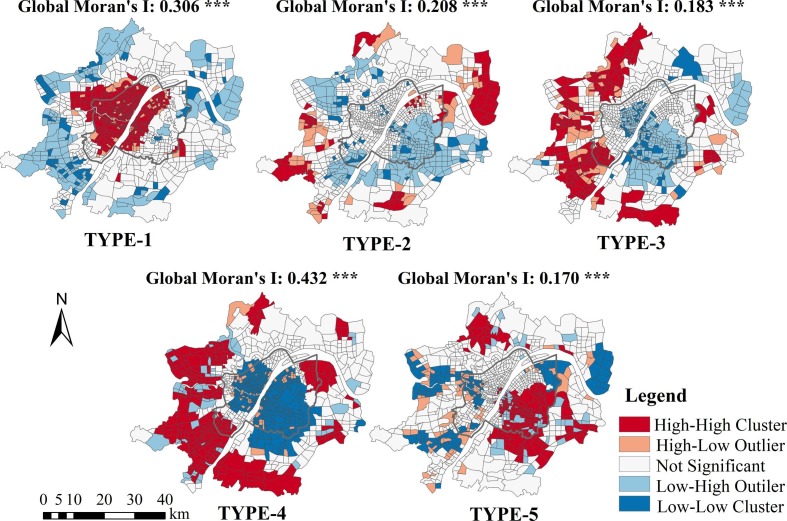
After successfully inhibiting the first wave of COVID-19 transmission through a city lockdown, Wuhan implemented a series of policies to gradually lift restrictions and restore daily activities. Existing studies mainly focus on the intercity recovery under a macroscopic view. How does the intracity mobility return to normal? Is the recovery process consistent among different subareas, and what factor affects the post-pandemic recovery? To answer these questions, we sorted out policies adopted during the Wuhan resumption, and collected the long-time mobility big data in 1105 traffic analysis zones (TAZs) to construct an observation matrix (A). We then used the nonnegative matrix factorization (NMF) method to approximate A as the product of two condensed matrices (WH). The column vectors of W matrix were visualized as five typical recovery curves to reveal the temporal change. The row vectors of H matrix were visualized to identify the spatial distribution of each recovery type, and were analyzed with variables of population, GDP, land use, and key facility to explain the recovery driving mechanisms. We found that the "staggered time" policies implemented in Wuhan effectively staggered the peak mobility of several recovery types ("staggered peak"). Besides, different TAZs had heterogeneous response intensities to these policies ("staggered area") which were closely related to land uses and key facilities. The creative policies taken by Wuhan highlight the wisdom of public health crisis management, and could provide an empirical reference for the adjustment of post-pandemic intervention measures in other cities.
Keywords: COVID-19; Intracity mobility; Nonnegative matrix factorization; Spatial lag regression; Spatiotemporal analysis.
© 2022 Published by Elsevier Ltd on behalf of Hong Kong Society for Transportation Studies.
Conflict of interest statement
The authors declare that they have no known competing financial interests or personal relationships that could have appeared to influence the work reported in this paper.
Figures
References
-
- Anselin L., Bera A.K., Florax R., Yoon M.J. Simple diagnostic tests for spatial dependence. Regl. Sci. Urban Econom. 1996;26:77–104.
-
- Anselin L., Syabri I., Kho Y. GeoDa: An introduction to spatial data analysis. Geograph. Anal. 2006;38:5–22.
-
- Barouki, R., Kogevinas, M., Audouze, K., Belesova, K., Bergman, A., Birnbaum, L., Boekhold, S., Denys, S., Desseille, C., Drakvik, E., Frumkin, H., Garric, J., Destoumieux-Garzon, D., Haines, A., Huss, A., Jensen, G., Karakitsios, S., Klanova, J., Koskela, I.M., Laden, F., Marano, F., Franziska Matthies-Wiesler, E., Morris, G., Nowacki, J., Paloniemi, R., Pearce, N., Peters, A., Rekola, A., Sarigiannis, D., Sebkova, K., Slama, R., Staatsen, B., Tonne, C., Vermeulen, R., Vineis, P., https://www.heraresearcheu.eu, H.-C.-w.g.E.a., 2021. The COVID-19 pandemic and global environmental change: Emerging research needs. Environ. Int. 146, 106272. - PMC - PubMed
-
- Buckee C.O., Balsari S., Chan J., Crosas M., Dominici F., Gasser U., Grad Y.H., Grenfell B., Halloran M.E., Kraemer M.U.G., Lipsitch M., Metcalf C.J.E., Meyers L.A., Perkins T.A., Santillana M., Scarpino S.V., Viboud C., Wesolowski A., Schroeder A. Aggregated mobility data could help fight COVID-19. Science. 2020;368:145–146. - PubMed
LinkOut - more resources
Full Text Sources