


The commitment of barley microspores into embryogenesis correlates with miRNA-directed regulation of members of the SPL, GRF and HD-ZIPIII transcription factor families
- PMID: 36406053
- PMCID: PMC9671080
- DOI: 10.1002/pld3.289
The commitment of barley microspores into embryogenesis correlates with miRNA-directed regulation of members of the SPL, GRF and HD-ZIPIII transcription factor families
Abstract
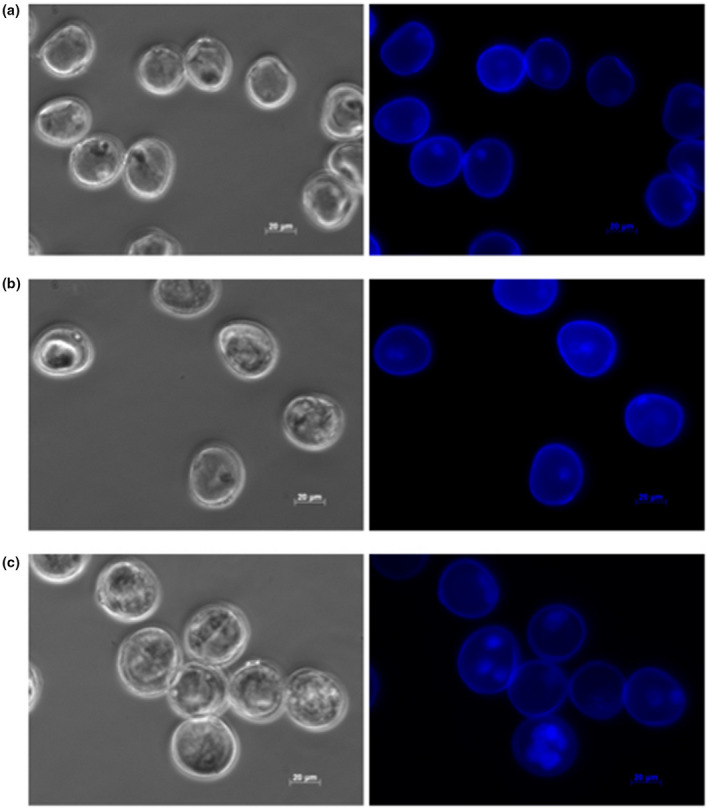
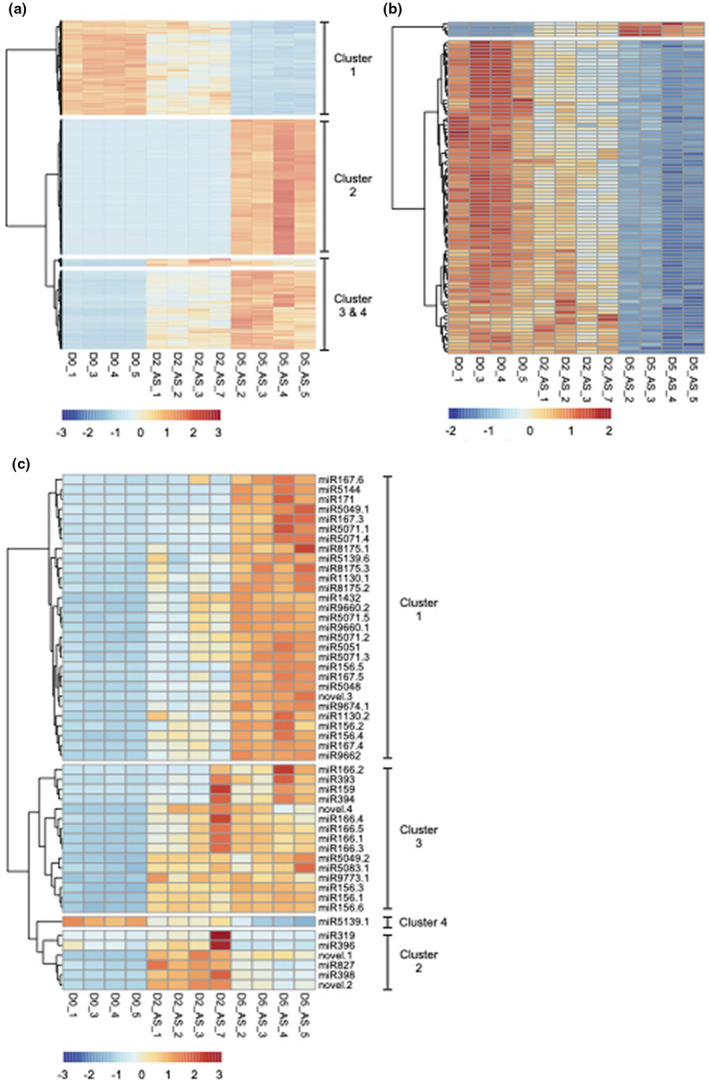
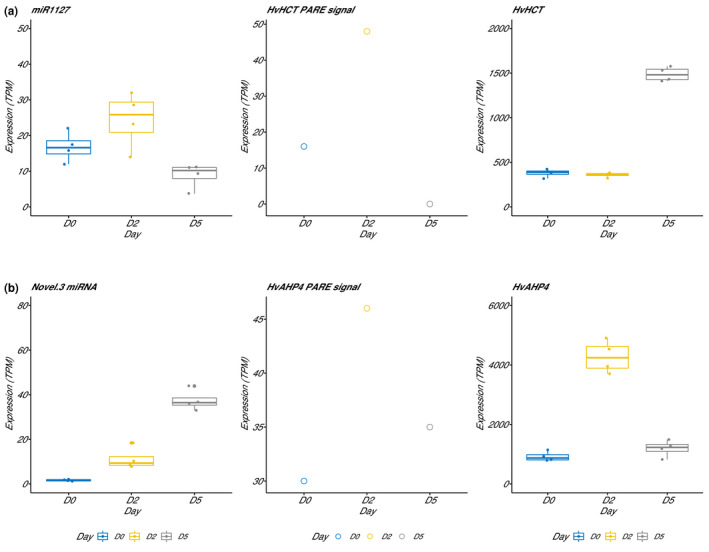
Microspore embryogenesis is a model for developmental plasticity and cell fate decisions. To investigate the role of miRNAs in this development, we sequenced sRNAs and the degradome of barley microspores collected prior to (day 0) and after (days 2 and 5) the application of a stress treatment known to induce embryogenesis. Microspores isolated at these timepoints were uniform in both appearance and in their complements of sRNAs. We detected 68 miRNAs in microspores. The abundance of 51 of these miRNAs differed significantly during microspore development. One group of miRNAs was induced when the stress treatment was applied, prior to being repressed when microspores transitioned to embryogenesis. Another group of miRNAs were up-regulated in day-2 microspores and their abundance remained stable or increased in day-5 microspores, a timepoint at which the first clear indications of the transition toward embryogenesis were visible. Collectively, these miRNAs might play a role in the modulation of the stress response, the repression of gametic development, and/or the gain of embryogenic potential. A degradome analysis allowed us to validate the role of miRNAs in regulating 41 specific transcripts. We showed that the transition of microspores toward the embryogenesis pathway involves miRNA-directed regulation of members of the ARF, SPL, GRF, and HD-ZIPIII transcription factor families. We noted that 41.5% of these targets were shared between day-2 and day-5 microspores while 26.8% were unique to day-5 microspores. The former set may act to disrupt transcripts involved in pollen development while the latter set may drive the commitment to embryogenesis.
Keywords: Hordeum vulgare; degradome; gametic embryogenesis; hc‐siRNA; miRNA; phasiRNA.
© 2020 The Authors. Plant Direct published by American Society of Plant Biologists, Society for Experimental Biology and John Wiley & Sons Ltd.
Conflict of interest statement
The authors declare no conflict of interest associated with the work described in this manuscript.
Figures
References
-
- Berenguer, E. , Bárány, I. , Solís, M. T. , Pérez‐Pérez, Y. , Risueño, M. C. , & Testillano, P. S. (2017). Inhibition of histone H3K9 methylation by BIX‐01294 promotes stress‐induced microspore totipotency and enhances embryogenesis initiation. Frontiers in Plant Science, 8, 1161. 10.3389/fpls.2017.01161 - DOI - PMC - PubMed
