


Glis1 and oxaloacetate in nucleus pulposus stromal cell somatic reprogramming and survival
- PMID: 36406265
- PMCID: PMC9671658
- DOI: 10.3389/fmolb.2022.1009402
Glis1 and oxaloacetate in nucleus pulposus stromal cell somatic reprogramming and survival
Abstract
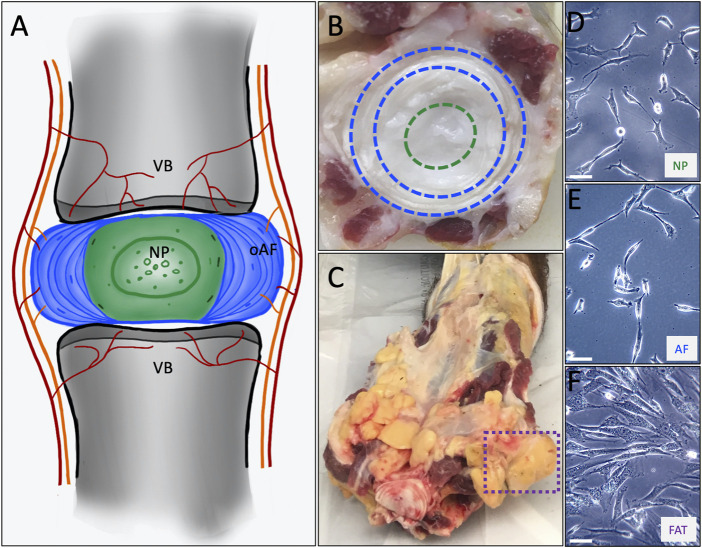
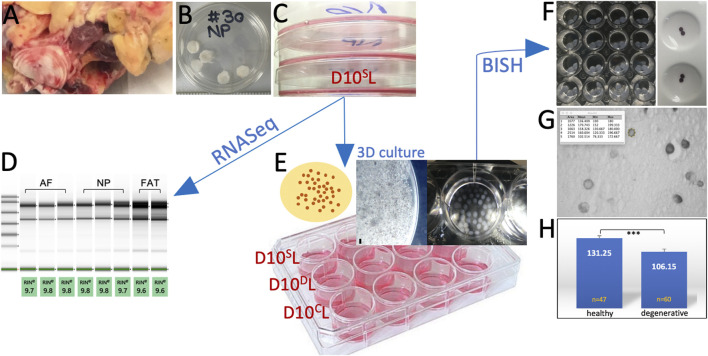
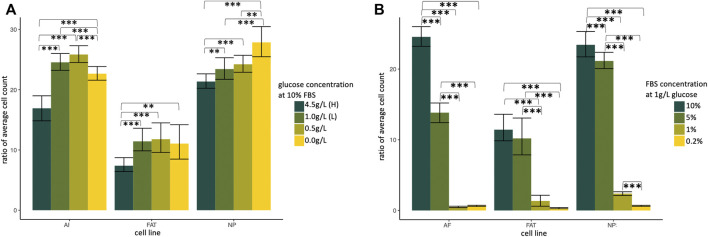
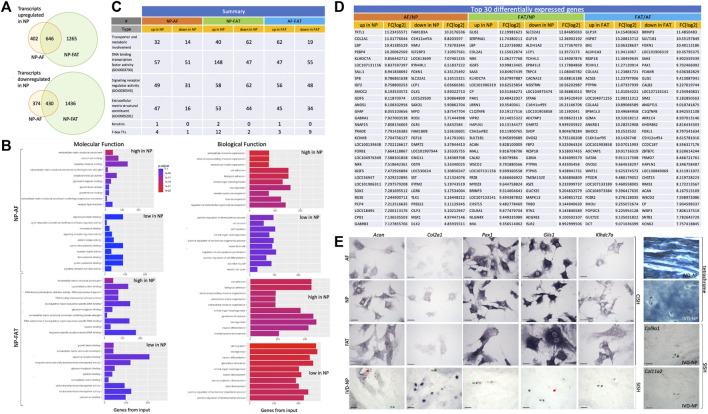
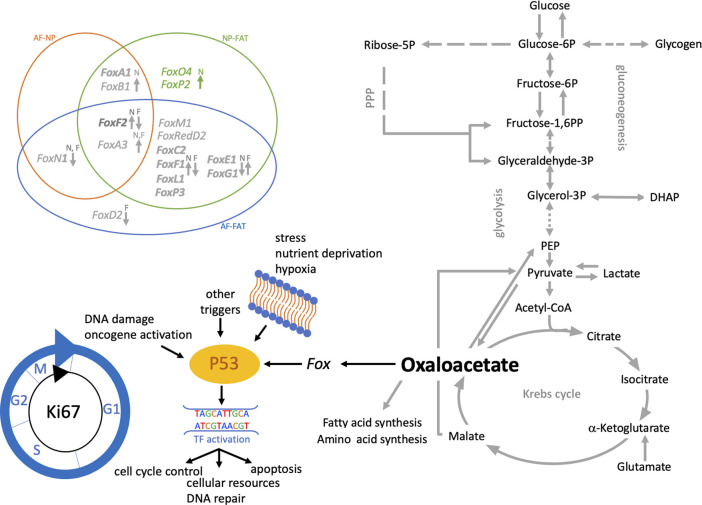
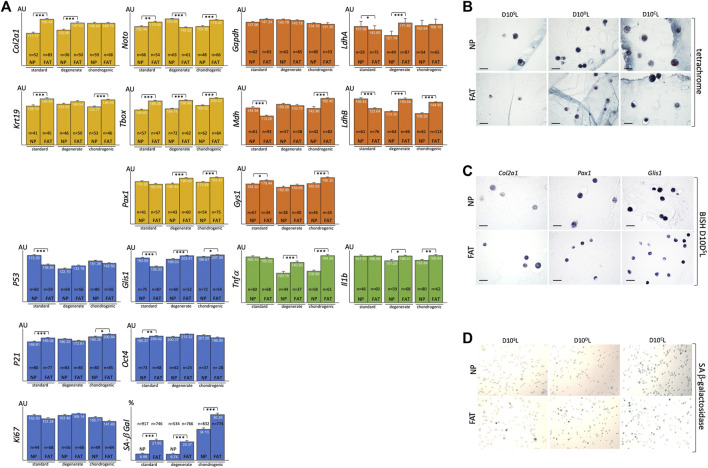
Regenerative medicine aims to repair degenerate tissue through cell refurbishment with minimally invasive procedures. Adipose tissue (FAT)-derived stem or stromal cells are a convenient autologous choice for many regenerative cell therapy approaches. The intervertebral disc (IVD) is a suitable target. Comprised of an inner nucleus pulposus (NP) and an outer annulus fibrosus (AF), the degeneration of the IVD through trauma or aging presents a substantial socio-economic burden worldwide. The avascular nature of the mature NP forces cells to reside in a unique environment with increased lactate levels, conditions that pose a challenge to cell-based therapies. We assessed adipose and IVD tissue-derived stromal cells through in vitro transcriptome analysis in 2D and 3D culture and suggested that the transcription factor Glis1 and metabolite oxaloacetic acid (OAA) could provide NP cells with survival tools for the harsh niche conditions in the IVD.
Keywords: 3D culture; adipose; annulus fibrosus; intervertebral disc; nucleus pulposus; regenerative medicine; stromal cell; transcriptome analysis.
Copyright © 2022 Lufkin, Samanta, Baker, Lufkin, Schulze, Ellis, Rose, Lufkin and Kraus.
Figures

References
-
- Amirdelfan K., Bae H., McJunkin T., DePalma M., Kim K., Beckworth W. J., et al. (2021). Allogeneic mesenchymal precursor cells treatment for chronic low back pain associated with degenerative disc disease: A prospective randomized, placebo-controlled 36-month study of safety and efficacy. Spine J. 21 (2), 212–230. 10.1016/j.spinee.2020.10.004 - DOI - PubMed
Grants and funding
LinkOut - more resources
Full Text Sources
Molecular Biology Databases
Miscellaneous
