


Macrophage-Targeted Berberine-Loaded β-Glucan Nanoparticles Enhance the Treatment of Ulcerative Colitis
- PMID: 36406639
- PMCID: PMC9673505
- DOI: 10.2147/IJN.S379792
Macrophage-Targeted Berberine-Loaded β-Glucan Nanoparticles Enhance the Treatment of Ulcerative Colitis
Abstract
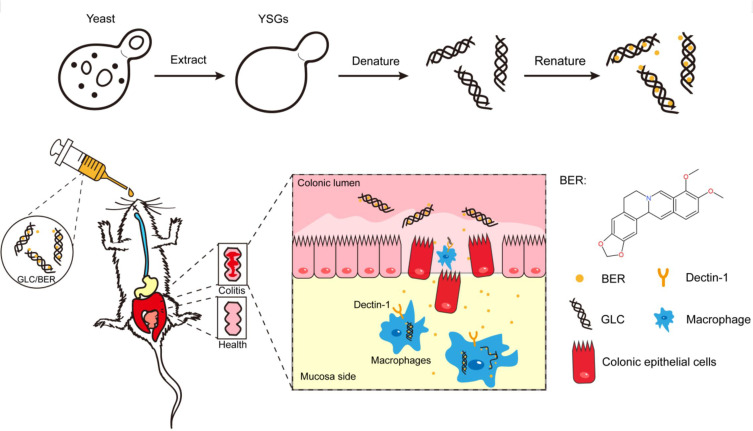
Aim: This study focuses on constructing of an anti-inflammatory drug delivery system by encapsulation of berberine in the β-glucan nanoparticles and evaluates its effect on treating ulcerative colitis.
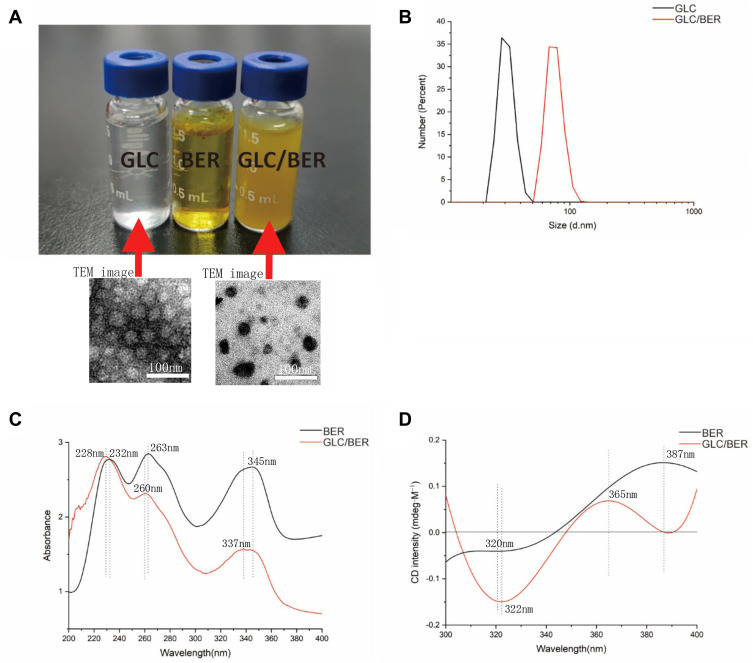
Methods: β-Glucan and the anti-inflammatory drug berberine (BER) are self-assembled into nanoparticles to construct a drug delivery system (GLC/BER). The interaction between the drug and the carrier was characterized by circular dichroism, ultraviolet-visible spectroscopy, and dynamic light scattering. The anti-inflammatory effect of the GLC/BER was evaluated through a lipopolysaccharide (LPS)-induced RAW264.7 macrophage inflammation model and a sodium sulfate (DSS)-induced C57BL/6 mouse ulcerative colitis model.
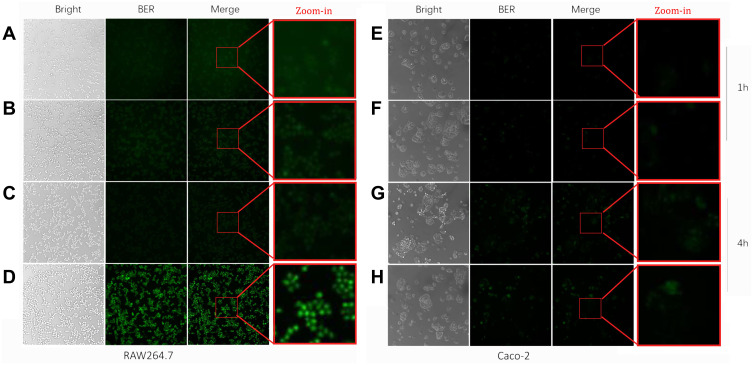
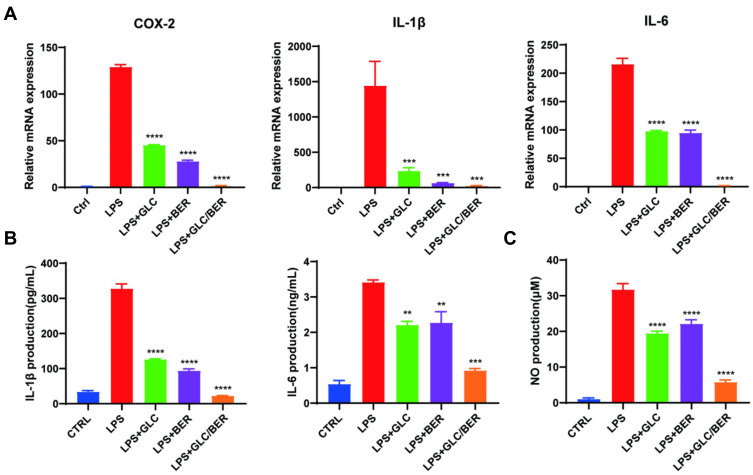
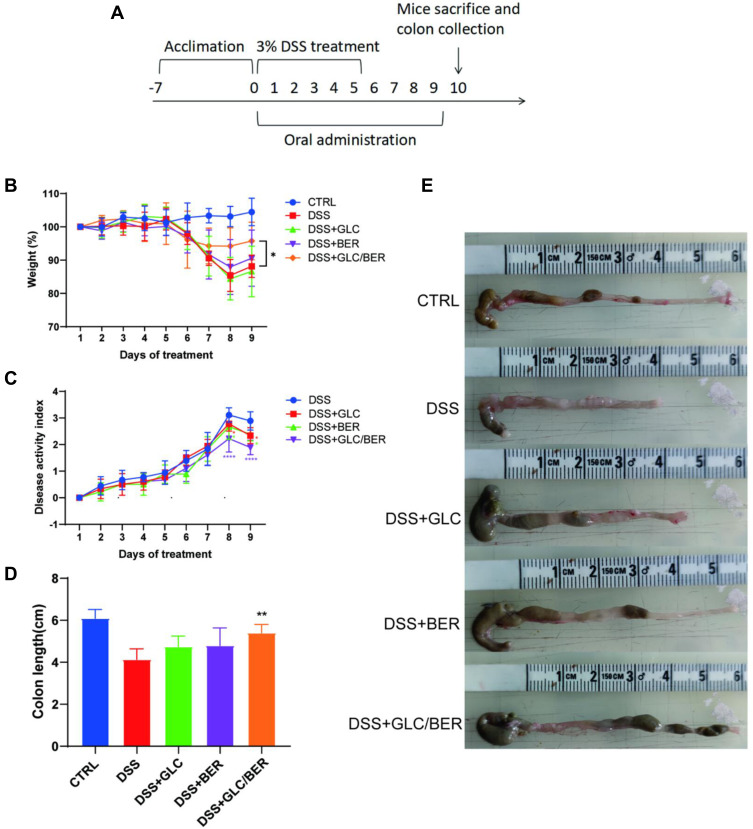
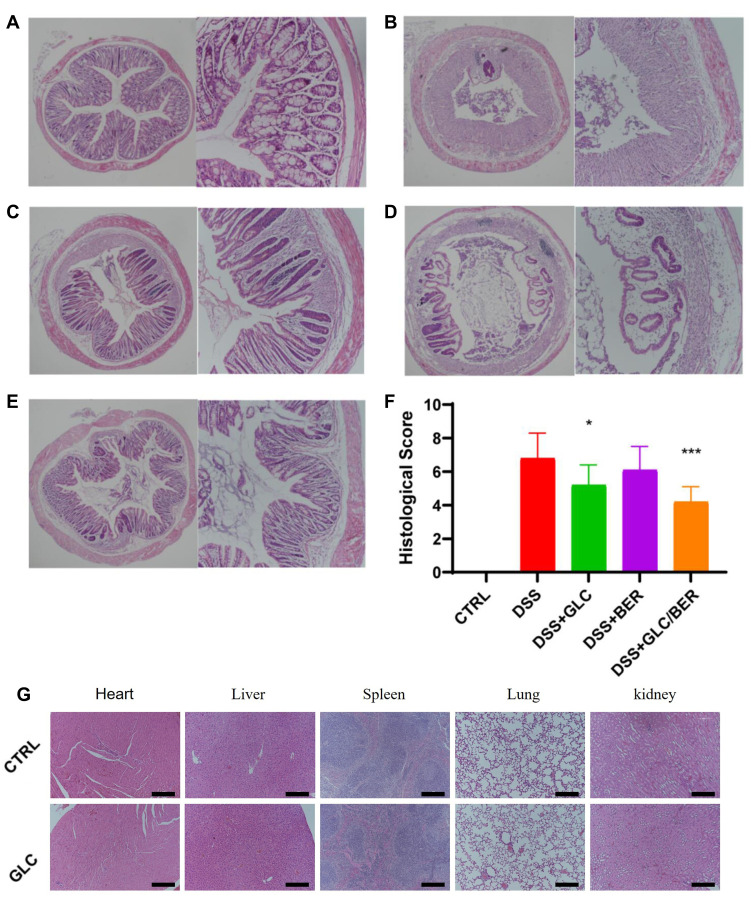
Results: The GLC/BER nanoparticles have a particle size of 80-120 nm and a high encapsulation efficiency of 37.8±4.21%. In the LPS-induced RAW264.7 macrophage inflammation model, GLC/BER significantly promoted the uptake of BER by RAW264.7 cells. RT-PCR and ELISA assay showed that it could significantly inhibit the inflammatory factors including IL-1β, IL-6 and COX-2. Furthermore, GLC/BER shows inhibiting effect on the secretion of pro-inflammatory factors such as IL-1β and IL-6, down-regulating the production of nitrite oxide; in animal studies, GLC/BER was found to exert a relieving effect on mice colitis.
Conclusion: The study found that GLC/BER has an anti-inflammatory effect in vitro and in vivo, and the GLC carrier improves the potency and bioavailability of BER, providing a new type of nanomedicine for the treatment of colitis.
Keywords: anti-inflammation; chiral; drug carrier; immunoregulation; β-glucan.
© 2022 Xu et al.
Conflict of interest statement
The authors report no conflicts of interest in this work.
Figures
References
-
- Friedrich MJ. Inflammatory bowel disease goes global. JAMA. 2018;319(7):648. - PubMed
-
- Bitzer ZT, Elias RJ, Vijay-Kumar M, Lambert JD. (-)-Epigallocatechin-3-gallate decreases colonic inflammation and permeability in a mouse model of colitis, but reduces macronutrient digestion and exacerbates weight loss. Mol Nutr Food Res. 2016;60(10):2267–2274. doi:10.1002/mnfr.201501042 - DOI - PubMed
MeSH terms
Substances
LinkOut - more resources
Full Text Sources
Medical
Research Materials
