


Sleep in hospitalized pediatric and adult patients - A systematic review and meta-analysis
- PMID: 36406659
- PMCID: PMC9672415
- DOI: 10.1016/j.sleepx.2022.100059
Sleep in hospitalized pediatric and adult patients - A systematic review and meta-analysis
Abstract
Background: Sleep is essential for recovery from illness. As a result, researchers have shown a growing interest in the sleep of hospitalized patients. Although many studies have been conducted over the past years, an up to date systematic review of the results is missing.
Objective: The objective of this systematic review was to assess sleep quality and quantity of hospitalized patients and sleep disturbing factors.
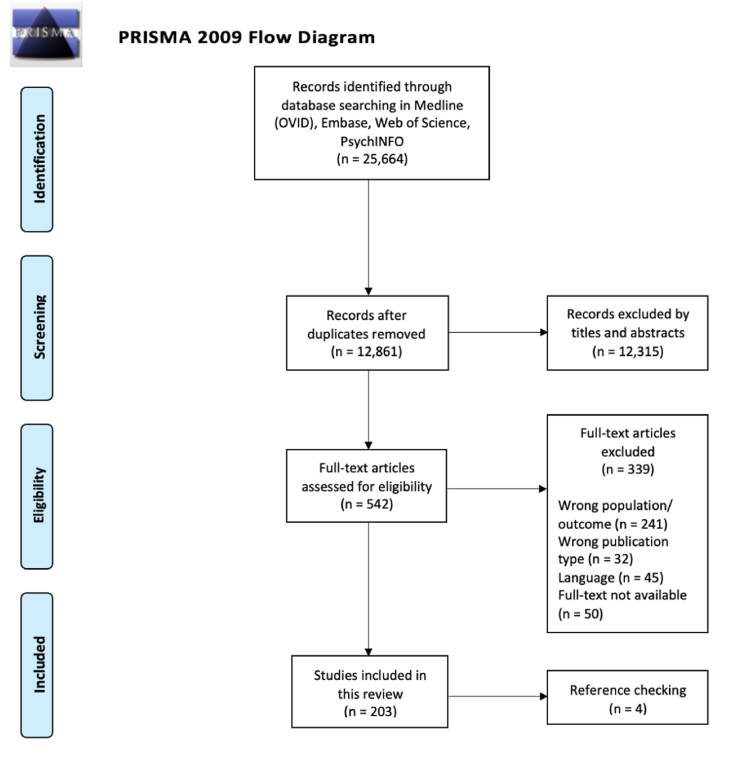
Methods: A systematic literature search was conducted within four scientific databases. The search focused on synonyms of 'sleep' and 'hospitalization'. Papers written in English or Dutch from inception to April 25th,2022 were included for hospitalized patients >1 year of age. Papers exclusively reporting about patients receiving palliative, obstetric or psychiatric care were excluded, as well as patients in rehabilitation and intensive care settings, and long-term hospitalized geriatric patients. This review was performed in accordance with the PRISMA guidelines.
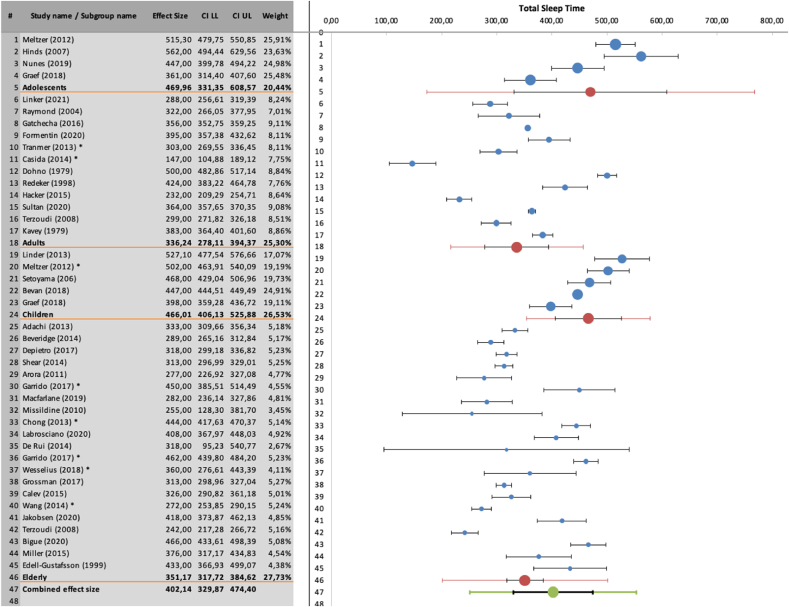
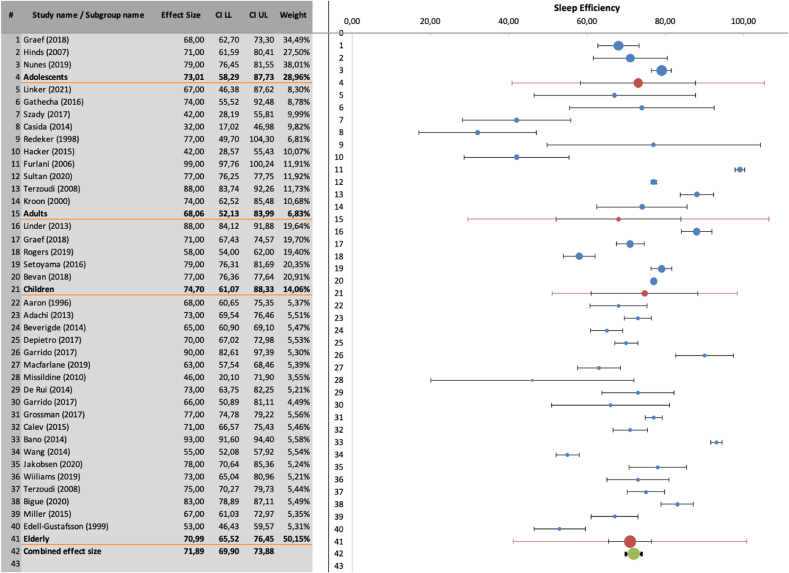
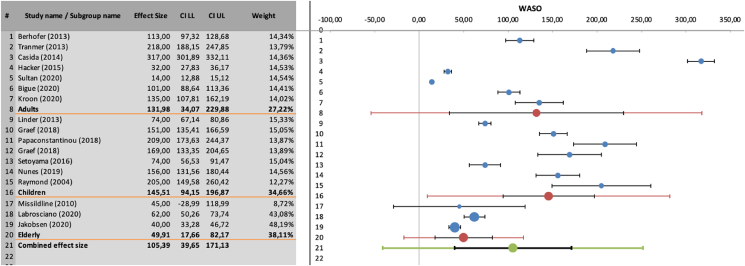
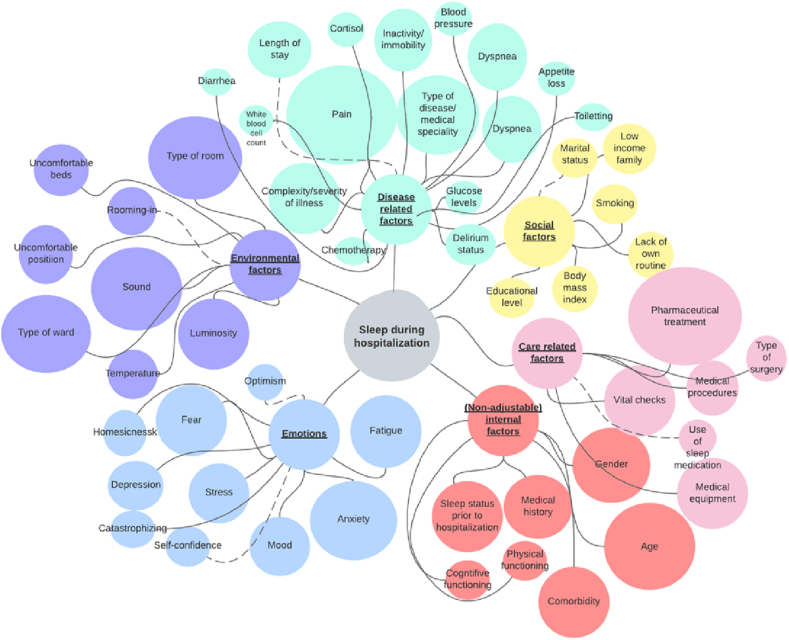
Results: Out of 542 full text studies assessed for eligibility, 203 were included, describing sleep quality and/or quantity of 17,964 patients. The median sample size of the studies was 51 patients (IQR 67, range 6-1472). An exploratory meta-analysis of the Total Sleep Time showed an average of 7.2 h (95%-CI 4.3, 10.2) in hospitalized children, 5.7 h (95%-CI 4.8, 6.7) in adults and 5.8 h (95%-CI 5.3, 6.4) in older patients (>60y). In addition, a meta-analysis of the Wake After Sleep Onset (WASO) showed a combined high average of 1.8 h (95%-CI 0.7, 2.9). Overall sleep quality was poor, also due to nocturnal awakenings. The most frequently cited external factors for poor sleep were noise and number of patients in the room. Among the variety of internal/disease-related factors, pain and anxiety were most frequently mentioned to be associated with poor sleep.
Conclusion: Of all studies, 76% reported poor sleep quality and insufficient sleep duration in hospitalized patients. Children sleep on average 0.7-3.8 h less in the hospital than recommended. Hospitalized adults sleep 1.3-3.2 h less than recommended for healthy people. This underscores the need for interventions to improve sleep during hospitalization to support recovery.
Keywords: Hospitalized patient; Sleep epidemiology; Sleep quality; meta-Analysis.
© 2022 The Authors. Published by Elsevier B.V.
Conflict of interest statement
The authors declare that they have no known competing financial interests or personal relationships that could have appeared to influence the work reported in this paper.
Figures
References
-
- Alvarez G.G., An T. The impact of daily sleep duration on health: a review of the literature. Prog Cardiovasc Nurs. 2004;19:56–59. - PubMed
-
- Kopasz M., Loessl B., Hornyak M. Sleep and memory in healthy children and adolescents - a critical review. Sleep Med Rev. 2010;14:167–177. - PubMed
-
- Tononi G., Cirelli C. Sleep function and synaptic homeostasis. Sleep Med Rev. 2006;10(1):49–62. - PubMed
-
- Dinges D.F. The state of sleep deprivation: from functional biology to functional consequences. Sleep Med Rev. 2006;10(5):303–305. - PubMed
LinkOut - more resources
Full Text Sources
Miscellaneous
