


Incidence and predictors of loss to follow-up among adult HIV-infected patients taking antiretroviral therapy at North Shewa zone public Hospitals, Northeast Ethiopia: A retrospective follow-up study
- PMID: 36407380
- PMCID: PMC9652688
- DOI: 10.4314/ahs.v22i2.3
Incidence and predictors of loss to follow-up among adult HIV-infected patients taking antiretroviral therapy at North Shewa zone public Hospitals, Northeast Ethiopia: A retrospective follow-up study
Abstract
Background: Patients who are lost to follow-up while on treatment compromise their own health and the long-term success of antiretroviral therapy (ART) programs. Besides, loss to follow-up (LTFU) increases HIV-related morbidity and mortality. Therefore, this study aimed to determine the incidence of LTFU and its predictors among adult HIV positive patients on anti-retroviral therapy at North Shoa zone public hospitals, Northeast Ethiopia.
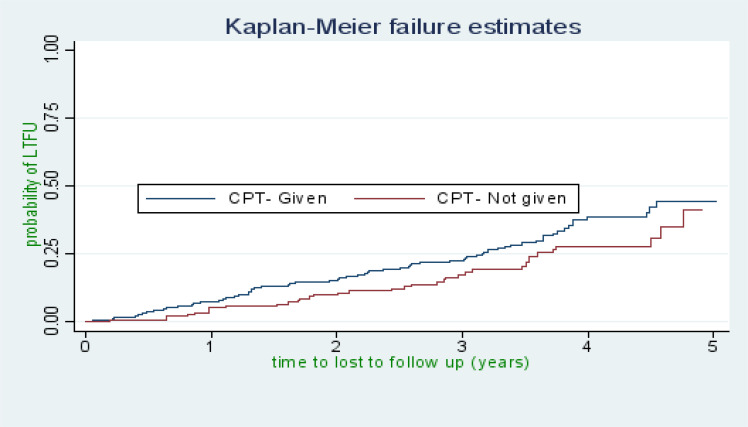
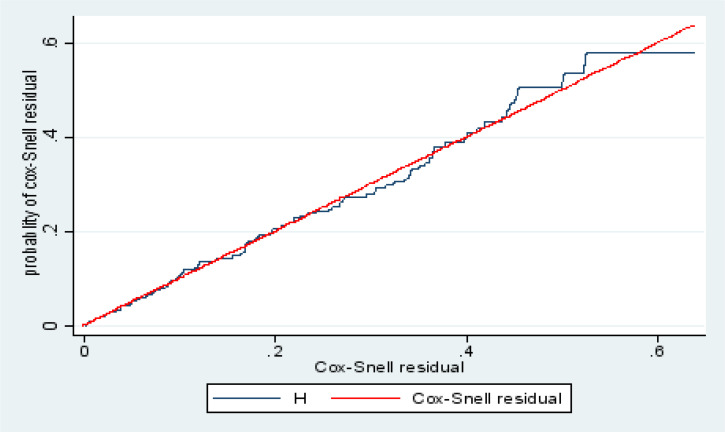
Methods: A retrospective follow up study of 517 people living with HIV/AIDS and attending an ART clinic between 2015 and 2020 was conducted at North Shewa zone, public hospitals. Kaplan-Meier failure function together with log rank test was used to compare failure function. Multivariable Cox proportion hazards regression model was used to determine predictors of LTFU.
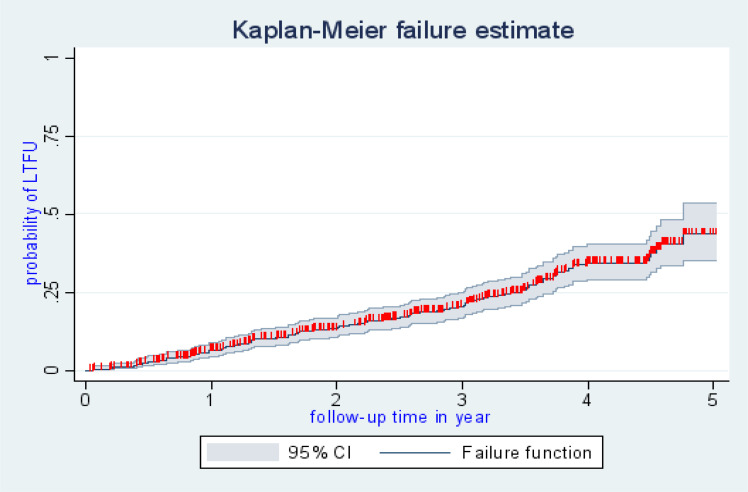
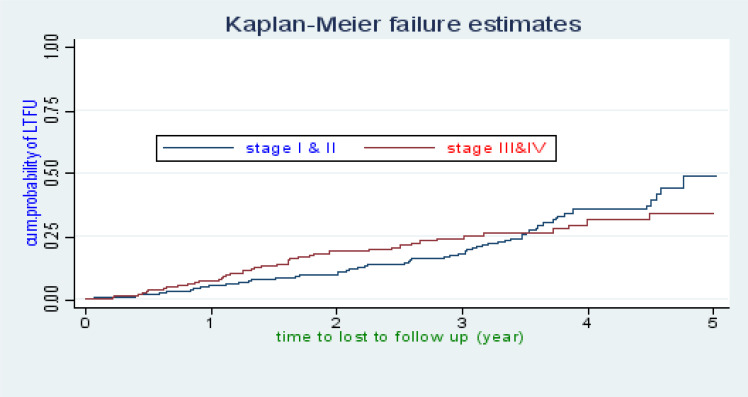
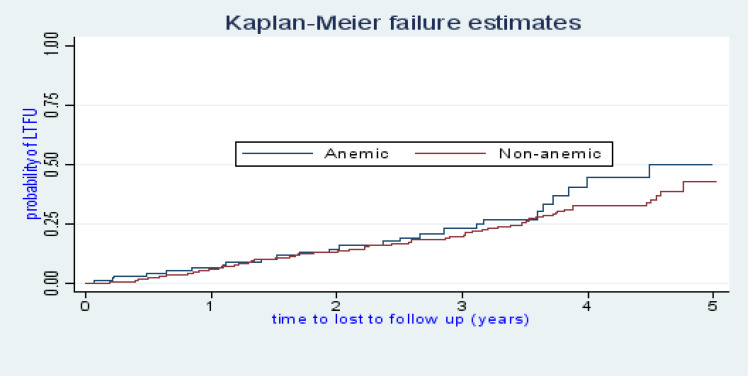
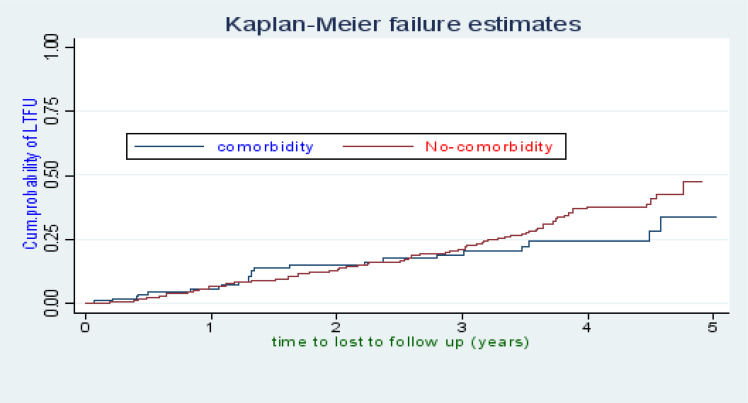
Result: The incidence density rate of lost to follow up among HIV positive adult on ART was found to be 8.9 per 100 adult years observation (95%CI; 7.45, 10.68). In multivariable cox proportional regression analysis, WHO clinical stage-IV (AHR = 1.50; 95% CI: 1.08, 3.75), comorbidity disease (AHR = 0.54; 95% CI; 0.30, 0.97), body mass index less than 18kg/m2 (AHR = 1.60; 95% CI; 1.02, 2.51), cotrimoxazole preventive therapy (AHR = 1.57; 95% CI;1.09, 2.53), and a low CD4 count (AHR = 1.66; 95% CI; 1.29, 3.49) were found to be a significant predictors of lost to follow up.
Conclusion: The current study showed that the incidence rate of loss to ART follow-up was high. Body mass index score less than 18kg/m2, advanced WHO clinical stage, CD4<200cell/mm3, had comorbidity disease, and cotrimoxazole therapy were a significant predictors of lost to ART follow up. Therefore, appropriate mitigation measures in the at-risk group need to be instigated to advance retention rate.
Keywords: ART; Ethiopia; HIV/AIDS; lost to follow up; predictors.
© 2022 Shiferaw WS et al.
Figures
References
-
- HIV/AIDS JUNPo, author. Global HIV & AIDS statistics—2018 fact sheet. [August 8, 2018]. UNAIDS org ( http://www unaids org/en/resources/fact-sheet) Export Citation 2018.
-
- World Health Organization, author. Progress report 2016: prevent HIV, test and treat all: WHO support for country impact. World Health Organization; 2016.
-
- UNAIDS W, author. Global AIDS monitoring. Geneva: UNAIDS; 2017.
MeSH terms
Substances
LinkOut - more resources
Full Text Sources
Medical
Research Materials