


Case Reports
doi: 10.1016/j.jdcr.2022.10.007.
eCollection 2022 Dec.
Durvalumab-associated generalized morphea with overlapping vitiligo
Affiliations
- PMID: 36407485
- PMCID: PMC9672885
- DOI: 10.1016/j.jdcr.2022.10.007
Item in Clipboard
Case Reports
Durvalumab-associated generalized morphea with overlapping vitiligo
JAAD Case Rep.
.
No abstract available
Keywords: PD-L1; PD-L1, programmed cell death receptor ligand 1; durvalumab; immunotherapy; irAEs, immune-related adverse events; morphea; vitiligo.
Conflict of interest statement
None disclosed.
Figures
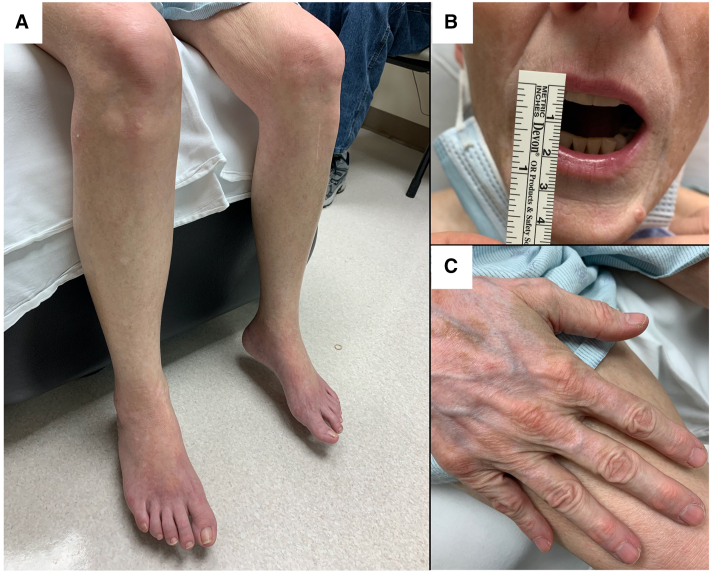
Durvalumab-associated morphea with overlapping vitiligo. Clinical features show smooth, tightened, thickened skin with overlying ill-defined hypopigmented patches on the lower portion of both the legs (A). Perioral sclerosis causes the reduced opening of the mouth (B). The dorsal aspect of the hand shows depigmentation without underlying morphea. There is no sclerodactyly of the hand and no telangiectasias of nail beds (C).
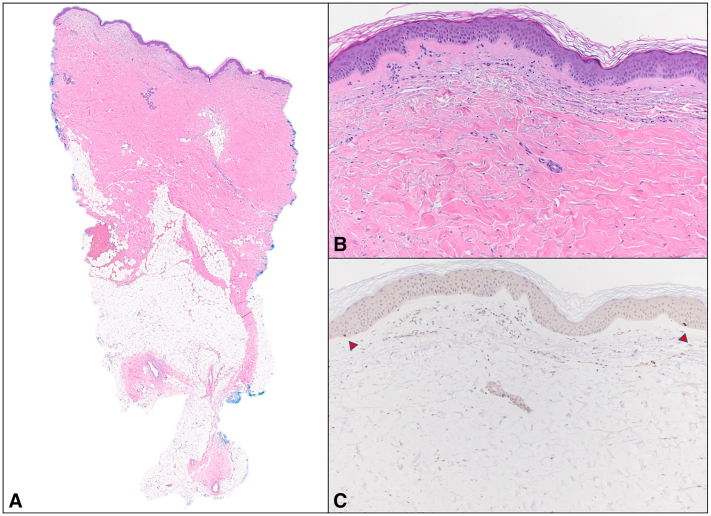
Durvalumab-associated morphea with overlapping vitiligo. Histologic features from punch biopsy on back. Sections showed skin and subcutis with squared silhouette and diffuse dermal fibrosis, with thickened dermal collagen and atrophic adnexal structures (A and B, Hematoxylin-eosin; original magnification: A, ×10; B, ×100). There was a sparse superficial perivascular lymphocytic infiltrate and mild edema in the papillary dermis. An immunohistochemical study with anti-SOX10 highlighted rare, scattered basally located junctional melanocytes (arrowheads) that were markedly reduced in number. (C, Original magnification: ×100.)
References
-
- Paz-Ares L., Dvorkin M., Chen Y., et al. Durvalumab plus platinum-etoposide versus platinum-etoposide in first-line treatment of extensive-stage small-cell lung cancer (CASPIAN): a randomised, controlled, open-label, phase 3 trial. Lancet. 2019;394:1929–1939. doi: 10.1016/S0140-6736(19)32222-6. - DOI - PubMed
Publication types
LinkOut - more resources
Full Text Sources
Research Materials