


Home-based exercise using balance disc and smartphone inclinometer application improves balance and activity of daily living in individuals with stroke: A randomized controlled trial
- PMID: 36409753
- PMCID: PMC9678269
- DOI: 10.1371/journal.pone.0277870
Home-based exercise using balance disc and smartphone inclinometer application improves balance and activity of daily living in individuals with stroke: A randomized controlled trial
Abstract
Background: Sitting ability is critical for daily activities in individuals who have experienced a stroke. A combination of seated balance training on an unstable surface and real-time visual feedback via a simple mobile inclinometer application may improve trunk control in stroke survivors.
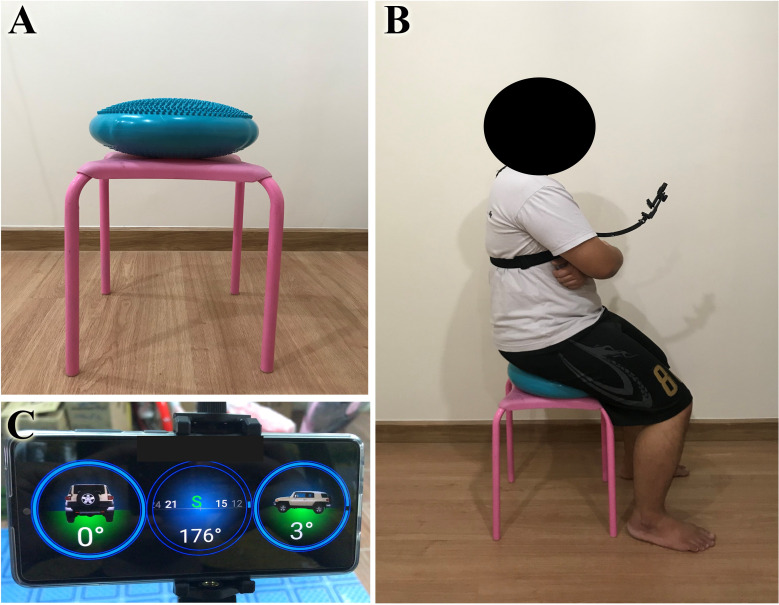
Objective: This randomized controlled trial aimed to determine the effects of home-based exercise utilizing a balance disc with input from a smartphone inclinometer application on sitting balance and activities of daily living in stroke survivors.
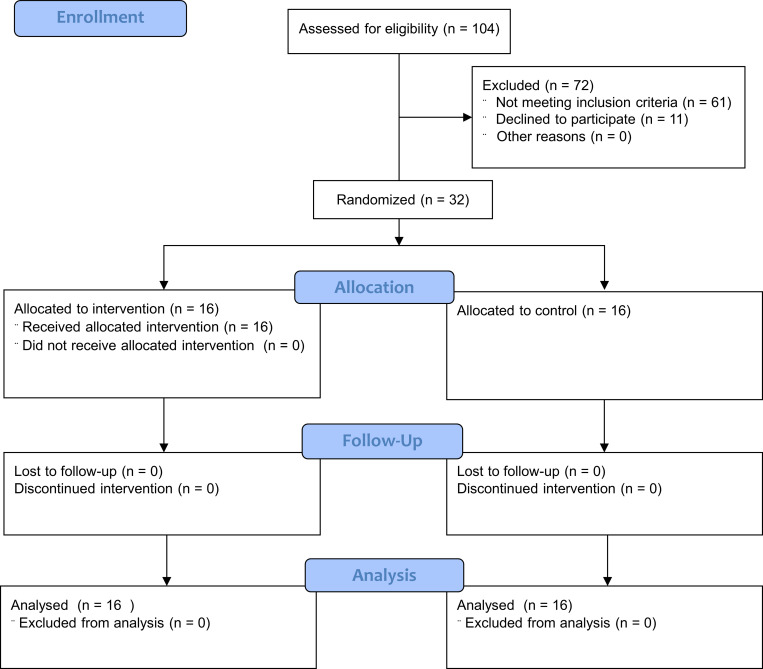
Methods: This trial enrolled 32 stroke survivors aged 30 to 75 years. Participants were randomly assigned to one of two groups: intervention or control. Both groups underwent four weeks of traditional therapy. Additionally, the intervention group received four weeks of multidirectional lean training utilizing a balance disc and a smartphone application with an inclinometer. The Postural Assessment Scale for Stroke (PASS), the Function in Sitting Test (FIST), and the Barthel Index (BI) were used to assess the results. To compare between group effects, an ANCOVA analysis was performed using a baseline as a covariate.
Results: The PASS changing posture and BI were considerably greater in the intervention group compared to the control group. Other metrics revealed no statistically significant differences between the groups.
Conclusion: Home-based training with balance discs and input from a smartphone inclinometer application may improve postural control and daily activity in stroke patients.
Trial registration: Clinical trials registry number: TCTR20210617004.
Copyright: © 2022 Aphiphaksakul, Siriphorn. This is an open access article distributed under the terms of the Creative Commons Attribution License, which permits unrestricted use, distribution, and reproduction in any medium, provided the original author and source are credited.
Conflict of interest statement
The authors have declared that no competing interests exist.
Figures
References
-
- Dabrowska-Bender M, Milewska M, Golabek A, Duda-Zalewska A, Staniszewska A. The Impact of Ischemic Cerebral Stroke on the Quality of Life of Patients Based on Clinical, Social, and Psychoemotional Factors. J Stroke Cerebrovasc Dis. 2017;26(1):101–7. Epub 2016/10/18. doi: 10.1016/j.jstrokecerebrovasdis.2016.08.036 . - DOI - PubMed
Publication types
MeSH terms
LinkOut - more resources
Full Text Sources
Medical
