


A genetically informed prediction model for suicidal and aggressive behaviour in teens
- PMID: 36411277
- PMCID: PMC9678913
- DOI: 10.1038/s41398-022-02245-w
A genetically informed prediction model for suicidal and aggressive behaviour in teens
Abstract
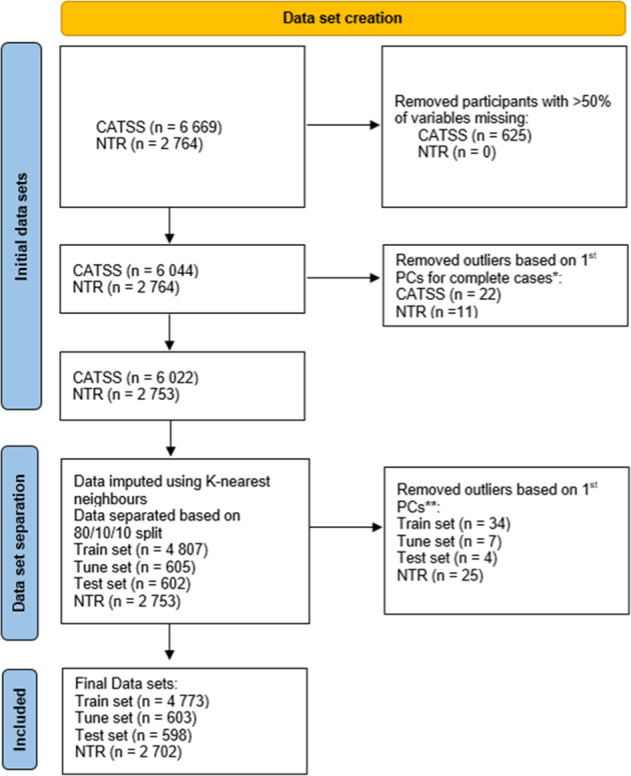
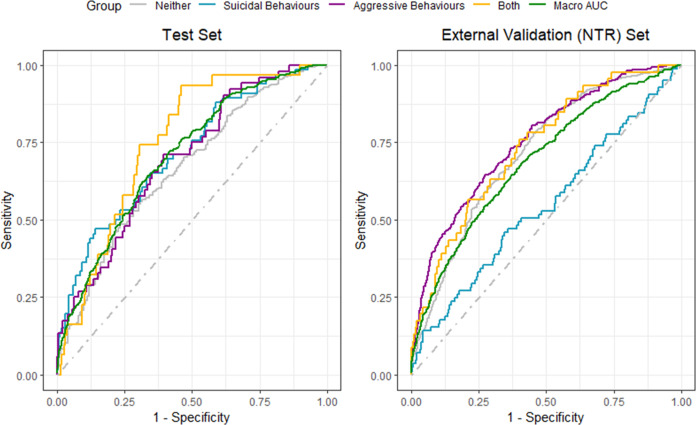
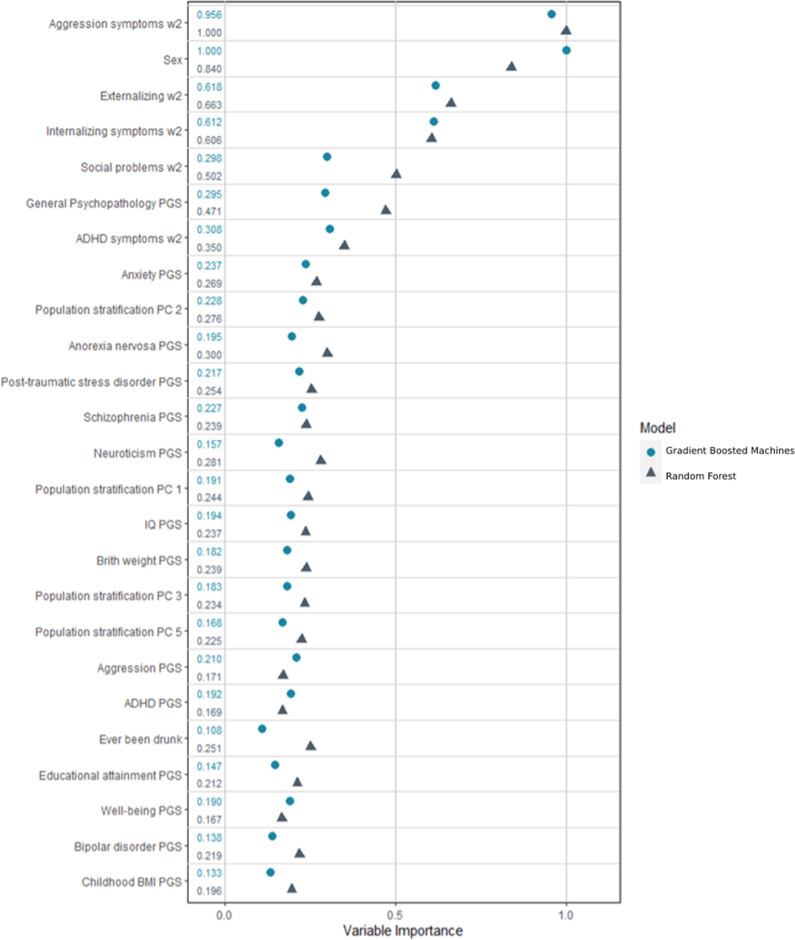
Suicidal and aggressive behaviours cause significant personal and societal burden. As risk factors associated with these behaviours frequently overlap, combined approaches in predicting the behaviours may be useful in identifying those at risk for either. The current study aimed to create a model that predicted if individuals will exhibit suicidal behaviour, aggressive behaviour, both, or neither in late adolescence. A sample of 5,974 twins from the Child and Adolescent Twin Study in Sweden (CATSS) was broken down into a training (80%), tune (10%) and test (10%) set. The Netherlands Twin Register (NTR; N = 2702) was used for external validation. Our longitudinal data featured genetic, environmental, and psychosocial predictors derived from parental and self-report data. A stacked ensemble model was created which contained a gradient boosted machine, random forest, elastic net, and neural network. Model performance was transferable between CATSS and NTR (macro area under the receiver operating characteristic curve (AUC) [95% CI] AUCCATSS(test set) = 0.709 (0.671-0.747); AUCNTR = 0.685 (0.656-0.715), suggesting model generalisability across Northern Europe. The notable exception is suicidal behaviours in the NTR, which was no better than chance. The 25 highest scoring variable importance scores for the gradient boosted machines and random forest models included self-reported psychiatric symptoms in mid-adolescence, sex, and polygenic scores for psychiatric traits. The model's performance is comparable to current prediction models that use clinical interviews and is not yet suitable for clinical use. Moreover, genetic variables may have a role to play in predictive models of adolescent psychopathology.
© 2022. The Author(s).
Conflict of interest statement
HL reports receiving grants from Shire Pharmaceuticals; personal fees from and serving as a speaker for Medice, Shire/Takeda Pharmaceuticals and Evolan Pharma AB; and sponsorship for a conference on attention-deficit/hyperactivity disorder from Shire/Takeda Pharmaceuticals and Evolan Pharma AB, all outside the submitted work. All other authors report no conflicts of interest.
Figures
References
-
- Brownstein HH The social reality of violence and violent crime: Allyn and Bacon Boston; 2000.
Publication types
MeSH terms
LinkOut - more resources
Full Text Sources
Medical
Research Materials
