Comprehensive nationwide incidence and prevalence trends of atrial fibrillation in Finland
- PMID: 36414332
- PMCID: PMC9685262
- DOI: 10.1136/openhrt-2022-002140
Comprehensive nationwide incidence and prevalence trends of atrial fibrillation in Finland
Abstract
Objective: Atrial fibrillation (AF) is a worldwide healthcare challenge owing to population ageing. In this study, we assessed the current trends in the incidence and prevalence of AF for the first time in an unselected, nationwide population.
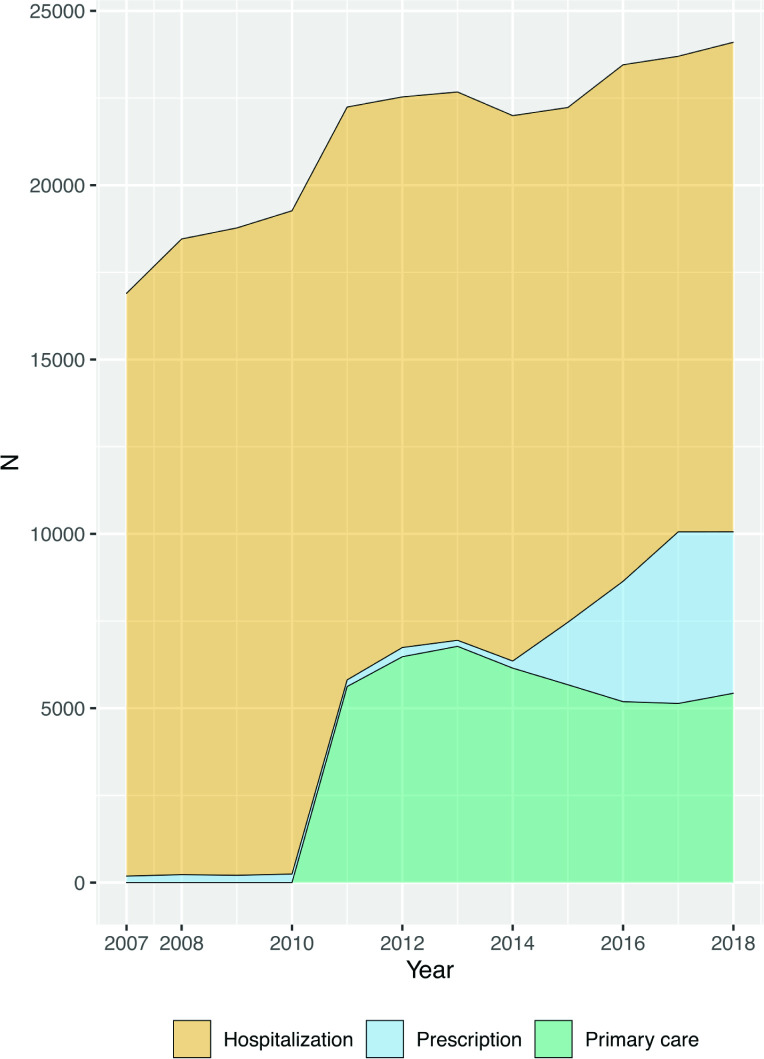
Methods: In the Finnish Anticoagulation in Atrial Fibrillation study, we gathered comprehensive data including all primary, secondary and tertiary healthcare visits and drug reimbursement from national healthcare registers to identify all patients with incident AF between 2004 and 2018 in Finland. Incident AF was defined as new-onset AF occurring after 2007. Time trends for the incidence and prevalence of AF were calculated and stratified by sex and age.
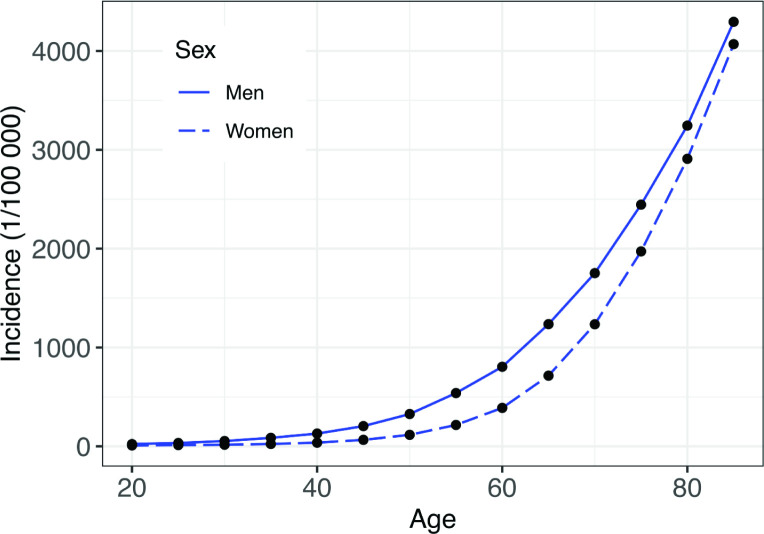
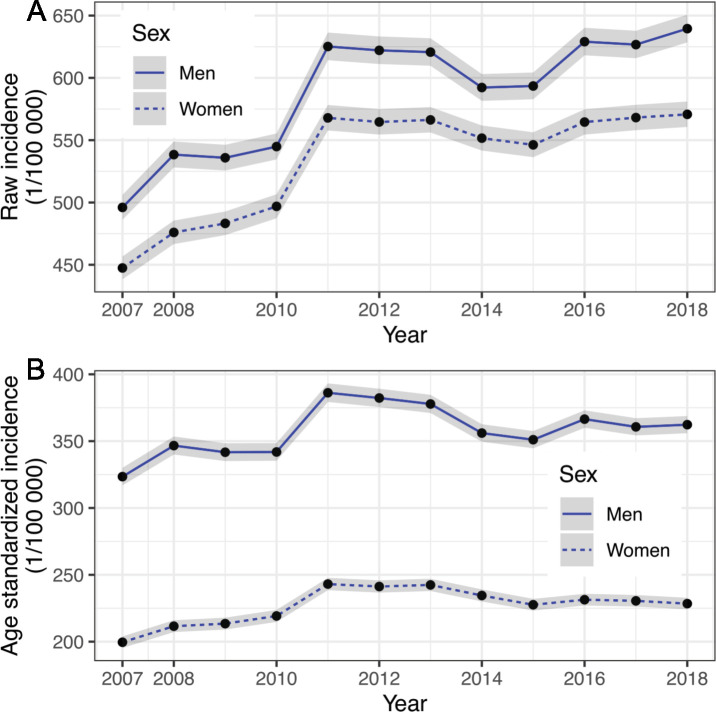
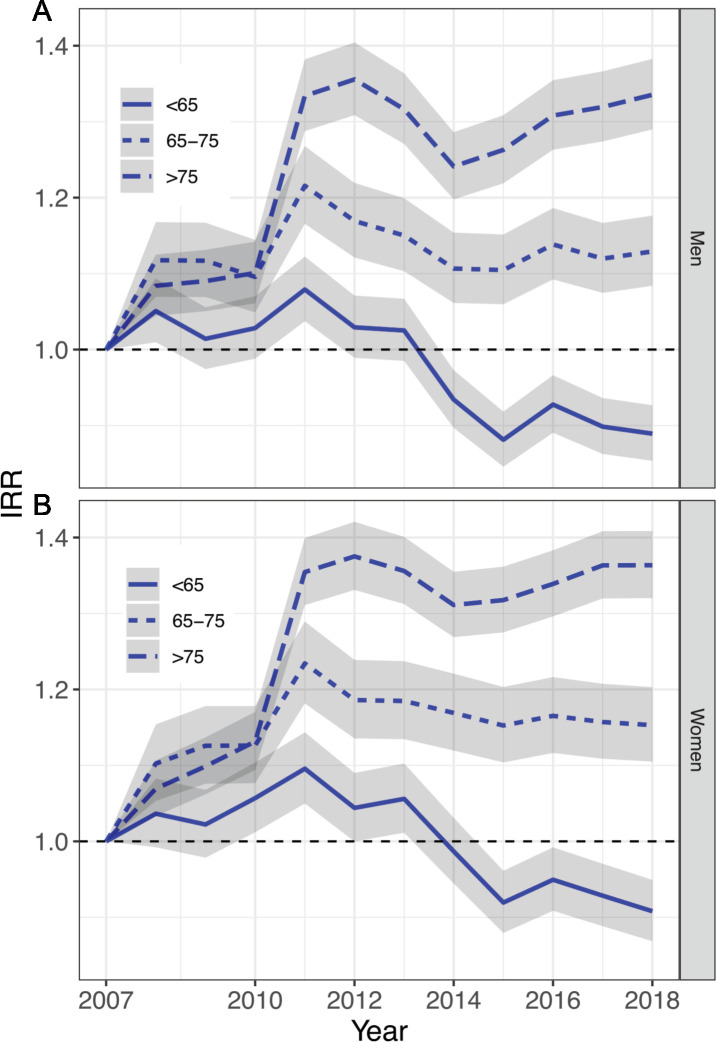
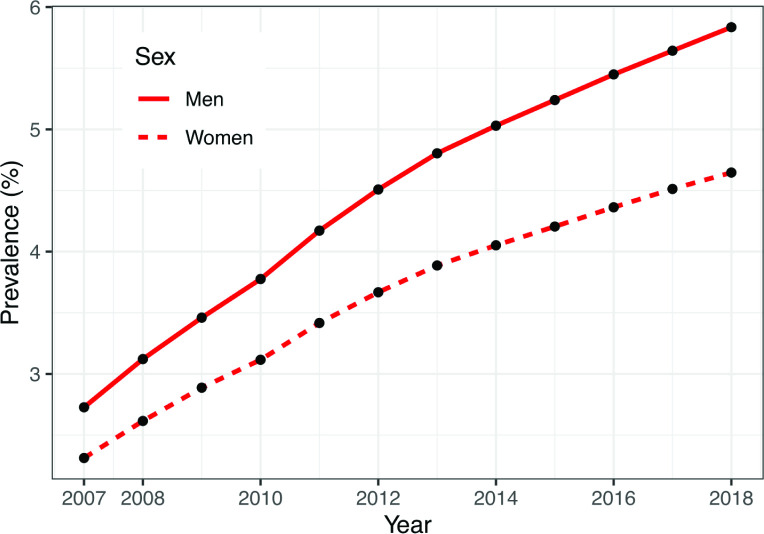
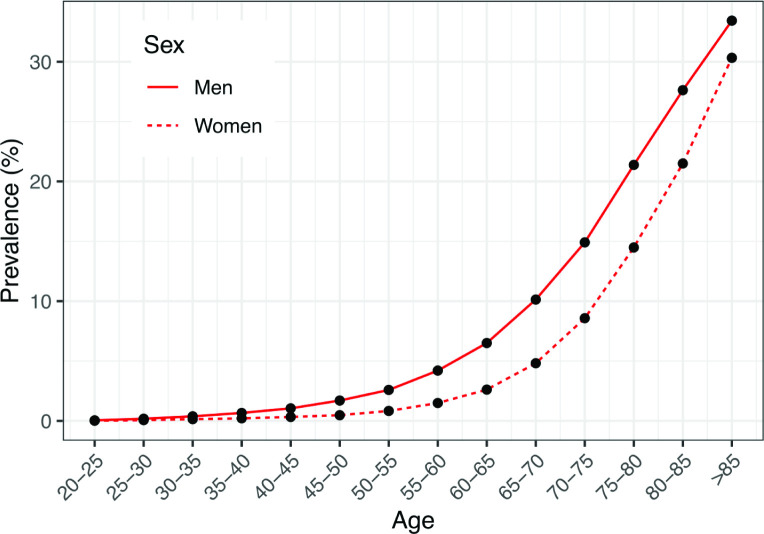
Results: A total of 411 387 patients with AF diagnosis were documented in Finland during 2004-2018. In 2018, the incidence and prevalence of AF in the total Finnish population were 469/100 000 and 4.1%, respectively. The incidence of new-onset AF in the adult population (≥20 years) increased from 471/100 000 in 2007 to 604/100 000 in 2018, but the age-adjusted incidence remained stable. The prevalence of AF increased in the adult population from 2.5% to 5.2%, and was higher in men than in women (5.9% vs 4.6%, p<0.001). The incidence and prevalence of AF increased with age and were 3194/100 000 and 23.4% in patients older than 75 years.
Conclusions: Based on comprehensive nationwide data including primary care, we observed an increasing incidence and prevalence of AF over time. This increase was strongly age-dependent with the age-standardised incidence remaining stable during 2007-2018.
Trial registration number: NCT04645537.
Keywords: Atrial Fibrillation; Epidemiology; Health Care Economics and Organizations.
© Author(s) (or their employer(s)) 2022. Re-use permitted under CC BY-NC. No commercial re-use. See rights and permissions. Published by BMJ.
Conflict of interest statement
Competing interests: MLe: Consultant: BMS-Pfizer-alliance, Bayer, Boehringer-Ingelheim and MSD; Speaker: BMS-Pfizer-alliance, Bayer, Boehringer-Ingelheim, MSD, Terve Media and Orion Pharma. Research grants: Aarne Koskelo Foundation, The Finnish Foundation for Cardiovascular Research, and Helsinki and Uusimaa Hospital District research fund, Boehringer-Ingelheim. JHau: Consultant: Research Janssen R&D; Speaker: Bayer Finland. AA: Research grants: Finnish Foundation for Cardiovascular Research; Speaker: Abbott, Johnson&Johnson, Sanofi, Bayer, Boehringer Ingelheim. JP: Consultant: Boehringer-Ingelheim, Bayer, BMS-Pfizer, Abbott/St. Jude Medical, Vital Signum, Nokia Technologies, Bittium, BcB Medical, Herantis Pharma, Medixine, and Portola. Speaker: Boehringer-Ingelheim, Bayer, BMS-Pfizer, and Terve Media; Research grants: BMS-Pfizer, Abbott/St. Jude Medical, Business Finland, and Amgen. MLi: Speaker: BMS-Pfizer-alliance, Bayer, Boehringer-Ingelheim. PM: Consultant: Roche, BMS-Pfizer-alliance, Novartis Finland, Boehringer Ingelheim, MSD Finland. JHar: Research grants: The Finnish Foundation for Cardiovascular Research, Advisory Board Member: BMS-Pfizer-alliance, Novo Nordisk, Amgen. Speaker: Cardiome, Bayer. JKEA: Research grants: The Finnish Foundation for Cardiovascular Research; Speaker: Bayer, Pfizer and Boehringer-Ingelheim. Member in the advisory boards:Bayer, Pfizer and AstraZeneca.
Figures
References
Publication types
MeSH terms
Associated data
LinkOut - more resources
Full Text Sources
Medical