


Home care nurses' management of high-risk medications: a cross-sectional study
- PMID: 36414977
- PMCID: PMC9682630
- DOI: 10.1186/s40545-022-00476-2
Home care nurses' management of high-risk medications: a cross-sectional study
Abstract
Background: High-risk medications use at home entails an increased risk of significant harm to the patient. While interventions and strategies to improve medications care have been implemented in hospitals, it remains unclear how this type of medications care is provided in the home care setting. The objective was to describe home care nurses' management of high-risk medications.
Methods: A cross-sectional, descriptive design was set up in home care nurses in Flanders, Belgium. Participants were recruited through convenience sampling and could be included in the study if they provided medications care and worked as a home care nurses. Participants completed an online structured questionnaire. Questions were asked about demographic information, work experience, nurses' general attitude regarding high-risk medications, contact with high-risk medications and the assessment of risk and severity of harm, specific initiatives undertaken to improve high-risk medications care and the use of additional measures when dealing with high-risk medications. Descriptive statistics were used.
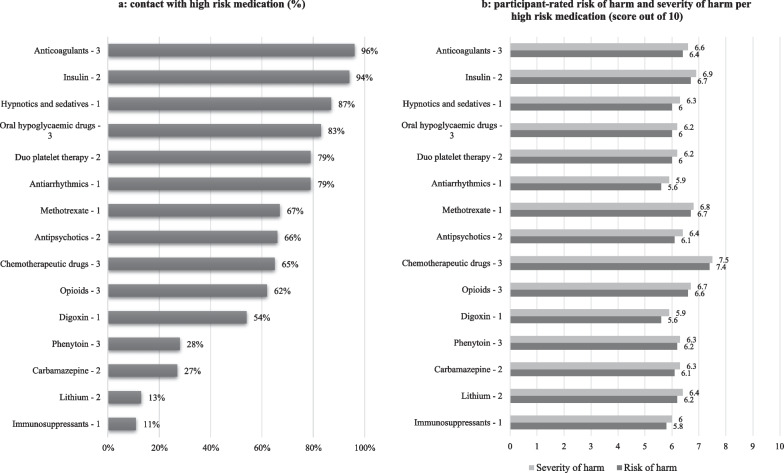
Results: A total of 2283 home care nurses participated in this study. In our study, 98% of the nurses reported dealing high-risk medications. Home care nurses dealt the most with anticoagulants (96%), insulin (94%) and hypnotics and sedatives (87%). Most nurses took additional measures with high-risk medications in less than 25% of the cases, with the individual double check being the most performed measure for all high-risk medications except lithium. Nurses employed by an organization received support mostly in the form of a procedure while self-employed nurses mostly look for support through external organizations and information sources.
Conclusions: The study shows several gaps regarding high-risk medications care, which can imply safety risks. Implementation and evaluation of more standardized high-risk medications care, developing and implementing procedures or guidelines and providing continuous training for home care nurses are advised.
Keywords: Community care; Cross-sectional study; High-risk medications; Home care nurse; Medications care.
© 2022. The Author(s).
Conflict of interest statement
The authors declare that they have no competing interests.
Figures
References
-
- Silva L, Sena R, Silva P, Souza C, Martins A. The nurse’s role in home care: its implications for the training process. Cienc Cuid Saude. 2014;13(3):503–510. doi: 10.4025/cienccuidsaude.v13i3.19227. - DOI
-
- Andrade A, Silva K, Seixas C, Braga P. Nursing practice in home care: an integrative literature review. Rev Bras Enferm [Internet]. 2017;70(1). - PubMed
-
- Kovner C, Menezes J, Goldberg JD. Examining nurses’ decision process for medication management in home care. Jt Comm J Qual patient Saf [Internet]. 2005;31(7):379–385. - PubMed
-
- De Baetselier E, Dilles T, Batalha LM, Dijkstra NE, Fernandes MI, Filov I, et al. Perspectives of nurses’ role in interprofessional pharmaceutical care across 14 European countries: a qualitative study in pharmacists, physicians and nurses. PLoS ONE. 2021;16(5):23. doi: 10.1371/journal.pone.0251982. - DOI - PMC - PubMed
Grants and funding
LinkOut - more resources
Full Text Sources
