


PROTAC therapy as a new targeted therapy for lung cancer
- PMID: 36415148
- PMCID: PMC10014230
- DOI: 10.1016/j.ymthe.2022.11.011
PROTAC therapy as a new targeted therapy for lung cancer
Abstract
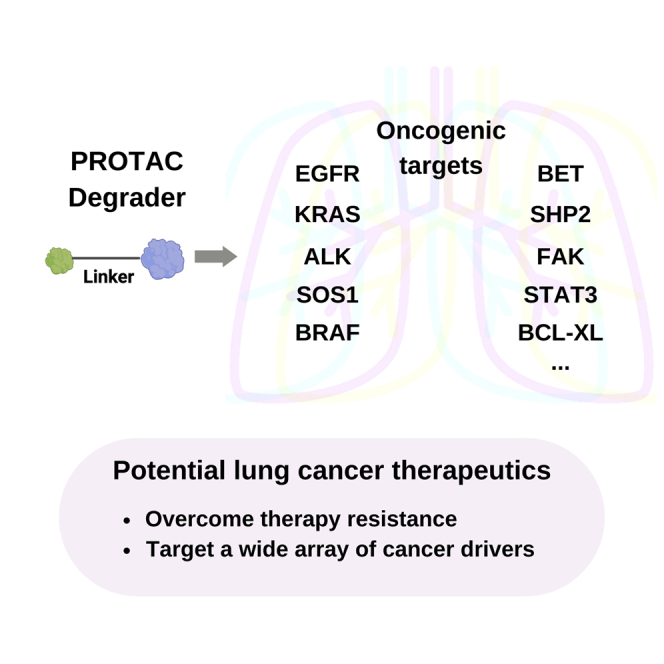
Despite recent advances in molecular therapeutics, lung cancer is still a leading cause of cancer deaths. Currently, limited targeted therapy options and acquired drug resistance present significant barriers in the treatment of patients with lung cancer. New strategies in drug development, including those that take advantage of the intracellular ubiquitin-proteasome system to induce targeted protein degradation, have the potential to advance the field of personalized medicine for patients with lung cancer. Specifically, small molecule proteolysis targeting chimeras (PROTACs), consisting of two ligands connected by a linker that bind to a target protein and an E3 ubiquitin ligase, have been developed against many cancer targets, providing promising opportunities for advanced lung cancer. In this review, we focus on the rationale for PROTAC therapy as a new targeted therapy and the current status of PROTAC development in lung cancer.
Keywords: PROTACs; argeted protein degradation; lung cancer; proteolysis targeting chimeras; targeted therapy.
Copyright © 2022 The Author(s). Published by Elsevier Inc. All rights reserved.
Conflict of interest statement
Declaration of interests G.Z. is co-founder of and has equity in Dialectic Therapeutics, which develops BCL-XL/2 PROTACs as cancer therapeutics.
Figures

References
Publication types
MeSH terms
Substances
Grants and funding
LinkOut - more resources
Full Text Sources
Medical
