Oral Administration of Mice with Cell Extracts of Recombinant Lactococcus lactis IL1403 Expressing Mouse Receptor Activator of NF-kB Ligand (RANKL)
- PMID: 36415570
- PMCID: PMC9647179
- DOI: 10.5851/kosfa.2022.e54
Oral Administration of Mice with Cell Extracts of Recombinant Lactococcus lactis IL1403 Expressing Mouse Receptor Activator of NF-kB Ligand (RANKL)
Abstract
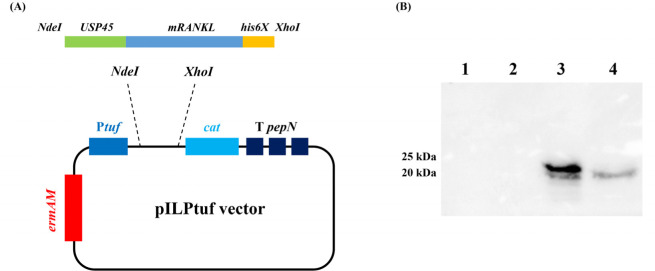
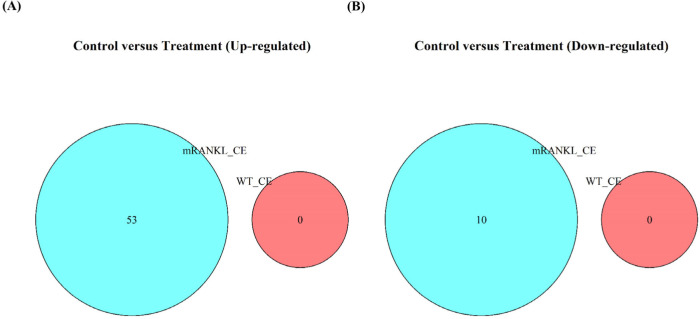
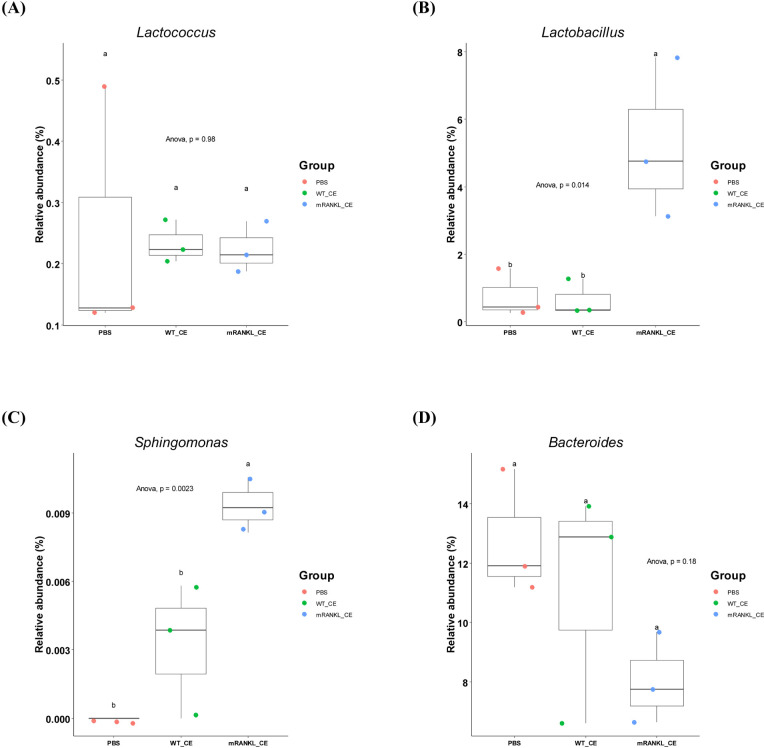
Receptor activator of NF-kB ligand (RANKL) is known to play a major role in bone metabolism and the immune system, and its recombinant form has been expressed in bacterial systems for research since the last two decades. However, most of these recombinant forms are used after purification or directly using living cells. Here, there were cell extracts of recombinant Lactococcus lactis expressing mouse RANKL (mRANKL) used to evaluate its biological activity in mice. Mice were divided into three groups that were fed phosphate-buffered saline (PBS), wild-type L. lactis IL1403 (WT_CE), and recombinant L. lactis expressing mRANKL (mRANKL_CE). The small intestinal transcriptome and fecal microbiome were then profiled. The biological activity of mRANKL_CE was confirmed by studying RANK-RANKL signaling in vitro and in vivo. For small intestinal transcriptome, differentially expressed genes (DEGs) were identified in the mRANKL_CE group, and no DEGs were found in the WT_CE group. In the PBS vs. mRANKL_CE gene enrichment analysis, upregulated genes were enriched for heat shock protein binding, regulation of bone resorption, and calcium ion binding. In the gut microbiome analysis, there were no critical changes among the three groups. However, Lactobacillus and Sphingomonas were more abundant in the mRANKL_CE group than in the other two groups. Our results indicate that cell extracts of mRANKL_CE can play an effective role without a significant impact on the intestine. This strategy may be useful for the development of protein drugs.
Keywords: Lactococcus lactis; cell extracts; microbiome; receptor activator of NF-kB ligand (RANKL); transcriptome.
© Korean Society for Food Science of Animal Resources.
Conflict of interest statement
The authors declare no potential conflicts of interest.
Figures
References
-
- Benjamini Y, Hochberg Y. Controlling the false discovery rate: A practical and powerful approach to multiple testing. J R Stat Soc Ser B. 1995;57:289–300. doi: 10.1111/j.2517-6161.1995.tb02031.x. - DOI
-
- Eriksson K, Lundmark A, Delgado LF, Hu YOO, Fei G, Lee L, Fei C, Catrina AI, Jansson L, Andersson AF, Yucel-Lindberg T. Salivary microbiota and host-inflammatory responses in periodontitis affected individuals with and without rheumatoid arthritis. Front Cell Infect Microbiol. 2022;12:841139. doi: 10.3389/fcimb.2022.841139. - DOI - PMC - PubMed
LinkOut - more resources
Full Text Sources