


Evening Light Intensity and Phase Delay of the Circadian Clock in Early Childhood
- PMID: 36415902
- PMCID: PMC11302507
- DOI: 10.1177/07487304221134330
Evening Light Intensity and Phase Delay of the Circadian Clock in Early Childhood
Abstract
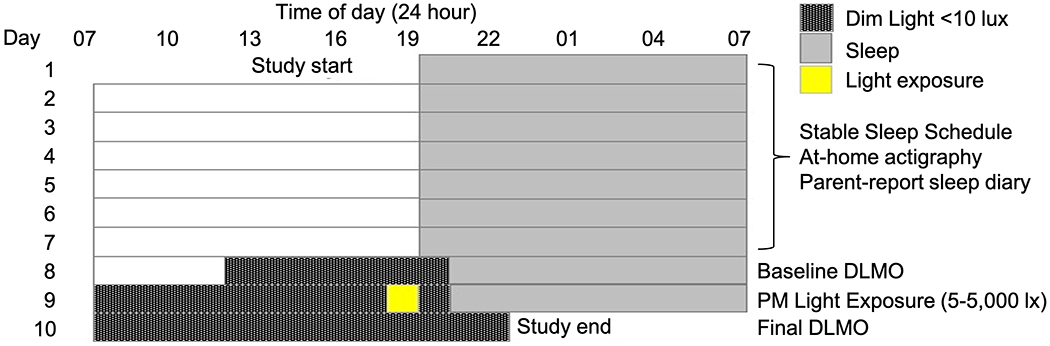
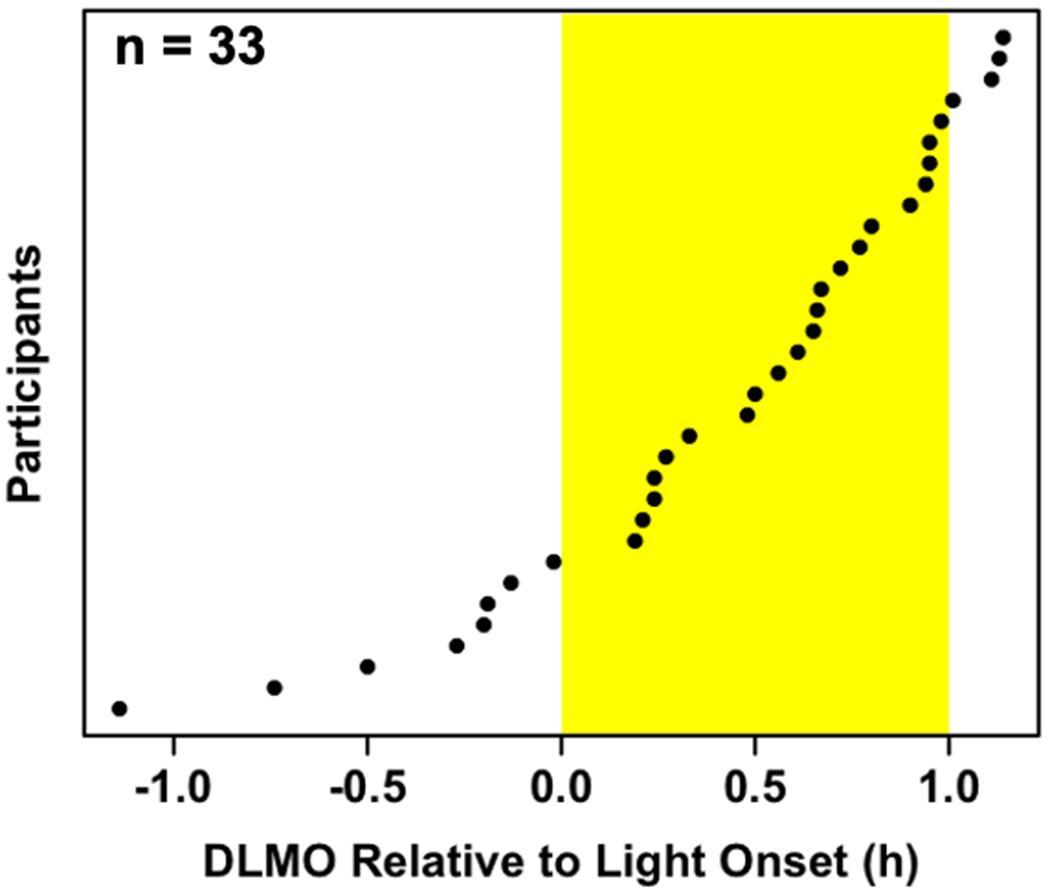
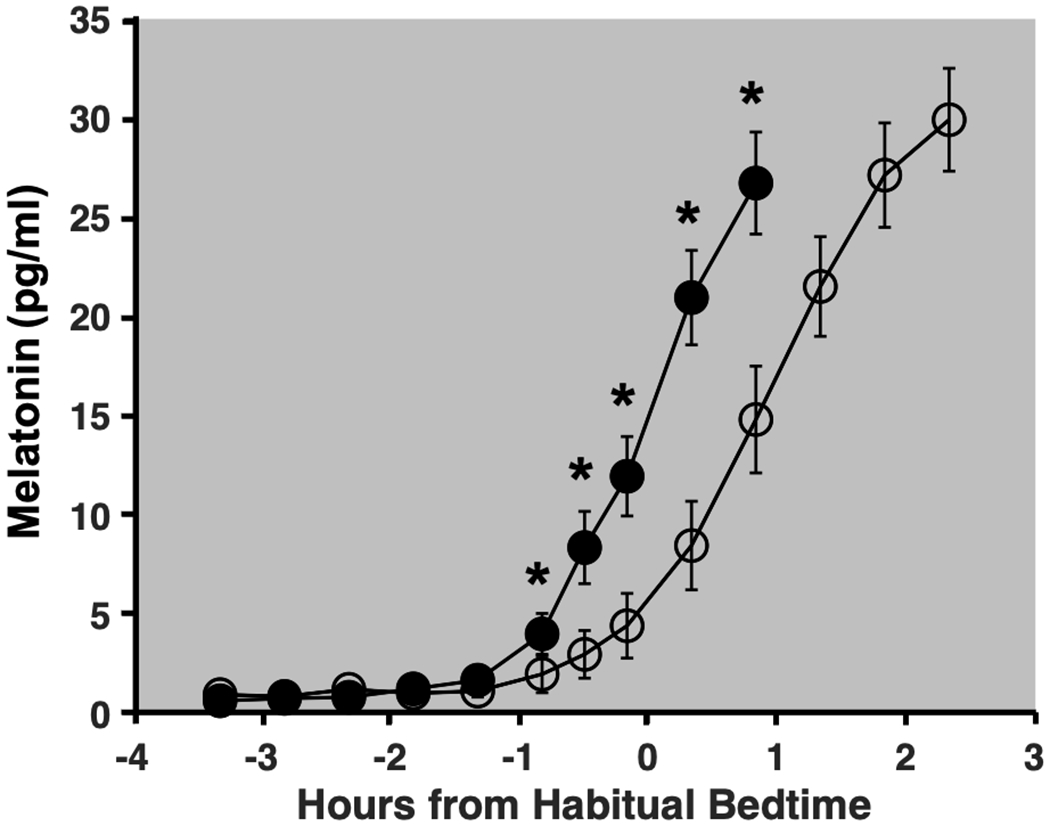
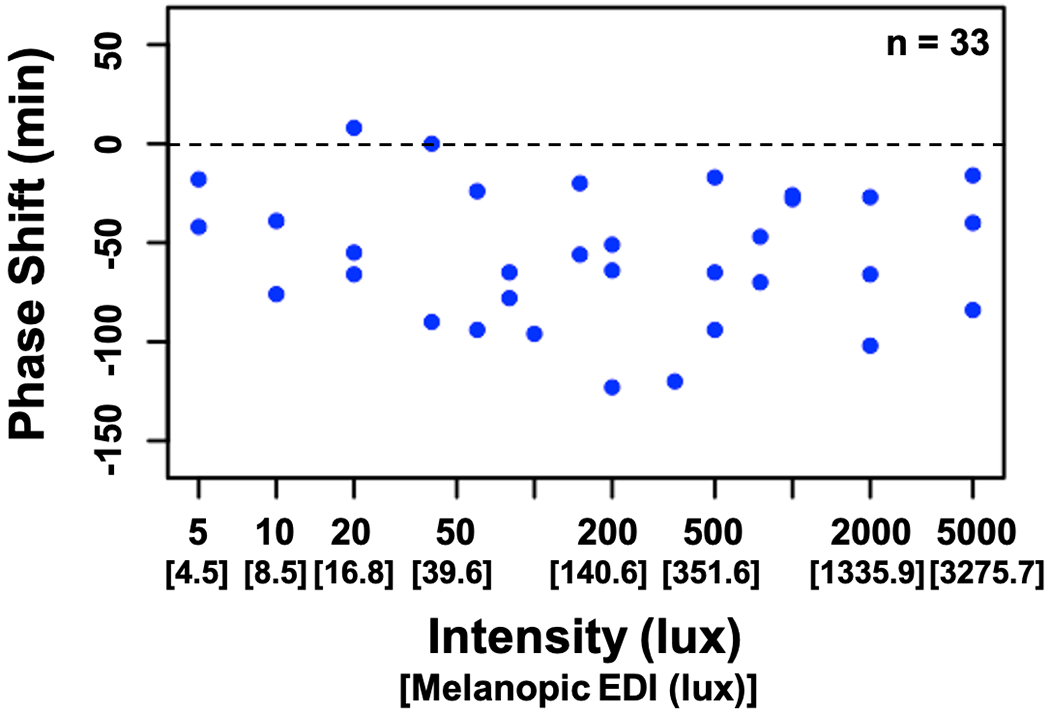
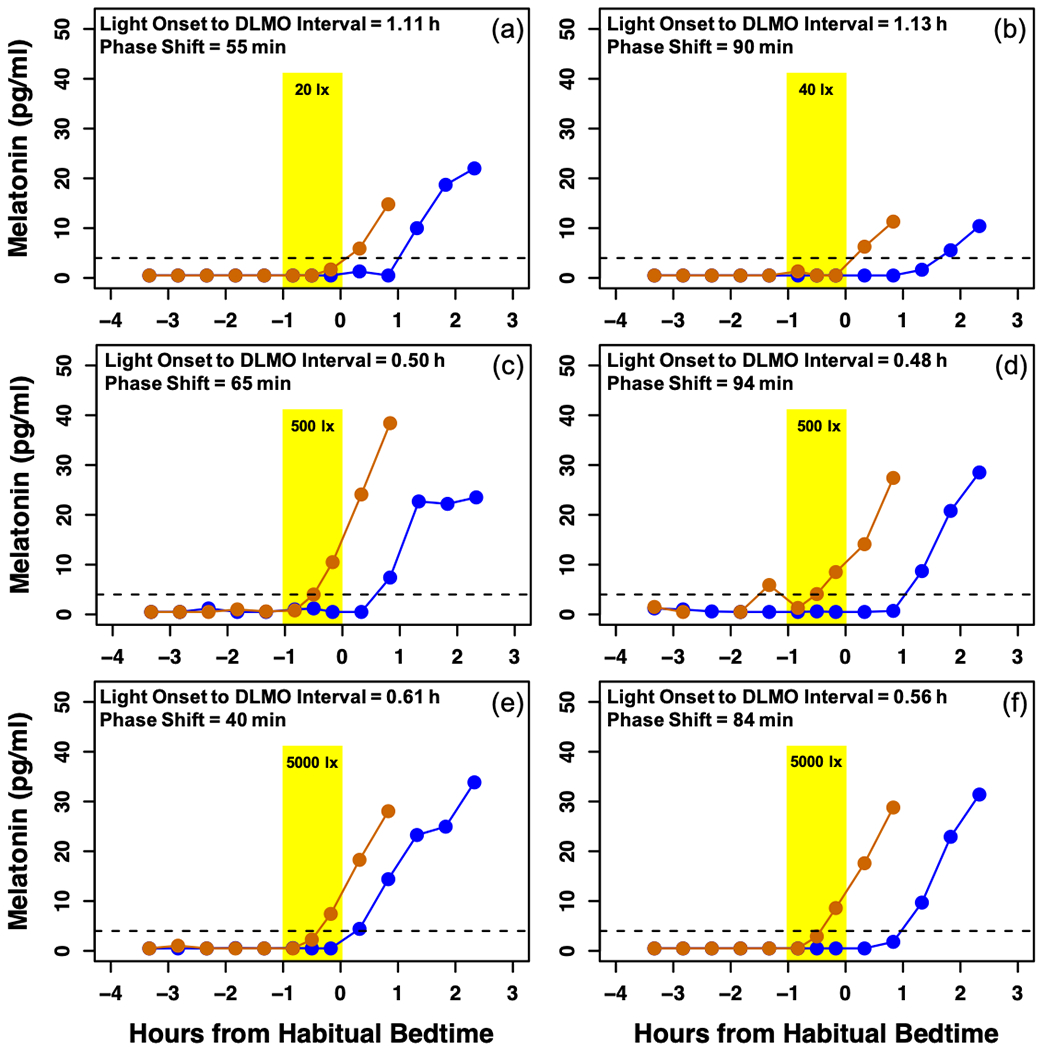
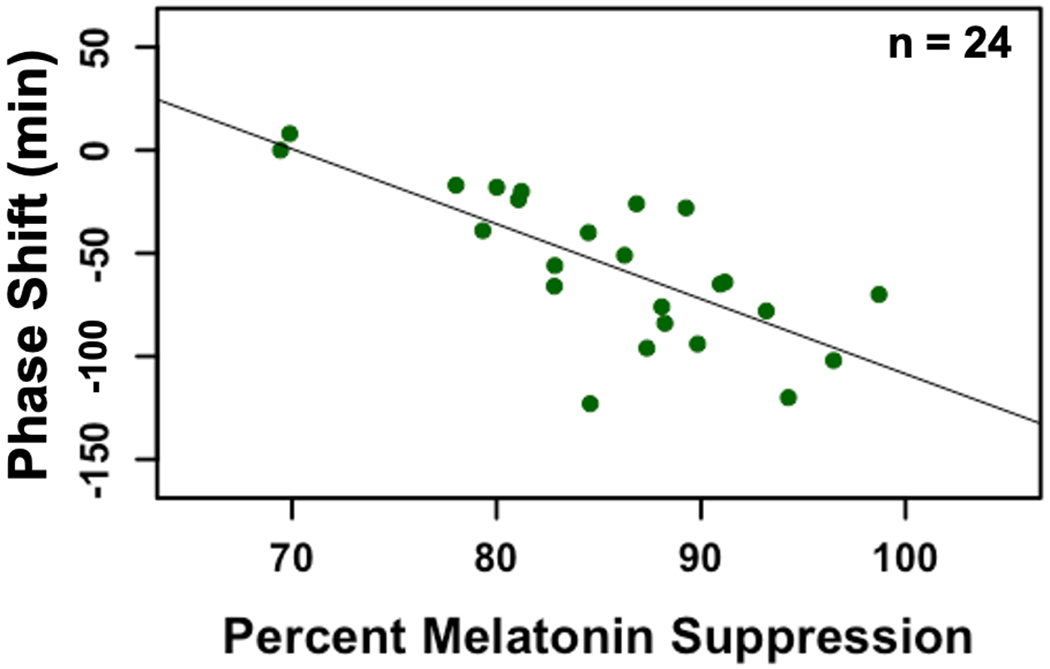
Late sleep timing is prevalent in early childhood and a risk factor for poor behavioral and health outcomes. Sleep timing is influenced by the phase of the circadian clock, with later circadian timing linked to delayed sleep onset in young children. Light is the strongest zeitgeber of circadian timing and, in adults, evening light produces circadian phase delay in an intensity-dependent manner. The intensity-dependent circadian phase-shifting response to evening light in children, however, is currently unknown. In the present study, 33 healthy, good-sleeping children aged 3.0 to 4.9 years (M = 4.14 years, 39% male) completed a 10-day between-subjects protocol. Following 7 days of a stable sleep schedule, an in-home dim-light circadian assessment was performed. Children remained in dim-light across 3 days (55 h), with salivary melatonin collected in regular intervals throughout each evening. Phase-shifting effects of light exposure were determined via changes in the timing of the dim-light melatonin onset (DLMO) prior to (Day 8) and following (Day 10) a light exposure stimulus. On Day 9, children were exposed to a 1 h light stimulus in the hour before their habitual bedtime. Each child was randomly assigned to one intensity between 5 and 5000 lux (4.5-3276 melanopic EDI). Across light intensities, children showed significant circadian phase delays, with an average phase delay of 56.1 min (SD = 33.6 min), and large inter-individual variability. No relationship between light intensity and magnitude of the phase shift was observed. However, a greater percentage of melatonin suppression during the light exposure was associated with a greater phase delay (r = -0.73, p < 0.01). These findings demonstrate that some young children may be highly sensitive to light exposure in the hour before bedtime and suggest that the home lighting environment and its impact on circadian timing should be considered a possible contributor to behavioral sleep difficulties.
Keywords: child development; circadian rhythm; light; phase delay; preschool; sleep.
Figures
References
-
- Beltramini AU and Hertzig ME (1983) Sleep and bedtime behavior in preschool-aged children. Pediatrics 71(2):153–158. - PubMed
-
- Boivin DB, Duffy JF, Kronauer RE, Czeisler CA (1996) Dose-response relationships for resetting of human circadian clock by light. Nature 379(6565):540–542. - PubMed
-
- Bruni O, Reto FL, Miano S, Ottaviano S (2000) Daytime behavioral correlates of awakenings and bedtime resistance in preschool children. Suppl Clin Neurophysiol 53:358–361. - PubMed
Publication types
MeSH terms
Substances
Grants and funding
LinkOut - more resources
Full Text Sources
Medical
