. 2022 Nov 23;13(1):7193.
doi: 10.1038/s41467-022-34767-8.

Breakup of the proton halo nucleus 8B near barrier energies

Affiliations

Breakup of the proton halo nucleus 8B near barrier energies

L Yang et al. Nat Commun. .

Abstract

The dynamics of a nuclear open quantum system could be revealed in the correlations between the breakup fragments of halo nuclei. The breakup mechanism of a proton halo nuclear system is of particular interest as the Coulomb polarization may play an important role, which, however, remains an open question. Here we use a highly efficient silicon detector array and measure the correlations between the breakup fragments of 8B incident on 120Sn at near-barrier energies. The energy and angular correlations can be explained by a fully quantum mechanical method based on the state-of-the-art continuum discretized coupled channel calculations. The results indicate that, compared to the neutron halo nucleus 6He, 8B presents distinctive reaction dynamics: the dominance of the elastic breakup. This breakup occurs mainly via the short-lived continuum states, almost exhausts the 7Be yield, indicating the effect of Coulomb polarization on the proton halo state. The correlation information reveals that the prompt breakup mechanism dominates, occurring predominantly on the outgoing trajectory. We also show that, as a large environment, the continuum of 8B breakup may not significantly influence elastic scattering and complete fusion.


Conflict of interest statement

The authors declare no competing interests.

Figures
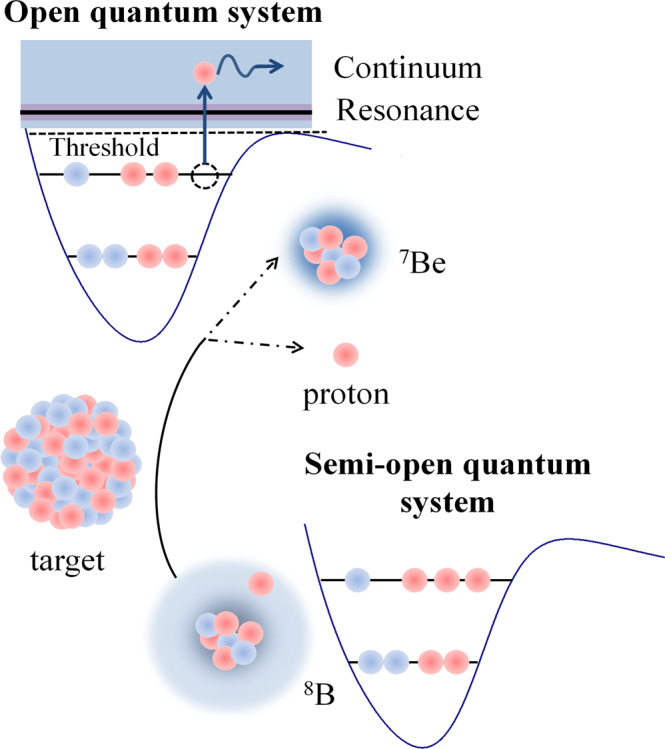
Fig. 1
Fig. 1. Illustration of 8B breaking up into 7Be and proton.
In the initial state, the nucleons in 8B occupy bound single particle orbits in the potential well. Although located in the potential well, the halo proton is extremely weakly-bound in an extended distribution around the centrum 7Be core. It hence can be regarded as a semi-open quantum system. During the collision, 8B is excited to the unbound states above the breakup threshold (either resonant or non-resonant), forming an open quantum system.
Fig. 2
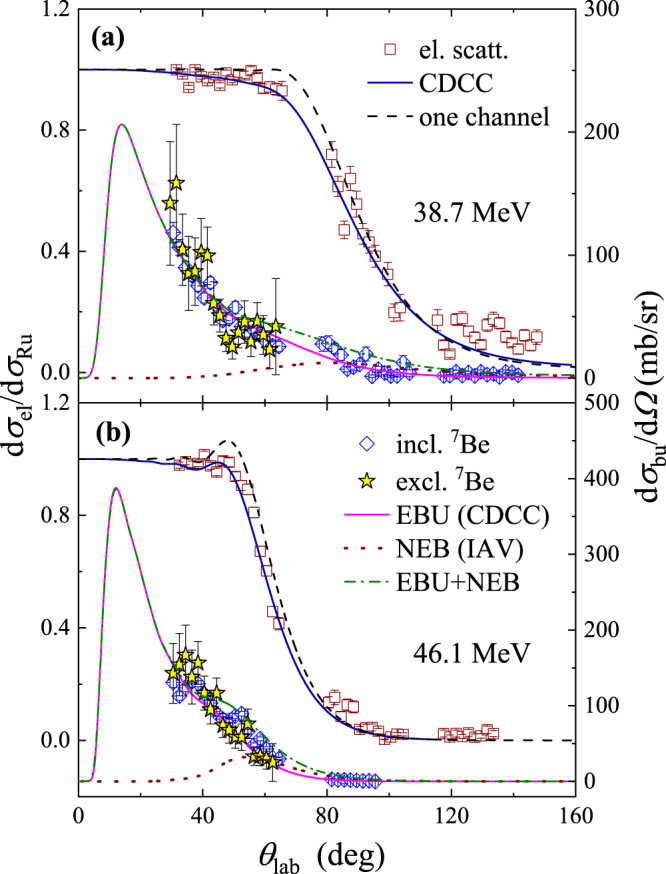
Fig. 2. Angular distributions of elastic scattering and breakup reactions.
Squares, diamonds and stars denote the experimental data of elastic scattering, inclusive and exclusive breakup at a 38.7 and b 46.1 MeV, respectively. The elastic scattering and breakup data are respectively related to the left and right axes. The error bars indicate the statistical uncertainties. CDCC results for elastic scattering and elastic breakup (EBU) are shown by the blue and magenta solid curves, respectively. As a comparison, the one-channel calculations for the elastic scattering are represented by the dashed curves. The dotted lines correspond to the non-elastic breakup (NEB) contributions, which are derived from the IAV model calculations. The dash-dotted lines stand for the sum of EBU and NEB.
Fig. 3
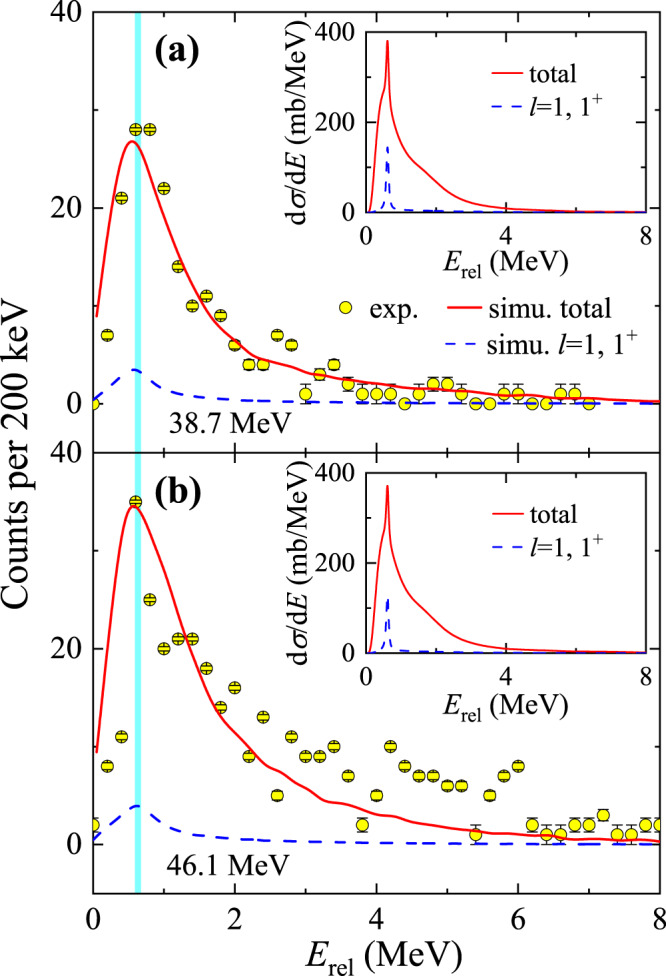
Fig. 3. Measured Erel distributions for breakup fragments 7Be and proton.
The experimental data (circles) at a 38.7 and b 46.1 MeV are compared with the simulated distributions of Erel (solid curves). The error bars show the associated statistical uncertainties. The dashed curves denote simulation results of p-wave 1+ state. The raw theoretical Erel distributions from CDCC are shown in the insets, where the solid and dashed curves represent the calculations with the orbital angular momentum up to l = 3 (total) and the contributions from the p-wave (l = 1) 1+ state. The vertical line indicates the expected location of the peak from the first 1+ resonance of 8B.
Fig. 4
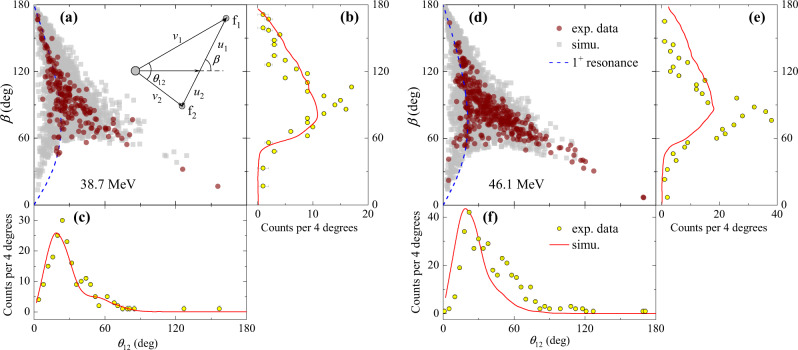
Fig. 4. Angular correlations of breakup fragments 7Be and proton.
Comparison of experimental data (circles, with error bars indicating the associated statistical uncertainties) with simulations (squares) for correlations of β and θ12 at a 38.7 and d 46.1 MeV. The dashed curves show the expected β-θ12 correlation assuming asymptotic breakup from the 1+ resonance of 8B. The projections of β and θ12 at the corresponding energies are shown in b, c, and e, f, respectively, where the solid curves represent the simulations based on the CDCC calculations. The inset in a illustrates the definitions of β and θ12. The error bars show the associated statistical uncertainties.
Fig. 5
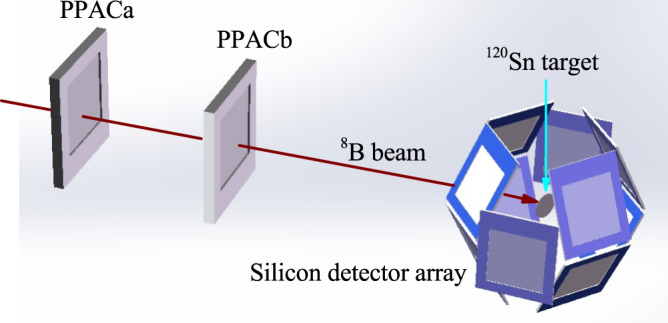
Fig. 5. Schematic view of the experimental setup.
The upstream and downstream parallel plate avalanche counters (PPACs) are denoted as the PPACa and PPACb, respectively. Ten silicon detector telescopes surround the 120Sn target, arranged in a spherical shape with a radius around 70 mm. To demonstrate clearly, only the first layers of the silicon detector array are displayed.
Fig. 6
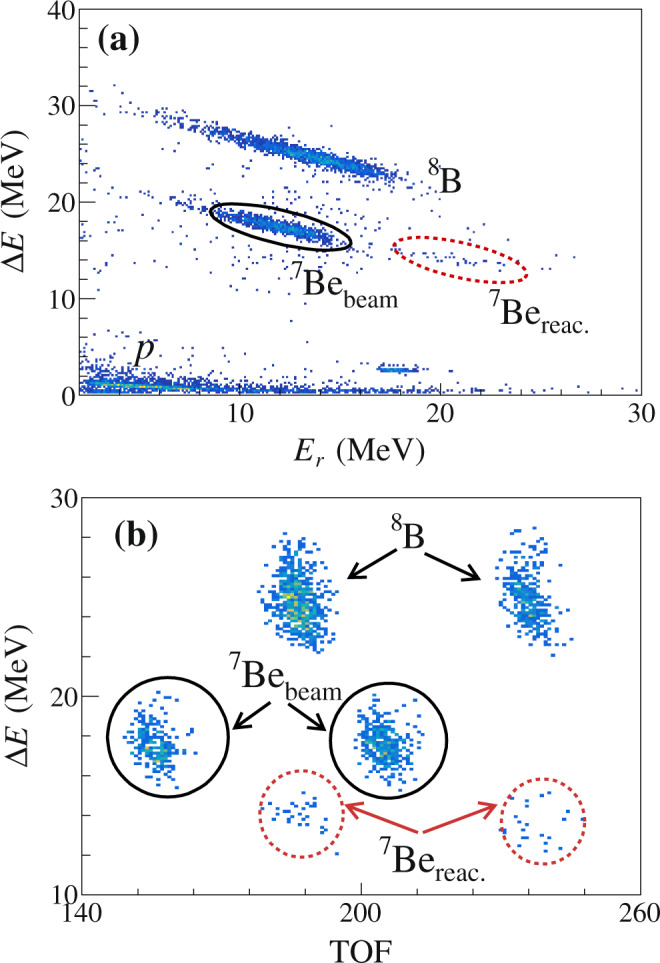
Fig. 6. Particle identification.
a Typical ΔE − Er spectrum at 46.1 MeV, taken by one strip of the forward-angle telescope, covering the polar angular range of 30.4–50.9. b ΔE-TOF spectrum of two radio-frequency cycles illustrating the separation between the 7Be from 8B reactions (7Bereac.) and elastically scattered 7Be in the secondary beam (7Bebeam), as surrounded by the dashed and solid circles, respectively.

References

    1. Jensen AS, Riisager K, Fedorov DV, Garrido E. Structure and reactions of quantum halos. Rev. Mod. Phys. 2004;76:215. doi: 10.1103/RevModPhys.76.215. - DOI
    1. Diaz-Torres A, Moro AM. Insights into low-energy elastic scattering of halo nuclei. Phys. Lett. B. 2014;733:89. doi: 10.1016/j.physletb.2014.04.032. - DOI
    1. Canto LF, Gomes PRS, Donangelo R, Lubian J, Hussein MS. Recent developments in fusion and direct reactions with weakly bound nuclei. Phys. Rep. 2015;596:1. doi: 10.1016/j.physrep.2015.08.001. - DOI
    1. Ershov SN, Grigorenko LV, Vaagen JS, Zhukov MV. Halo formation and breakup: lessons and open questions. J. Phys. G: Nucl. Part. Phys. 2010;37:064026. doi: 10.1088/0954-3899/37/6/064026. - DOI
    1. Mukeru B. Proton-halo breakup dynamics for the breakup threshold in the ε0 → 0 limit. Chin. Phys. C. 2021;45:054107. doi: 10.1088/1674-1137/abe9a3. - DOI