


Mild Encephalopathy/Encephalitis With a Reversible Splenial Lesion (MERS) and Longitudinally Extensive Transverse Myelitis (LETM) in Influenza B: Neurotropic Mechanisms and Diagnostic Challenges
- PMID: 36426329
- PMCID: PMC9681700
- DOI: 10.7759/cureus.30681
Mild Encephalopathy/Encephalitis With a Reversible Splenial Lesion (MERS) and Longitudinally Extensive Transverse Myelitis (LETM) in Influenza B: Neurotropic Mechanisms and Diagnostic Challenges
Abstract
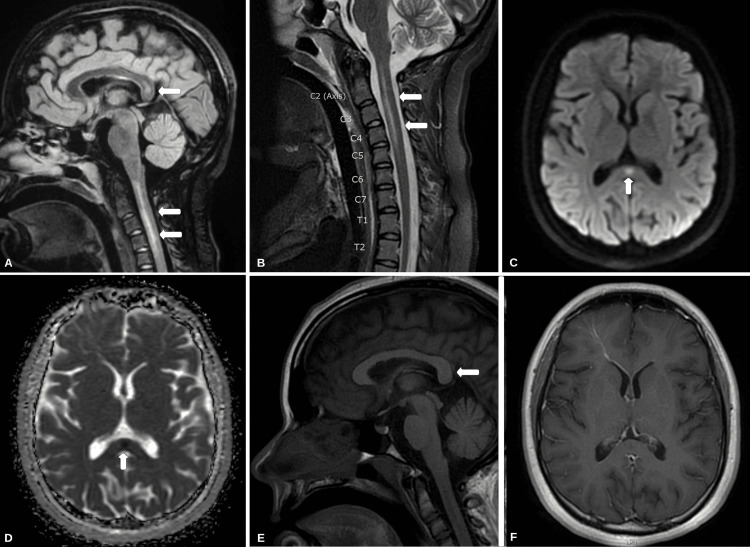
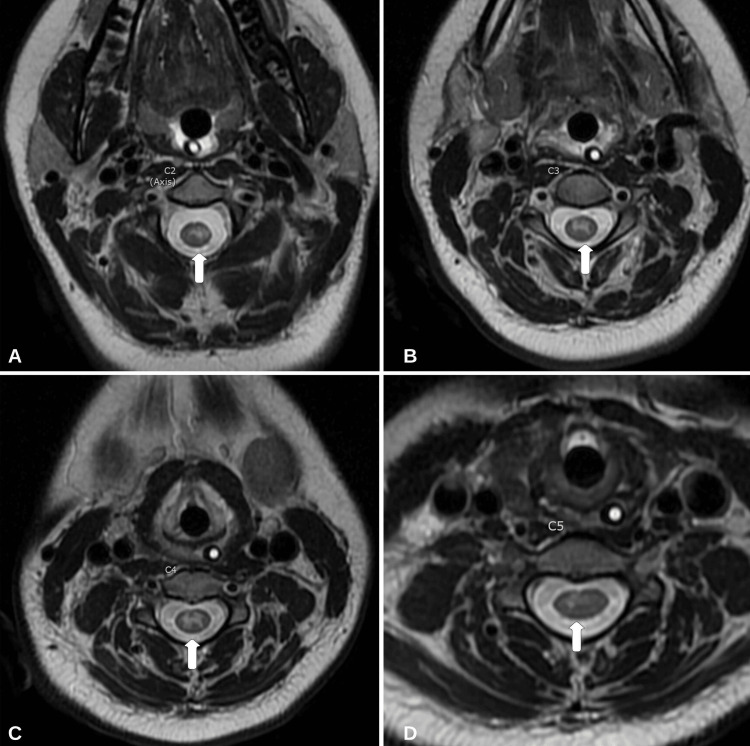
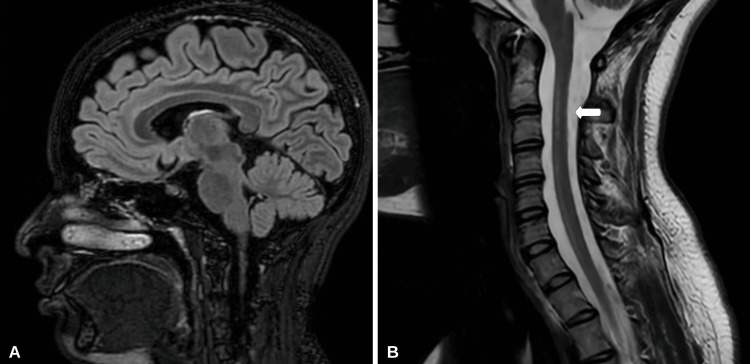
Mild encephalopathy/encephalitis with a reversible splenial lesion (MERS) and longitudinally extensive transverse myelitis (LETM) are neuroinflammatory conditions related to the brain and spinal cord, respectively. Most cases of MERS and LETM are related to a secondary autoimmune process in response to an initial insult (i.e., infection, immunization, etc.). The case of an 18-year-old female who developed a three-day history of fever, quadriplegia, cough, and mild encephalopathy is reported here. The patient tested positive for influenza B by nasopharyngeal swab with polymerase chain reaction (PCR). Initial magnetic resonance imaging (MRI) revealed the presence of a diffusion-restricted non-enhancing lesion confined to the splenium of the corpus callosum (MERS type I) and longitudinally extensive non-enhancing T2 hyperintensities from C1 to C5. The patient was managed with a five-day course of 1,000 mg of intravenous methylprednisolone (IVMP). Additionally, five days of therapeutic plasmapheresis (PLEX) was completed. The patient showed significant improvement with medical management and physical therapy. At the one-year follow-up, her motor symptoms had resolved and endorsed only mild paresthesia in the upper extremities. A repeat MRI revealed a reversal of the splenium lesion and moderate improvement in T2 hyperintensities of the cervical cord. Assessing neuroinvasion of the influenza virus is difficult, and diagnostic challenges arise in determining primary infectious versus autoimmune-mediated neuroinflammation. A review of the literature on influenza infection with radiographic findings of MERS and LETM is included.
Keywords: corpus callosum; encephalomyelitis; infectious encephalitis; influenza b; influenza virus; longitudinally extensive transverse myelitis; mild encephalopathy/encephalitis with reversible splenial lesion; neuroinfectious diseases; neurotropism; splenium.
Copyright © 2022, Srichawla et al.
Conflict of interest statement
The authors have declared that no competing interests exist.
Figures
References
-
- Myelitis and other autoimmune myelopathies. Lopez Chiriboga S, Flanagan EP. Continuum (Minneap Minn) 2021;27:62–92. - PubMed
-
- Mild encephalitis/encephalopathy with reversible splenial lesion: a little-known entity with favourable prognosis. Gómez Iglesias P, López Valdés E, Vega Bayoll M, Gómez Ruíz MN. Neurologia (Engl Ed) 2020;35:581–583. - PubMed
-
- Mild encephalitis/encephalopathy with a reversible splenial lesion: five cases and a literature review. Pan JJ, Zhao YY, Lu C, Hu YH, Yang Y. Neurol Sci. 2015;36:2043–2051. - PubMed
Publication types
LinkOut - more resources
Full Text Sources
Miscellaneous