. 2022 Nov 16;12(11):2824.
doi: 10.3390/diagnostics12112824.

Analysis of Gene Single Nucleotide Polymorphisms in COVID-19 Disease Highlighting the Susceptibility and the Severity towards the Infection

Affiliations

Analysis of Gene Single Nucleotide Polymorphisms in COVID-19 Disease Highlighting the Susceptibility and the Severity towards the Infection

Mario Giosuè Balzanelli et al. Diagnostics (Basel). .

Abstract

Many factors may influence the risk of being infected by SARS-CoV-2, the coronavirus responsible for coronavirus disease 2019 (COVID-19). Exposure to the virus cannot explain the variety of an individual's responses to the virus and the high differences of effect that the virus may cause to some. While a person's preexisting condition and their immune defenses have been confirmed to play a major role in the disease progression, there is still much to learn about hosts' genetic makeup towards COVID-19 susceptibility and risk. The host genetic makeup may have direct influence on the grade of predisposition and outcomes of COVID-19. In this study, we aimed to investigate the presence of relevant genetic single nucleotide polymorphisms (SNPs), the peripheral blood level of IL6, vitamin D and arterial blood gas (ABG) markers (pH, oxygen-SpO2 and carbon dioxide-SpCO2) on two groups, COVID-19 (n = 41, study), and the healthy (n = 43, control). We analyzed cytokine and interleukin genes in charge of both pro-inflammatory and immune-modulating responses and those genes that are considered involved in the COVID-19 progression and complications. Thus, we selected major genes, such as IL1β, IL1RN (IL-1 β and α receptor) IL6, IL6R (IL-6 receptor), IL10, IFNγ (interferon gamma), TNFα (tumor necrosis factor alpha), ACE2 (angiotensin converting enzyme), SERPINA3 (Alpha-1-Antiproteinase, Antitrypsin member of Serpin 3 family), VDR (vitamin D receptor Tak1, Bsm1 and Fok1), and CRP (c-reactive protein). Though more research is needed, these findings may give a better representation of virus pleiotropic activity and its relation to the immune system.

Keywords: COVID-19; SARS-CoV-2; arterial blood gas (ABG); carbon dioxide (SpCO2); oxygen (SpO2).


Conflict of interest statement

The authors declare no conflict of interest.

Figures
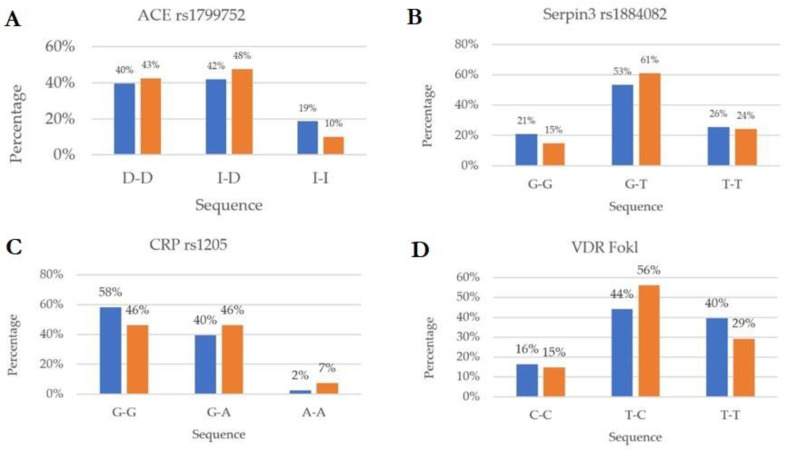
Figure 1
Figure 1
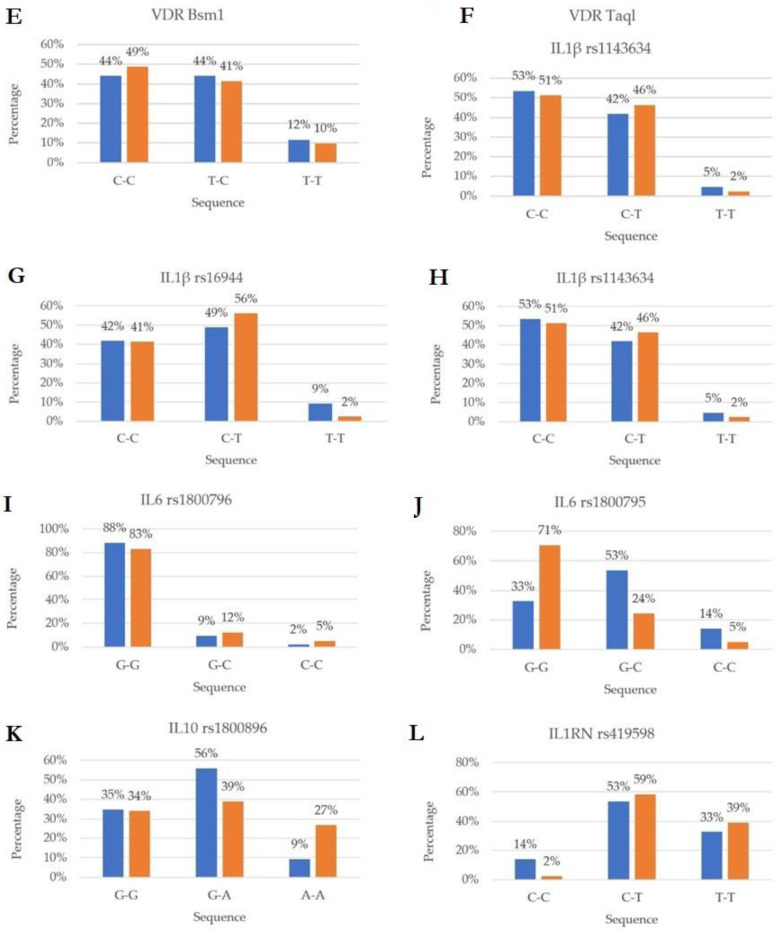
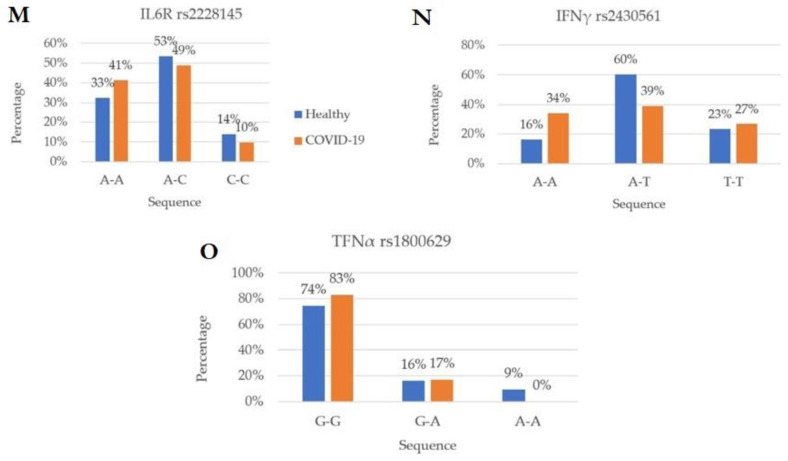
Genotype distribution of 15 SNPs among the healthy (blue) and affected (Orange) subjects analyzed. (A) SNPs and ACE: the analysis indicates that the I/I genotype is suggestive of higher protection to COVID-19 infection (19% vs 10%), while the expression of I/D may represent a higher susceptibility to the infection; a higher frequency of the I/D genotype (48% vs. 42%) and the D allele (>43% overall) was reported in COVID-19 patients than controls (95% CI, p < 0.05) [22]. (B) SNP in the Serpina3 (AACT) gene seems to be tissue-specific and influences protease targeting considered to play a key role in neuro-degenerative disorders. The gene is involved in expressing the protein during acute and chronic inflammation. The Serpina3 seems to be significantly associated with critical illness in COVID-19. The analysis indicates that the G/G genotype is suggestive of higher protection to COVID-19 infection (21%vs 15%; 95% CI, p < 0.05) [23,24,25,26]. (C) Circulating CRP concentration reflects systemic inflammation. Some polymorphisms have been linked with high expression during inflammatory conditions such as in COVID-19; the outcomes indicated that the G/G genotype is suggestive of higher protection to COVID-19 infection (46% vs. 40%), while the expression of G/A (normal genotype) (95% CI, 95% CI, p < 0.05) and A/A (7% vs. 2%) (gene down-expression) may represent a sort of susceptibility to the infection; in allelic comparison, the G allele was strongly associated with COVID-19 infection (95% CI, 95% CI, p < 0.05) [27,28,29]. (DF) VDR gene polymorphisms might play critical roles in the vulnerability to infection and severity of COVID-19. The allele frequencies for the SNPs of the VDR gene (FokI, BsmI, and TaqI) were compared between infected cases and controls. The analysis regarding VDR Fok1 indicates that the T/C genotype might be significantly associated with COVID-19 infection (56% vs. 44%; 95% CI, p < 0.05), while the expression of T/T (40% vs. 29%) indicated a significant protection against the infection (95% CI, p < 0.05); Taq1, the A/G genotype, was significantly associated with COVID-19 infection (59% vs. 47%; 95% CI, p < 0.05), while the expression of G/G (37% vs. 27%) indicated a significant protection against the infection (95% CI, p < 0.05) [49,50]. (G,H) the carriers with IL1β c-81 with C/T genotype has been associated with increased IL-1β production and grade of inflammation. The carriers with 511 C/T genotypes were also seen with higher incidence of COVID-19 infection (95% CI, p > 0.05) [39,40,41]. (I,J) The human IL-6 572 gene is involved in anti-E production, with the allele G as the major risk allele. This is evidence that there is a clear genetic influence on plasma levels of fibrinogen and CRP. However, the data did not indicate a clear involvement in COVID-19 disease. Conversely, IL-6 174 rs1800795 polymorphism has been shown to be highly related to inflammatory and neuropathic patterns in several diseases such as DM2, atherosclerosis, CVD, and COVID-19. The G/G genotype is suggestive of IL-6 gene overexpression. There were significant differences between the two groups (COVID-19 71% vs. 33% healthy) (95% CI, p < 0.005); conversely, the G/C seemed to exert a more protective activity (53% vs. 24%; 95% CI, p < 0.05) [33,34,35]. (K) The IL10 (rs1800896) gene polymorphism that compromises the expression of IL10 is implicated in susceptibility to pulmonary infection and general inflammatory states, typical of tuberculosis (PTBC) and ARDS, specifically in adult and elderly. Data showed that, among patients with ARDS, the -1082GG genotype with normal expression of IL10 revealed a decrease in severity with lower systemic failures and lower mortality rates. There was a mild significant correlation between the frequency of the A/A genotype and the prevalence of COVID-19 cases recorded in this study (27% vs. 9%) (95% CI, p < 0.05). Conversely, there was a significant correlation between the frequency of the G/A genotype and the prevalence of a protection against COVID-19 (56% vs. 39%) (95% CI, p < 0.05) [30,31,32]. (L) The IL1 receptor antagonist (IL1RN) belongs to the IL1 family, some of the gene variants were showed to be involved in several inflammatory degenerative conditions and high susceptibility to infection. In fact, the SNP expression of IL1RN C/T (59% vs. 53%) and T/T (39% vs. 33%), both gene down-expression genotypes, showed a higher susceptibility to COVID-19 infection, with allele T playing the major role (95% CI, p < 0.05). On the other hand, the SNP with the C/C genotype (14% vs. 2%) was seen to increase the serum level of IL-1 RN, which blocks the action of IL-1 (no statistical significance) [42]. (M) The IL-6 receptor antagonist (IL6R) belongs to the IL-6 family. The gene variants were shown to be quite ubiquitous, and some variants were seen to be involved in several inflammatory degenerative conditions and high susceptibility to infection. Some others were conversely revealed to exert a protective function. In fact, the SNP expression of the IL-6R gene with A/C (53% vs. 49%) and C/C (14% vs. 10%) genotypes were seen to protect against COVID-19 infection, with allele C playing the major role. Conversely, the A/A genotype (41% vs. 33%) was seen significantly toward the infection (95% CI, p < 0.05). Similarly, to IL1RN these A/C and C/C genotype seems to exert a protective function in decreasing the risk of development of acute respiratory distress syndrome and improves survival from septic shock, which are the two main causes of ICU admission and mortality in COVID-19 [12,13,14,15,16,17,36,37,38,43,44,45]. (N) IFNγ + 874A/T (rs2430561) gene polymorphism can increase or decrease the risk of a pathogenic infection and susceptibility for pulmonary infection such as tuberculosis, SARS, and oral infection. Data showed that, among patients with COVID-19, the IFN-γ + 874A/T genotype was higher (60% vs. 39%). In this study, there was a significant correlation between the frequency of A/A genotype (gene lower expression of IFN-γ) (34% vs. 16%) and the prevalence of COVID-19 cases (95% CI, p < 0.05) [47,48]. (O) The TNF-α -308 G > A gene is associated with high risk level of CVD, atherosclerosis, and high susceptibility to pulmonary disease risk. After genotype testing, a statistically significant difference between the patients and controls was found in regards to the genotype distribution, where the G allele was more expressed in patients vs. controls with (G/G 83% vs. 74%; 95% CI, p < 0.05). This indicated the G allele (G/G and G/A) as more susceptible to the disease (95% CI, p < 0.05) [44,45,46].
Figure 1
Figure 1
Genotype distribution of 15 SNPs among the healthy (blue) and affected (Orange) subjects analyzed. (A) SNPs and ACE: the analysis indicates that the I/I genotype is suggestive of higher protection to COVID-19 infection (19% vs 10%), while the expression of I/D may represent a higher susceptibility to the infection; a higher frequency of the I/D genotype (48% vs. 42%) and the D allele (>43% overall) was reported in COVID-19 patients than controls (95% CI, p < 0.05) [22]. (B) SNP in the Serpina3 (AACT) gene seems to be tissue-specific and influences protease targeting considered to play a key role in neuro-degenerative disorders. The gene is involved in expressing the protein during acute and chronic inflammation. The Serpina3 seems to be significantly associated with critical illness in COVID-19. The analysis indicates that the G/G genotype is suggestive of higher protection to COVID-19 infection (21%vs 15%; 95% CI, p < 0.05) [23,24,25,26]. (C) Circulating CRP concentration reflects systemic inflammation. Some polymorphisms have been linked with high expression during inflammatory conditions such as in COVID-19; the outcomes indicated that the G/G genotype is suggestive of higher protection to COVID-19 infection (46% vs. 40%), while the expression of G/A (normal genotype) (95% CI, 95% CI, p < 0.05) and A/A (7% vs. 2%) (gene down-expression) may represent a sort of susceptibility to the infection; in allelic comparison, the G allele was strongly associated with COVID-19 infection (95% CI, 95% CI, p < 0.05) [27,28,29]. (DF) VDR gene polymorphisms might play critical roles in the vulnerability to infection and severity of COVID-19. The allele frequencies for the SNPs of the VDR gene (FokI, BsmI, and TaqI) were compared between infected cases and controls. The analysis regarding VDR Fok1 indicates that the T/C genotype might be significantly associated with COVID-19 infection (56% vs. 44%; 95% CI, p < 0.05), while the expression of T/T (40% vs. 29%) indicated a significant protection against the infection (95% CI, p < 0.05); Taq1, the A/G genotype, was significantly associated with COVID-19 infection (59% vs. 47%; 95% CI, p < 0.05), while the expression of G/G (37% vs. 27%) indicated a significant protection against the infection (95% CI, p < 0.05) [49,50]. (G,H) the carriers with IL1β c-81 with C/T genotype has been associated with increased IL-1β production and grade of inflammation. The carriers with 511 C/T genotypes were also seen with higher incidence of COVID-19 infection (95% CI, p > 0.05) [39,40,41]. (I,J) The human IL-6 572 gene is involved in anti-E production, with the allele G as the major risk allele. This is evidence that there is a clear genetic influence on plasma levels of fibrinogen and CRP. However, the data did not indicate a clear involvement in COVID-19 disease. Conversely, IL-6 174 rs1800795 polymorphism has been shown to be highly related to inflammatory and neuropathic patterns in several diseases such as DM2, atherosclerosis, CVD, and COVID-19. The G/G genotype is suggestive of IL-6 gene overexpression. There were significant differences between the two groups (COVID-19 71% vs. 33% healthy) (95% CI, p < 0.005); conversely, the G/C seemed to exert a more protective activity (53% vs. 24%; 95% CI, p < 0.05) [33,34,35]. (K) The IL10 (rs1800896) gene polymorphism that compromises the expression of IL10 is implicated in susceptibility to pulmonary infection and general inflammatory states, typical of tuberculosis (PTBC) and ARDS, specifically in adult and elderly. Data showed that, among patients with ARDS, the -1082GG genotype with normal expression of IL10 revealed a decrease in severity with lower systemic failures and lower mortality rates. There was a mild significant correlation between the frequency of the A/A genotype and the prevalence of COVID-19 cases recorded in this study (27% vs. 9%) (95% CI, p < 0.05). Conversely, there was a significant correlation between the frequency of the G/A genotype and the prevalence of a protection against COVID-19 (56% vs. 39%) (95% CI, p < 0.05) [30,31,32]. (L) The IL1 receptor antagonist (IL1RN) belongs to the IL1 family, some of the gene variants were showed to be involved in several inflammatory degenerative conditions and high susceptibility to infection. In fact, the SNP expression of IL1RN C/T (59% vs. 53%) and T/T (39% vs. 33%), both gene down-expression genotypes, showed a higher susceptibility to COVID-19 infection, with allele T playing the major role (95% CI, p < 0.05). On the other hand, the SNP with the C/C genotype (14% vs. 2%) was seen to increase the serum level of IL-1 RN, which blocks the action of IL-1 (no statistical significance) [42]. (M) The IL-6 receptor antagonist (IL6R) belongs to the IL-6 family. The gene variants were shown to be quite ubiquitous, and some variants were seen to be involved in several inflammatory degenerative conditions and high susceptibility to infection. Some others were conversely revealed to exert a protective function. In fact, the SNP expression of the IL-6R gene with A/C (53% vs. 49%) and C/C (14% vs. 10%) genotypes were seen to protect against COVID-19 infection, with allele C playing the major role. Conversely, the A/A genotype (41% vs. 33%) was seen significantly toward the infection (95% CI, p < 0.05). Similarly, to IL1RN these A/C and C/C genotype seems to exert a protective function in decreasing the risk of development of acute respiratory distress syndrome and improves survival from septic shock, which are the two main causes of ICU admission and mortality in COVID-19 [12,13,14,15,16,17,36,37,38,43,44,45]. (N) IFNγ + 874A/T (rs2430561) gene polymorphism can increase or decrease the risk of a pathogenic infection and susceptibility for pulmonary infection such as tuberculosis, SARS, and oral infection. Data showed that, among patients with COVID-19, the IFN-γ + 874A/T genotype was higher (60% vs. 39%). In this study, there was a significant correlation between the frequency of A/A genotype (gene lower expression of IFN-γ) (34% vs. 16%) and the prevalence of COVID-19 cases (95% CI, p < 0.05) [47,48]. (O) The TNF-α -308 G > A gene is associated with high risk level of CVD, atherosclerosis, and high susceptibility to pulmonary disease risk. After genotype testing, a statistically significant difference between the patients and controls was found in regards to the genotype distribution, where the G allele was more expressed in patients vs. controls with (G/G 83% vs. 74%; 95% CI, p < 0.05). This indicated the G allele (G/G and G/A) as more susceptible to the disease (95% CI, p < 0.05) [44,45,46].
Figure 1
Figure 1
Genotype distribution of 15 SNPs among the healthy (blue) and affected (Orange) subjects analyzed. (A) SNPs and ACE: the analysis indicates that the I/I genotype is suggestive of higher protection to COVID-19 infection (19% vs 10%), while the expression of I/D may represent a higher susceptibility to the infection; a higher frequency of the I/D genotype (48% vs. 42%) and the D allele (>43% overall) was reported in COVID-19 patients than controls (95% CI, p < 0.05) [22]. (B) SNP in the Serpina3 (AACT) gene seems to be tissue-specific and influences protease targeting considered to play a key role in neuro-degenerative disorders. The gene is involved in expressing the protein during acute and chronic inflammation. The Serpina3 seems to be significantly associated with critical illness in COVID-19. The analysis indicates that the G/G genotype is suggestive of higher protection to COVID-19 infection (21%vs 15%; 95% CI, p < 0.05) [23,24,25,26]. (C) Circulating CRP concentration reflects systemic inflammation. Some polymorphisms have been linked with high expression during inflammatory conditions such as in COVID-19; the outcomes indicated that the G/G genotype is suggestive of higher protection to COVID-19 infection (46% vs. 40%), while the expression of G/A (normal genotype) (95% CI, 95% CI, p < 0.05) and A/A (7% vs. 2%) (gene down-expression) may represent a sort of susceptibility to the infection; in allelic comparison, the G allele was strongly associated with COVID-19 infection (95% CI, 95% CI, p < 0.05) [27,28,29]. (DF) VDR gene polymorphisms might play critical roles in the vulnerability to infection and severity of COVID-19. The allele frequencies for the SNPs of the VDR gene (FokI, BsmI, and TaqI) were compared between infected cases and controls. The analysis regarding VDR Fok1 indicates that the T/C genotype might be significantly associated with COVID-19 infection (56% vs. 44%; 95% CI, p < 0.05), while the expression of T/T (40% vs. 29%) indicated a significant protection against the infection (95% CI, p < 0.05); Taq1, the A/G genotype, was significantly associated with COVID-19 infection (59% vs. 47%; 95% CI, p < 0.05), while the expression of G/G (37% vs. 27%) indicated a significant protection against the infection (95% CI, p < 0.05) [49,50]. (G,H) the carriers with IL1β c-81 with C/T genotype has been associated with increased IL-1β production and grade of inflammation. The carriers with 511 C/T genotypes were also seen with higher incidence of COVID-19 infection (95% CI, p > 0.05) [39,40,41]. (I,J) The human IL-6 572 gene is involved in anti-E production, with the allele G as the major risk allele. This is evidence that there is a clear genetic influence on plasma levels of fibrinogen and CRP. However, the data did not indicate a clear involvement in COVID-19 disease. Conversely, IL-6 174 rs1800795 polymorphism has been shown to be highly related to inflammatory and neuropathic patterns in several diseases such as DM2, atherosclerosis, CVD, and COVID-19. The G/G genotype is suggestive of IL-6 gene overexpression. There were significant differences between the two groups (COVID-19 71% vs. 33% healthy) (95% CI, p < 0.005); conversely, the G/C seemed to exert a more protective activity (53% vs. 24%; 95% CI, p < 0.05) [33,34,35]. (K) The IL10 (rs1800896) gene polymorphism that compromises the expression of IL10 is implicated in susceptibility to pulmonary infection and general inflammatory states, typical of tuberculosis (PTBC) and ARDS, specifically in adult and elderly. Data showed that, among patients with ARDS, the -1082GG genotype with normal expression of IL10 revealed a decrease in severity with lower systemic failures and lower mortality rates. There was a mild significant correlation between the frequency of the A/A genotype and the prevalence of COVID-19 cases recorded in this study (27% vs. 9%) (95% CI, p < 0.05). Conversely, there was a significant correlation between the frequency of the G/A genotype and the prevalence of a protection against COVID-19 (56% vs. 39%) (95% CI, p < 0.05) [30,31,32]. (L) The IL1 receptor antagonist (IL1RN) belongs to the IL1 family, some of the gene variants were showed to be involved in several inflammatory degenerative conditions and high susceptibility to infection. In fact, the SNP expression of IL1RN C/T (59% vs. 53%) and T/T (39% vs. 33%), both gene down-expression genotypes, showed a higher susceptibility to COVID-19 infection, with allele T playing the major role (95% CI, p < 0.05). On the other hand, the SNP with the C/C genotype (14% vs. 2%) was seen to increase the serum level of IL-1 RN, which blocks the action of IL-1 (no statistical significance) [42]. (M) The IL-6 receptor antagonist (IL6R) belongs to the IL-6 family. The gene variants were shown to be quite ubiquitous, and some variants were seen to be involved in several inflammatory degenerative conditions and high susceptibility to infection. Some others were conversely revealed to exert a protective function. In fact, the SNP expression of the IL-6R gene with A/C (53% vs. 49%) and C/C (14% vs. 10%) genotypes were seen to protect against COVID-19 infection, with allele C playing the major role. Conversely, the A/A genotype (41% vs. 33%) was seen significantly toward the infection (95% CI, p < 0.05). Similarly, to IL1RN these A/C and C/C genotype seems to exert a protective function in decreasing the risk of development of acute respiratory distress syndrome and improves survival from septic shock, which are the two main causes of ICU admission and mortality in COVID-19 [12,13,14,15,16,17,36,37,38,43,44,45]. (N) IFNγ + 874A/T (rs2430561) gene polymorphism can increase or decrease the risk of a pathogenic infection and susceptibility for pulmonary infection such as tuberculosis, SARS, and oral infection. Data showed that, among patients with COVID-19, the IFN-γ + 874A/T genotype was higher (60% vs. 39%). In this study, there was a significant correlation between the frequency of A/A genotype (gene lower expression of IFN-γ) (34% vs. 16%) and the prevalence of COVID-19 cases (95% CI, p < 0.05) [47,48]. (O) The TNF-α -308 G > A gene is associated with high risk level of CVD, atherosclerosis, and high susceptibility to pulmonary disease risk. After genotype testing, a statistically significant difference between the patients and controls was found in regards to the genotype distribution, where the G allele was more expressed in patients vs. controls with (G/G 83% vs. 74%; 95% CI, p < 0.05). This indicated the G allele (G/G and G/A) as more susceptible to the disease (95% CI, p < 0.05) [44,45,46].
Figure 2
Figure 2
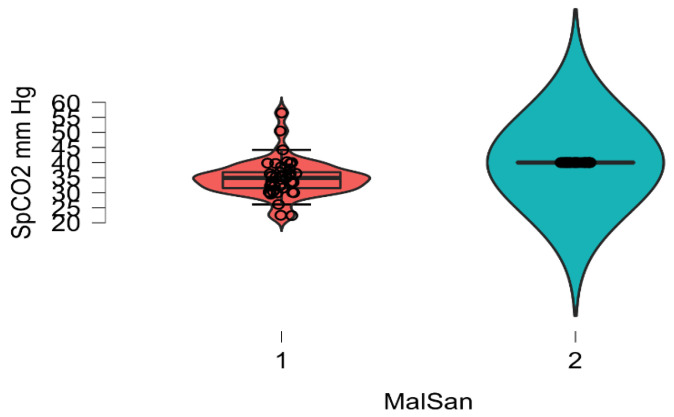
Boxplots of SpCO2 in mm/Hg concentrations in COVID-19 patients (red) and healthy control (blue) cases stratified by SpCO2 concentration. Of note, COVID-19 status (p = 0.005) and SpCO2 (p < 0.001) are significantly associated with clinical values in a multivariable linear regression analysis of sex, age, and COVID-19 status.
Figure 3
Figure 3
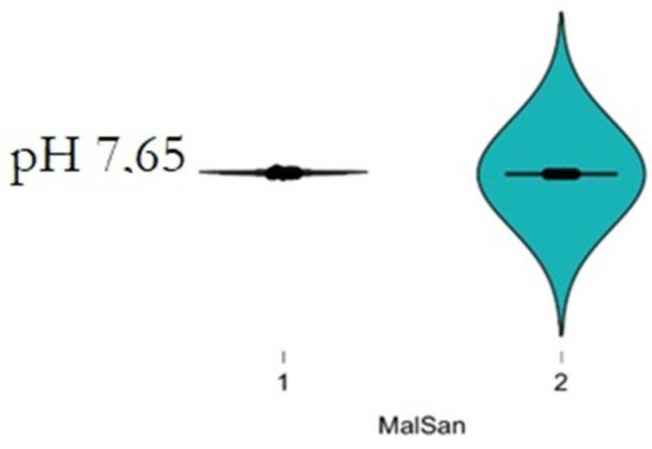
Boxplot representation of pH distribution in the first day after the admission patients (1) compared with healthy (2) stratified by pH concentration. Of note, COVID-19 status (p = 0.005) and pH (p < 0.001) are significantly associated with clinical values in a multivariable linear regression analysis of sex, age, and COVID-19 status.
Figure 4
Figure 4
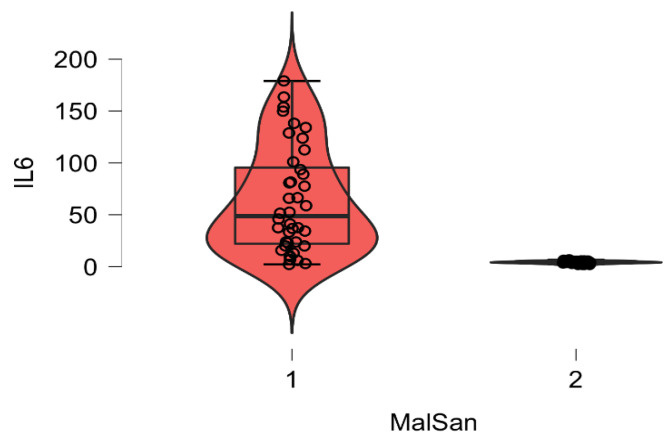
Boxplot showing the plasma concentration of IL-6 within 48 h of hospitalization in patients with COVID-19 (red) and healthy individuals.
Figure 5
Figure 5
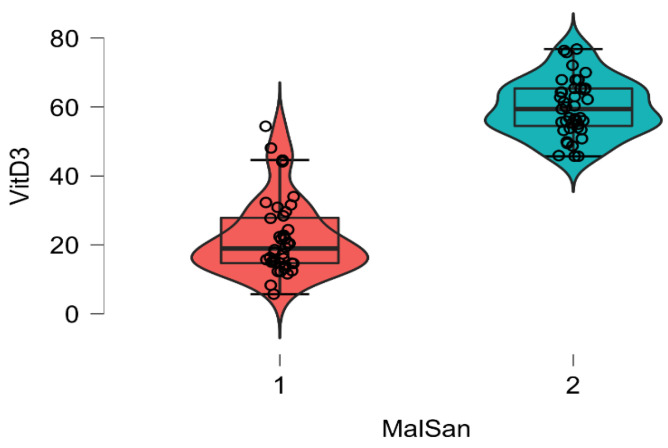
Box plot showing the plasma concentration of vitamin D within 48 h of hospitalization in patients with COVID-19 (red) and healthy individuals.
Figure 6
Figure 6
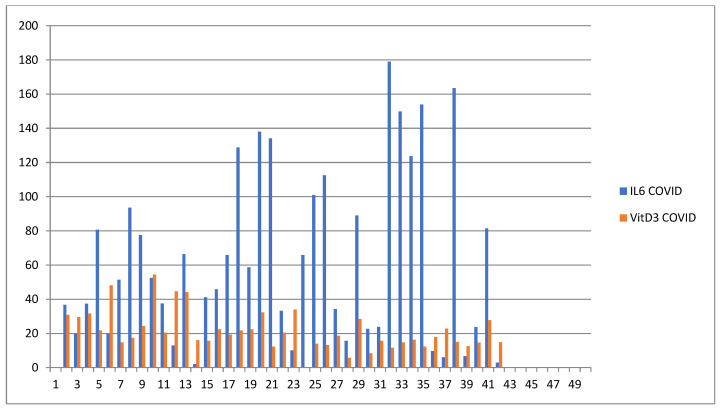
Graphic showing the plasma concentration of vitamin D (blue) and IL-6 (orange-red) within 48 h of hospitalization in patients with COVID-19.
Figure 7
Figure 7
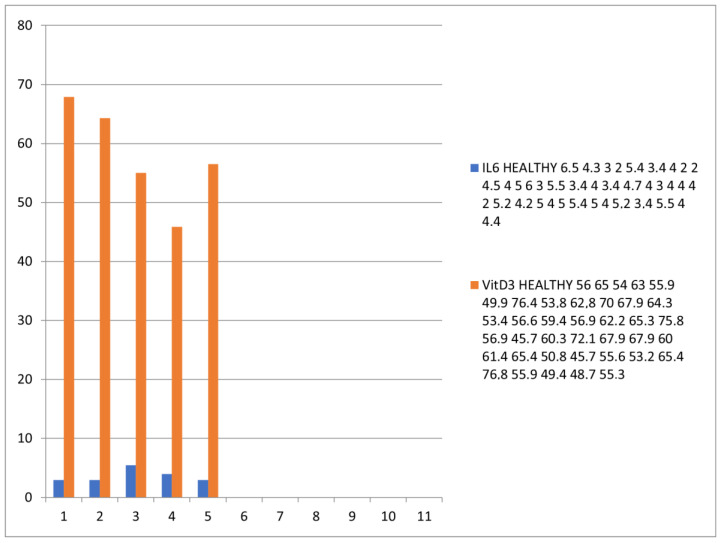
Graphic showing the plasma concentration of vitamin D (blue) and IL-6 (orange-red) in healthy individuals.

References

    1. Shang J., Ye G., Shi K., Wan Y., Luo C., Aihara H., Geng Q., Auerbach A., Li F. Structural basis of receptor recognition by SARS-CoV-2. Nature. 2020;581:221–224. doi: 10.1038/s41586-020-2179-y. - DOI - PMC - PubMed
    1. SeyedAlinaghi S., Mehrtak M., MohsseniPour M., Mirzapour P., Barzegary A., Habibi P., Moradmand-Badie B., Afsahi A.M., Karimi A., Heydari M., et al. Genetic susceptibility of COVID-19: A systematic review of current evidence. Eur. J. Med. Res. 2021;26:46. doi: 10.1186/s40001-021-00516-8. - DOI - PMC - PubMed
    1. Driggin E., Madhavan M.V., Bikdeli B., Chuich T., Laracy J., Biondi-Zoccai G., Brown T.S., Der Nigoghossian C., Zidar D.A., Haythe J., et al. Cardiovascular Considerations for Patients, Health Care Workers, and Health Systems During the COVID-19 Pandemic. J. Am. Coll. Cardiol. 2020;75:2352–2371. doi: 10.1016/j.jacc.2020.03.031. - DOI - PMC - PubMed
    1. Terpos E., Ntanasis-Stathopoulos I., Elalamy I., Kastritis E., Sergentanis T.N., Politou M., Psaltopoulou T., Gerotziafas G., Dimopoulos M.A. Hematological findings and complications of COVID-19. Am. J. Hematol. 2020;95:834–847. doi: 10.1002/ajh.25829. - DOI - PMC - PubMed
    1. Balzanelli M.G., Distratis P., Catucci O., Amatulli F., Cefalo A., Lazzaro R., Aityan K.S., Dalagni G., Nico A., De Michele A., et al. Clinical and diagnostic findings in COVID-19 patients: An original research from SG Moscati Hospital in Taranto Italy. J. Biol. Regul. Homeost. Agents. 2021;35:171–183. - PubMed