


Treatment of Periodontal Inflammation in Diabetic Rats with IL-1ra Thermosensitive Hydrogel
- PMID: 36430410
- PMCID: PMC9693501
- DOI: 10.3390/ijms232213939
Treatment of Periodontal Inflammation in Diabetic Rats with IL-1ra Thermosensitive Hydrogel
Abstract
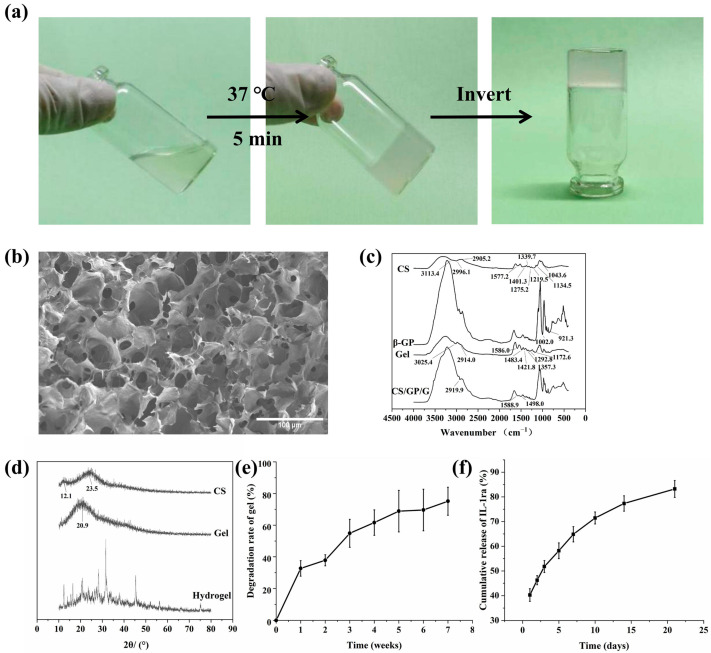
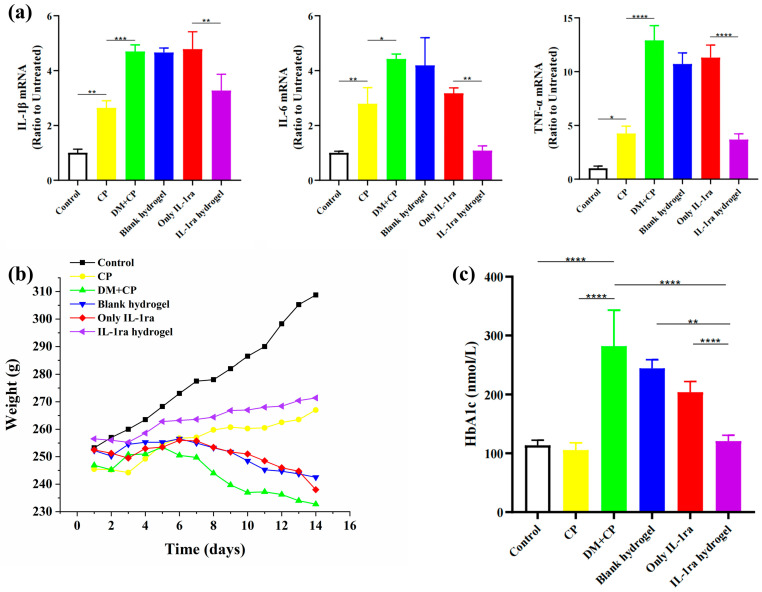
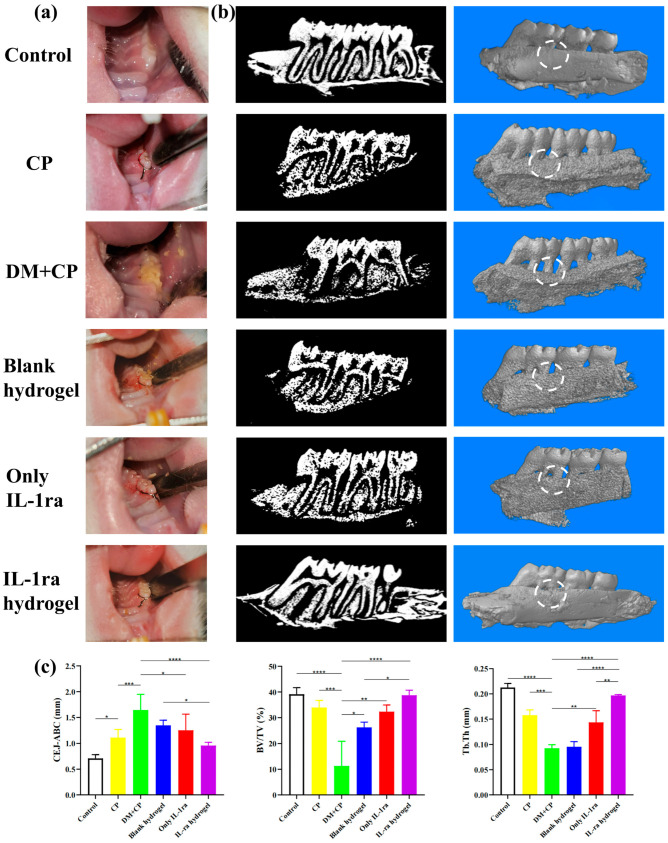
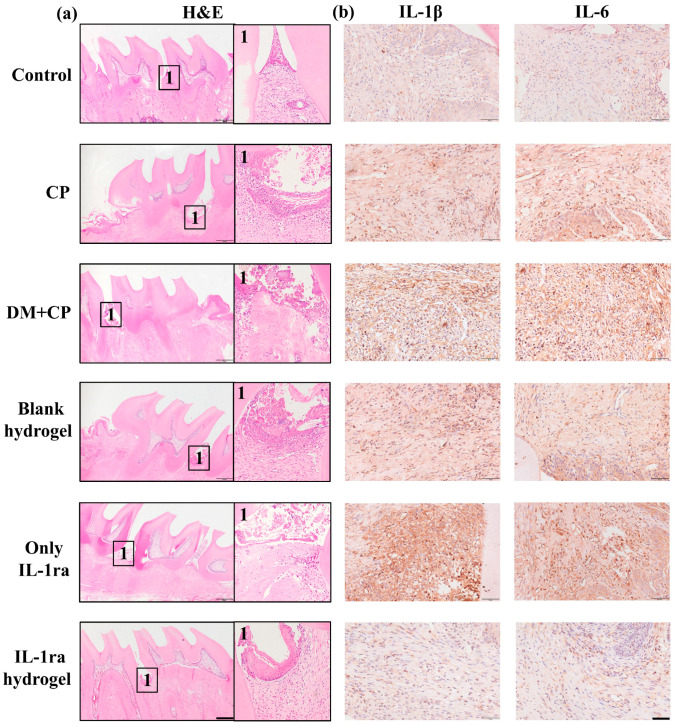
Periodontitis is a chronic inflammatory disease that is considered to be the main cause of adult tooth loss. Diabetes mellitus (DM) has a bidirectional relationship with periodontitis. Interleukin-1β (IL-1β) is an important pre-inflammatory factor, which participates in the pathophysiological process of periodontitis and diabetes. The interleukin-1 receptor antagonist (IL-1ra) is a natural inhibitor of IL-1, and the balance between IL-1ra and IL-1β is one of the main factors affecting chronic periodontitis (CP) and diabetes. The purpose of this study is to develop a drug carrier that is safe and nontoxic and can effectively release IL-1ra, which can effectively slow down the inflammation of periodontal tissues with diabetes, and explore the possibility of lowering the blood sugar of this drug carrier. Therefore, in this experiment, a temperature-sensitive hydrogel loaded with IL-1ra was prepared and characterized, and its anti-inflammatory effect in high-sugar environments in vivo and in vitro was evaluated. The results showed that the hydrogel could gel after 5 min at 37 °C, the pore size was 5-70 μm, and the cumulative release of IL-1ra reached 83.23% on the 21st day. Real-time polymerase chain reaction (qRT-PCR) showed that the expression of IL-1β, Interleukin 6 (IL-6), and tumor necrosis factor α (TNF-α) inflammatory factors decreased after the treatment with IL-1ra-loaded thermosensitive hydrogel. Histological evaluation and micro-computed tomography (Micro-CT) showed that IL-1ra-loaded thermosensitive hydrogel could effectively inhibit periodontal inflammation and reduce alveolar bone absorption in rats with diabetic periodontitis. It is worth mentioning that this hydrogel also plays a role in relieving hyperglycemia. Therefore, the temperature-sensitive hydrogel loaded with IL-1ra may be an effective method to treat periodontitis with diabetes.
Keywords: diabetes; injectable and thermosensitive hydrogel; interleukin 1 receptor antagonist protein; periodontitis.
Conflict of interest statement
The authors declare no conflict of interest. The sponsoring institute had no role in the design, execution, interpretation, or writing of the study.
Figures
Similar articles
-
Anti-inflammatory effect of IL-1ra-loaded dextran/PLGA microspheres on Porphyromonas gingivalis lipopolysaccharide-stimulated macrophages in vitro and in vivo in a rat model of periodontitis.Biomed Pharmacother. 2021 Feb;134:111171. doi: 10.1016/j.biopha.2020.111171. Epub 2020 Dec 28. Biomed Pharmacother. 2021. PMID: 33383312
-
Therapeutic Potential of Liraglutide for Diabetes-Periodontitis Comorbidity: Killing Two Birds with One Stone.J Diabetes Res. 2022 Jul 6;2022:8260111. doi: 10.1155/2022/8260111. eCollection 2022. J Diabetes Res. 2022. PMID: 35845316 Free PMC article.
-
Inflammatory bone loss in experimental periodontitis induced by Aggregatibacter actinomycetemcomitans in interleukin-1 receptor antagonist knockout mice.Infect Immun. 2014 May;82(5):1904-13. doi: 10.1128/IAI.01618-13. Epub 2014 Feb 24. Infect Immun. 2014. PMID: 24566623 Free PMC article.
-
Interleukin-1 receptor antagonist (IL-1Ra) and IL-1Ra producing mesenchymal stem cells as modulators of diabetogenesis.Autoimmunity. 2010 Jun;43(4):255-63. doi: 10.3109/08916930903305641. Autoimmunity. 2010. PMID: 19845478 Review.
-
Injectable biomaterials for delivery of interleukin-1 receptor antagonist: Toward improving its therapeutic effect.Acta Biomater. 2019 Jul 15;93:123-134. doi: 10.1016/j.actbio.2019.04.051. Epub 2019 Apr 25. Acta Biomater. 2019. PMID: 31029831 Review.
Cited by
-
Research Advances on Hydrogel-Based Materials for Tissue Regeneration and Remineralization in Tooth.Gels. 2023 Mar 20;9(3):245. doi: 10.3390/gels9030245. Gels. 2023. PMID: 36975694 Free PMC article. Review.
-
Bioactive injectable mucoadhesive thermosensitive natural polymeric hydrogels for oral bone and periodontal regeneration.Front Bioeng Biotechnol. 2024 May 28;12:1384326. doi: 10.3389/fbioe.2024.1384326. eCollection 2024. Front Bioeng Biotechnol. 2024. PMID: 38863491 Free PMC article. Review.
-
Anti-inflammatory effectiveness of Peperomia pellucida (L.) Kunth in rats induced with periodontitis.Biochem Biophys Rep. 2024 Oct 26;40:101856. doi: 10.1016/j.bbrep.2024.101856. eCollection 2024 Dec. Biochem Biophys Rep. 2024. PMID: 39539670 Free PMC article.
-
Preparation of Ag-Metal organic frameworks-loaded Sodium Alginate Hydrogel for the treatment of periodontitis.Sci Rep. 2025 Jan 4;15(1):800. doi: 10.1038/s41598-025-85123-x. Sci Rep. 2025. PMID: 39755826 Free PMC article.
-
Role of Berberine Thermosensitive Hydrogel in Periodontitis via PI3K/AKT Pathway In Vitro.Int J Mol Sci. 2023 Mar 28;24(7):6364. doi: 10.3390/ijms24076364. Int J Mol Sci. 2023. PMID: 37047340 Free PMC article.
References
-
- Sanz M., Ceriello A., Buysschaert M., Chapple I., Demmer R.T., Graziani F., Herrera D., Jepsen S., Lione L., Madianos P., et al. Scientific evidence on the links between periodontal diseases and diabetes: Consensus report and guidelines of the joint workshop on periodontal diseases and diabetes by the International Diabetes Federation and the European Federation of Periodontology. J. Clin. Periodontol. 2018;45:138–149. doi: 10.1111/jcpe.12808. - DOI - PubMed
MeSH terms
Substances
Grants and funding
LinkOut - more resources
Full Text Sources
Miscellaneous
