


Participatory development and implementation of inclusive digital health communication on COVID-19 with homeless people
- PMID: 36438267
- PMCID: PMC9687377
- DOI: 10.3389/fpubh.2022.1042677
Participatory development and implementation of inclusive digital health communication on COVID-19 with homeless people
Abstract
Introduction: People experiencing homelessness (PEH) are disproportionally affected by the COVID-19 pandemic. The realities of their daily lives have been given little consideration in the pandemic response. They are not represented in existing health information campaigns, and many are structurally excluded from digital information. The project aimed to develop inclusive COVID-19-information material to strengthen infection prevention and control of PEH.
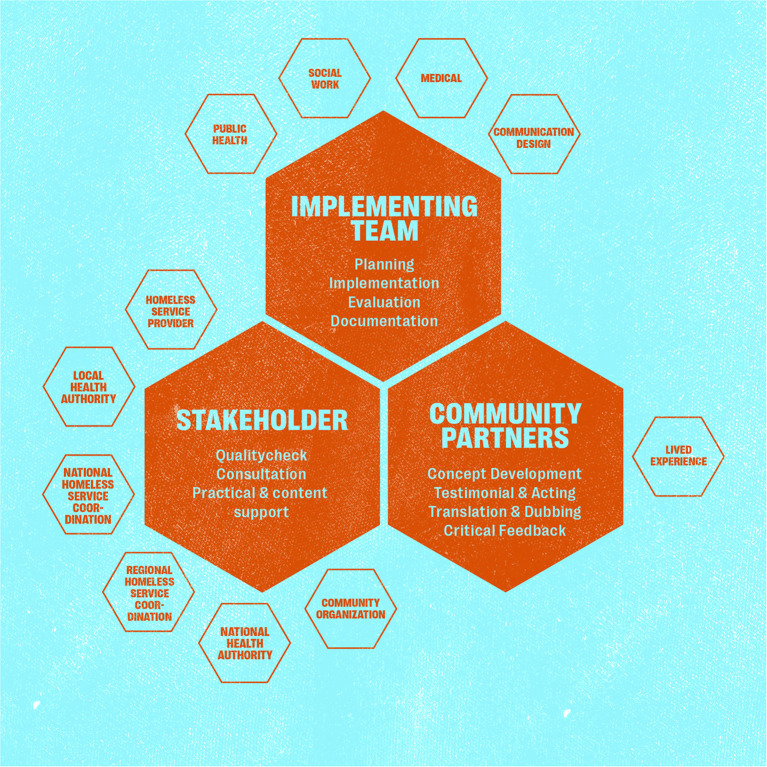
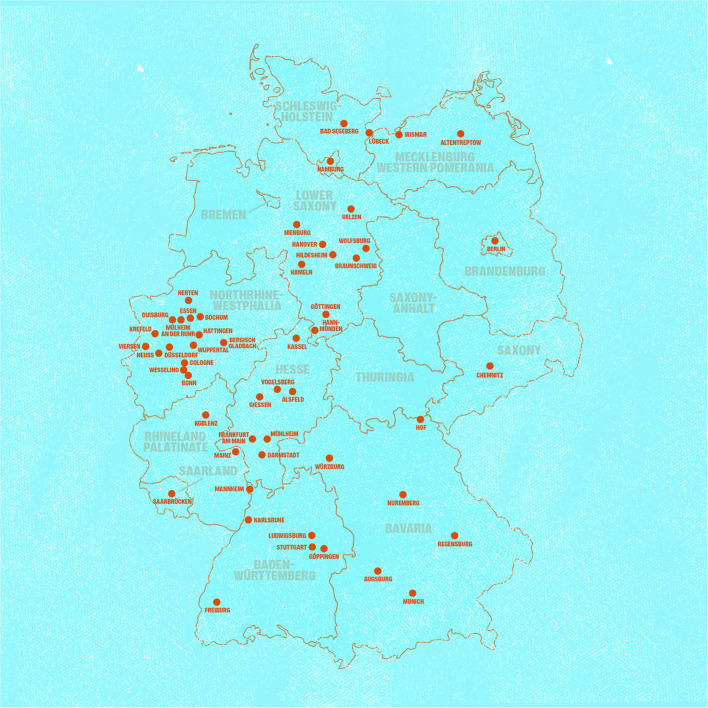
Material and methods: In a participatory process, PEH were involved in the planning, production, and evaluation of poster and video information material on COVID-19. Various stakeholders were consulted for external supervision. Service providers all over Germany were informed about the material that could be ordered free of charge. For the evaluation, semi-structured interviews with homeless service providers and PEH were conducted, and the online views of the videos were measured.
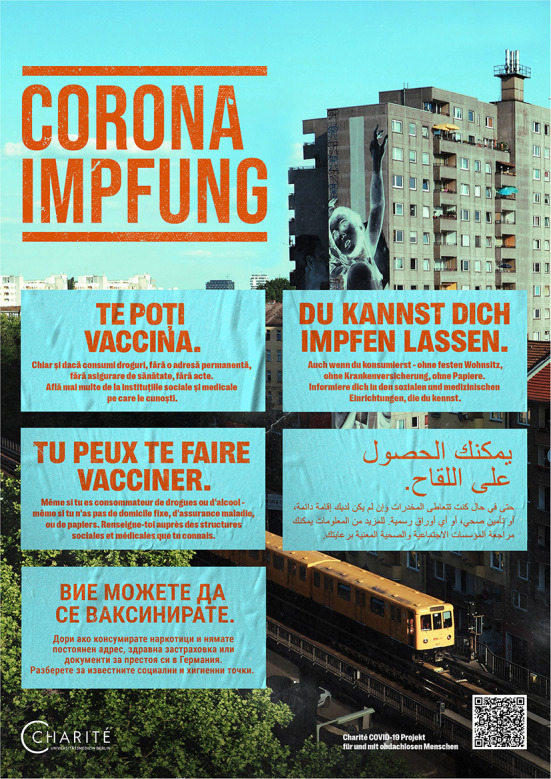
Results: Sixteen PEH participated actively in the project. Two COVID-19-information videos were launched in 5 languages in February 2021. Posters promoting vaccination against COVID-19 were produced in 9 languages. As of May 2022, the videos have been viewed more than 2,000 times. A total of 163 service providers for PEH and public institutions received the posters, thereof 72 upon request. Twelve service providers and 8 PEH participated in the evaluation. They pointed out the lack of targeted information material for PEH. The consideration of the concerns and the diverse representation of PEH was perceived as particularly important. Most of the service providers were unable to show the videos due to technical and spatial limitations. Digital challenges for PEH, like the lack of and maintenance of a smart phone, became apparent.
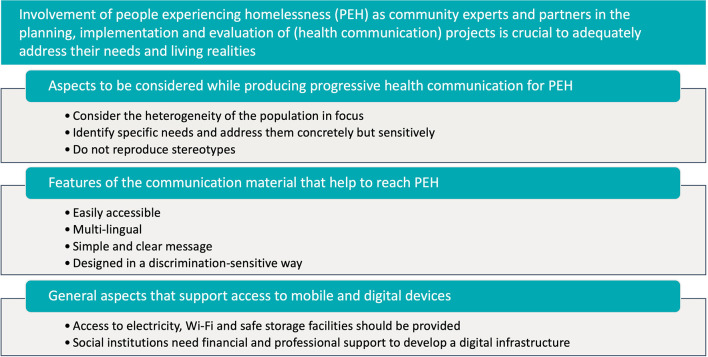
Conclusion: The cooperation of research, practice and the community were key factors for the realization of this project. Strong links to the community and the involvement of relevant stakeholders are indispensable when working with PEH. Exclusion from digital information is an increasingly important component of the structural marginalization of PEH. Digital inclusion for PEH and service providers can help to counteract social and health inequalities. The lessons learned through this project can contribute to strengthen participation of PEH and to consider their perspectives in future health communication strategies.
Keywords: COVID-19; SARS-CoV-2; digital gap; health communication; homeless; participatory research (PR); poverty and inequality.
Copyright © 2022 Specht, Sarma, Linzbach, Hellmund, Hörig, Wintel, Equihua Martinez, Seybold and Lindner.
Conflict of interest statement
The authors declare that the research was conducted in the absence of any commercial or financial relationships that could be construed as a potential conflict of interest.
Figures

References
Publication types
MeSH terms
LinkOut - more resources
Full Text Sources
Medical
Research Materials
Miscellaneous
