


Cordyceps cicadae and Cordyceps gunnii have closer species correlation with Cordyceps sinensis: from the perspective of metabonomic and MaxEnt models
- PMID: 36443322
- PMCID: PMC9705360
- DOI: 10.1038/s41598-022-24309-z
Cordyceps cicadae and Cordyceps gunnii have closer species correlation with Cordyceps sinensis: from the perspective of metabonomic and MaxEnt models
Abstract
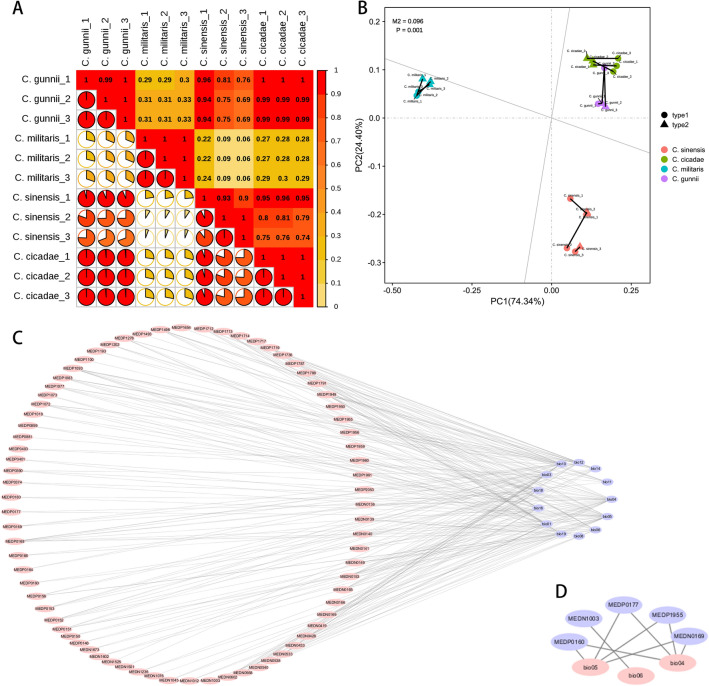
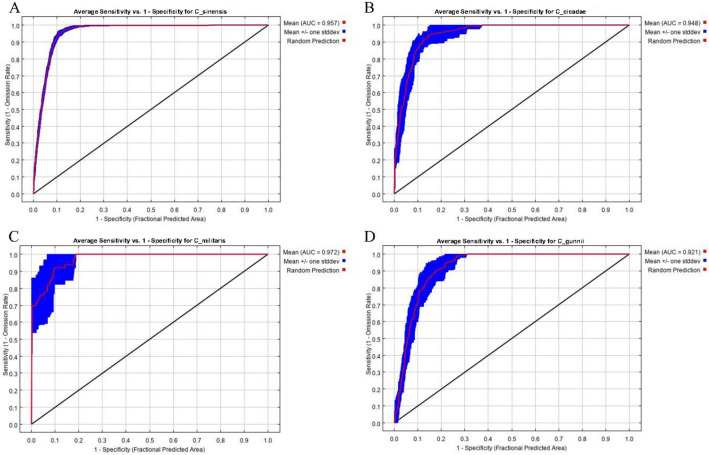
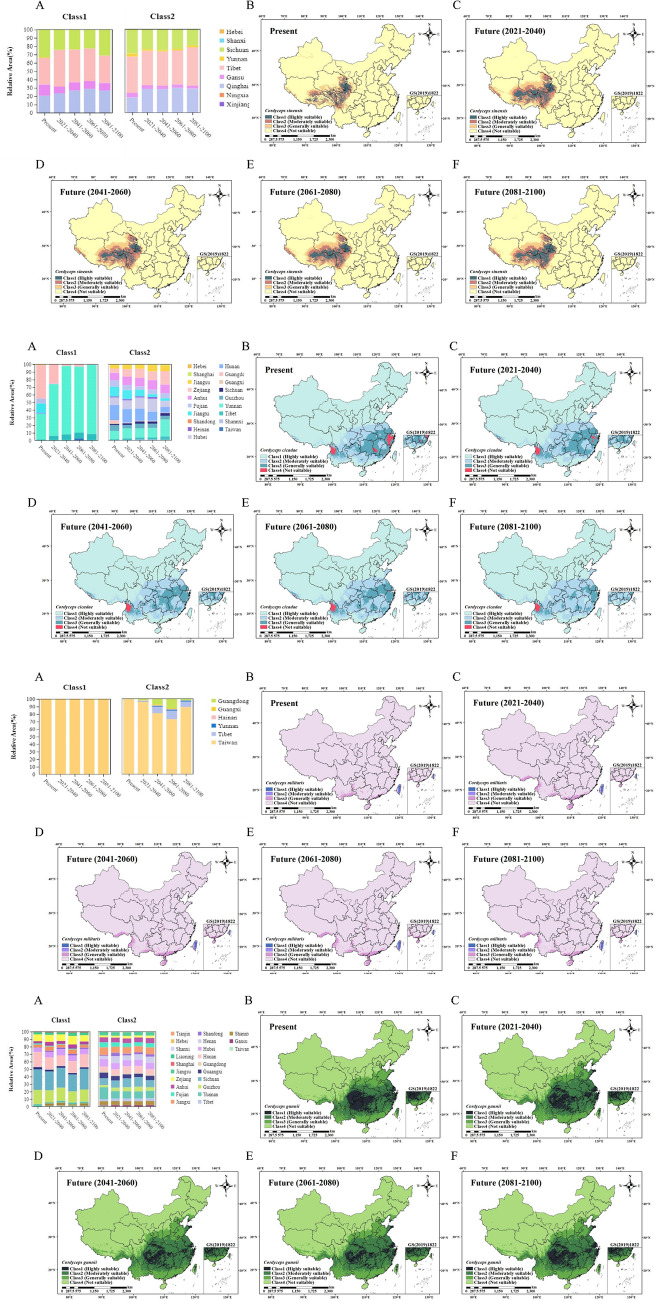
Cordyceps sinensis is a second-class nationally-protected medicinal fungus and functional food. Cordyceps sinensis resources are endangered, and finding new medicinal materials is a fast and economical way to meet the current demonstrated demand, which can effectively solve the shortage of C. sinensis resources. In this study, the metabolite characteristics of Cordyceps were comprehensively revealed by LC-QTOF-MS technology. The maxent model can be used to predict the habitat suitability distribution of Cordyceps and screen out the main climatic factors affecting its distribution. The correlation model between climate factors and chemical components was established by Pearson correlation analysis. Finally, based on the analysis of climate factors and metabolites, we will analyze the high correlation species with C. sinensis, and develop them as possible alternative species of C. sinensis in the future. The results showed that the suitable area of Cordyceps cicadae demonstrated a downward trend, while that of C. sinensis, Cordyceps militaris and Cordyceps gunnii demonstrated an upwards trend. The suitable areas all shifted to the northwest. The temperature seasonality and max temperature of the warmest month are the maximum climatic factors affecting nucleosides. Compared with C. sinensis, the metabolic spectrum similarities of C. cicadae, C. militaris, and C. gunnii were 94.42%, 80.82%, and 91.00%, respectively. Cordyceps sinensis, C. cicadae, and C. gunnii were correlated well for compounds and climate factors. This study will explore whether C. cicadae, C. militaris and C. gunnii can be used as substitutes for C. sinensis. Our results may provide a reference for resource conservation and sustainable utilization of endangered C. sinensis.
© 2022. The Author(s).
Conflict of interest statement
The authors declare no competing interests.
Figures

References
-
- Liu DM, Li JS, Li Y, Wang K, Yang RH, Yao YJ. Status of global macrofungal conservation based on red lists and suggestions for a comprehensive strategy in China. Acta Edulis Fungi. 2021;28:108–114.
-
- Yao YJ. Red list assessment of macrofungi in China. Biodivers. Sci. 2020;28:1–3. doi: 10.17520/biods.2019152. - DOI
-
- Li Y, Tang ZY, Yan YJ, Wang K, Cai L, He JS, Gu S, Yao YJ. Incorporating species distribution model into the red list assessment and conservation of macrofungi: A case study with Ophiocordyceps sinensis. Biol. Divers. 2020;28:99–106.
-
- Yang, Z.-L. Ophiocordyceps sinensis (amended version of 2020 assessment). The IUCN Red List of Threatened Species 2020:e.T58514773A179197748 (2020).
-
- Liang ZQ. Fungi of China. Science Press; 2007. pp. 1–190.
Publication types
MeSH terms
Supplementary concepts
LinkOut - more resources
Full Text Sources
