


Gene activation guided by nascent RNA-bound transcription factors
- PMID: 36443367
- PMCID: PMC9705438
- DOI: 10.1038/s41467-022-35041-7
Gene activation guided by nascent RNA-bound transcription factors
Abstract
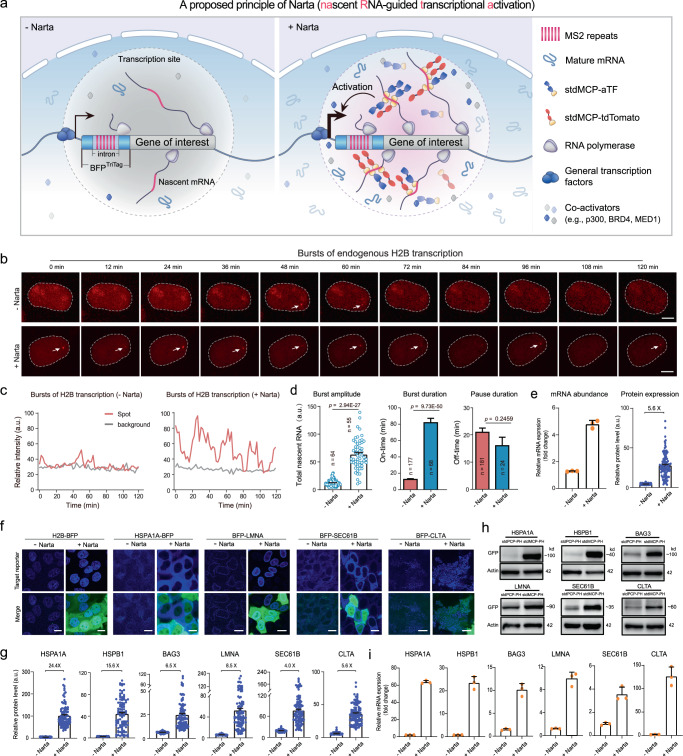
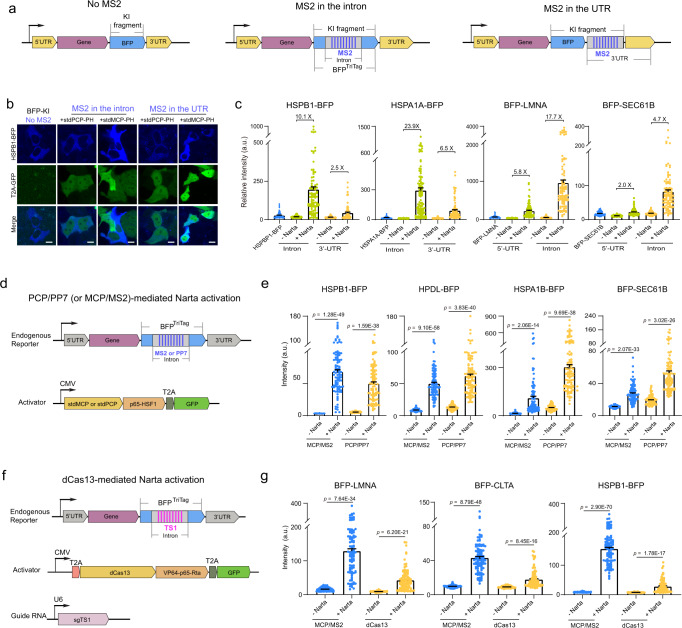
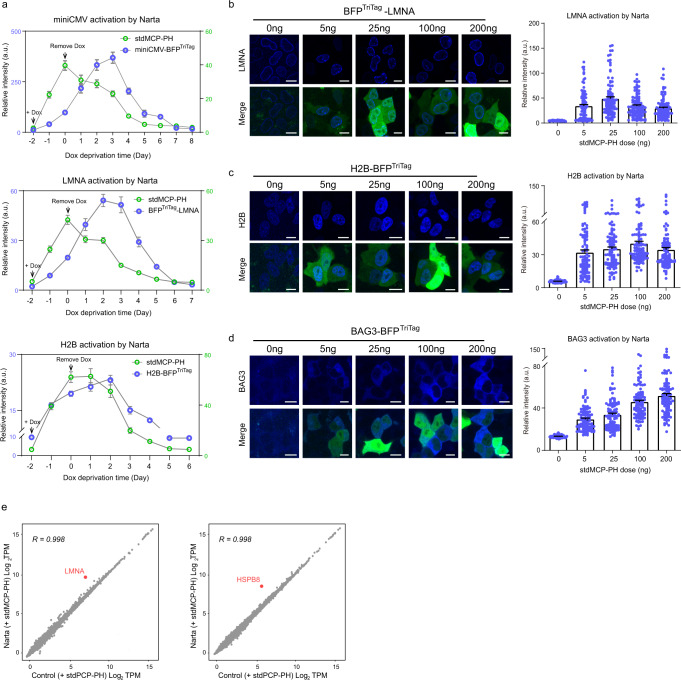
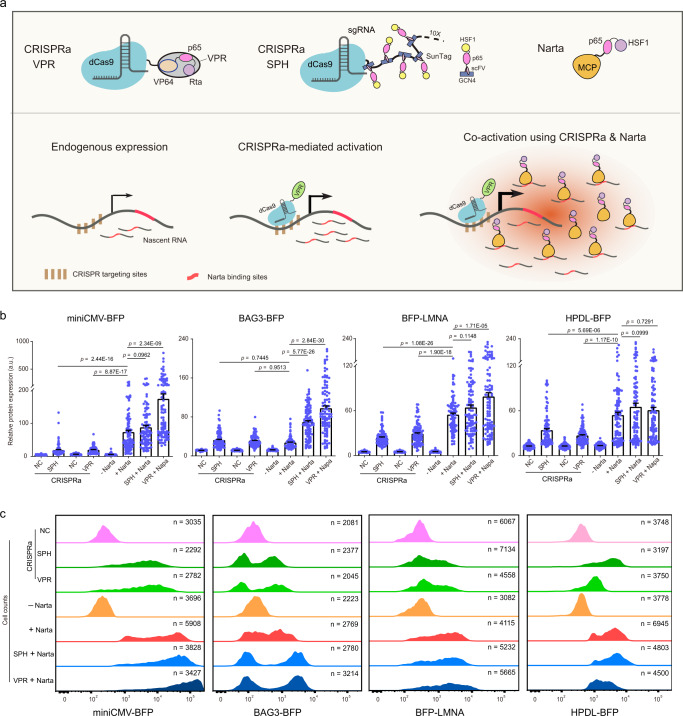
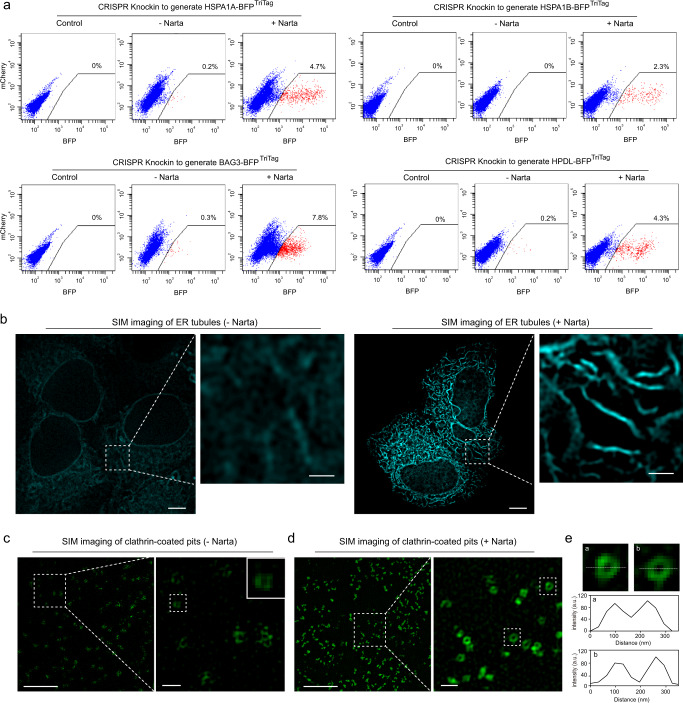
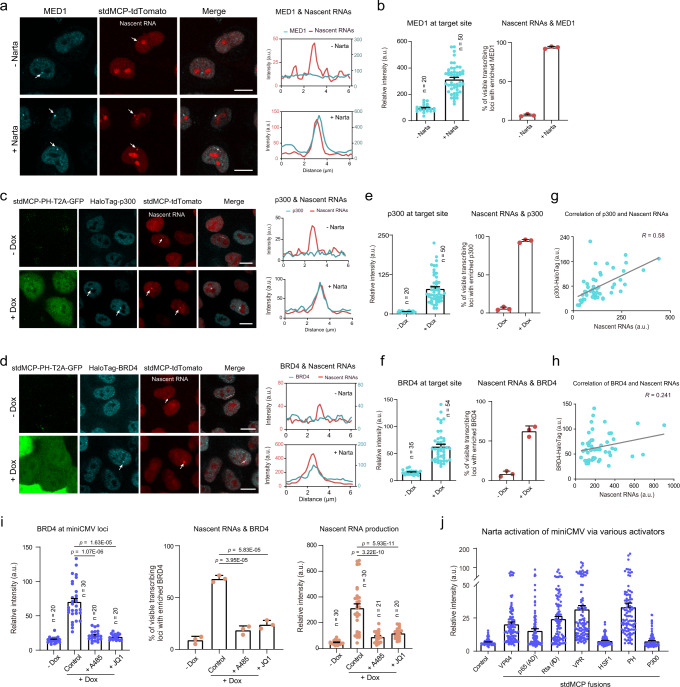
Technologies for gene activation are valuable tools for the study of gene functions and have a wide range of potential applications in bioengineering and medicine. In contrast to existing methods based on recruiting transcriptional modulators via DNA-binding proteins, we developed a strategy termed Narta (nascent RNA-guided transcriptional activation) to achieve gene activation by recruiting artificial transcription factors (aTFs) to transcription sites through nascent RNAs of the target gene. Using Narta, we demonstrate robust activation of a broad range of exogenous and endogenous genes in various cell types, including zebrafish embryos, mouse and human cells. Importantly, the activation is reversible, tunable and specific. Moreover, Narta provides better activation potency of some expressed genes than CRISPRa and, when used in combination with CRISPRa, has an enhancing effect on gene activation. Quantitative imaging illustrated that nascent RNA-directed aTFs could induce the high-density assembly of coactivators at transcription sites, which may explain the larger transcriptional burst size induced by Narta. Overall, our work expands the gene activation toolbox for biomedical research.
© 2022. The Author(s).
Conflict of interest statement
Y.L., W.Z., and B.C. submitted a patent application (Chinese Patent Application No. 2022111029154) on the design and application of a nascent RNA-guided gene activation method based on the technology developed in this paper. All other authors declare no competing interests.
Figures
References
Publication types
MeSH terms
Substances
LinkOut - more resources
Full Text Sources
Molecular Biology Databases
Research Materials
