


Drug resistance of Plasmodium falciparum and Plasmodium vivax isolates in Indonesia
- PMID: 36443817
- PMCID: PMC9703442
- DOI: 10.1186/s12936-022-04385-2
Drug resistance of Plasmodium falciparum and Plasmodium vivax isolates in Indonesia
Abstract
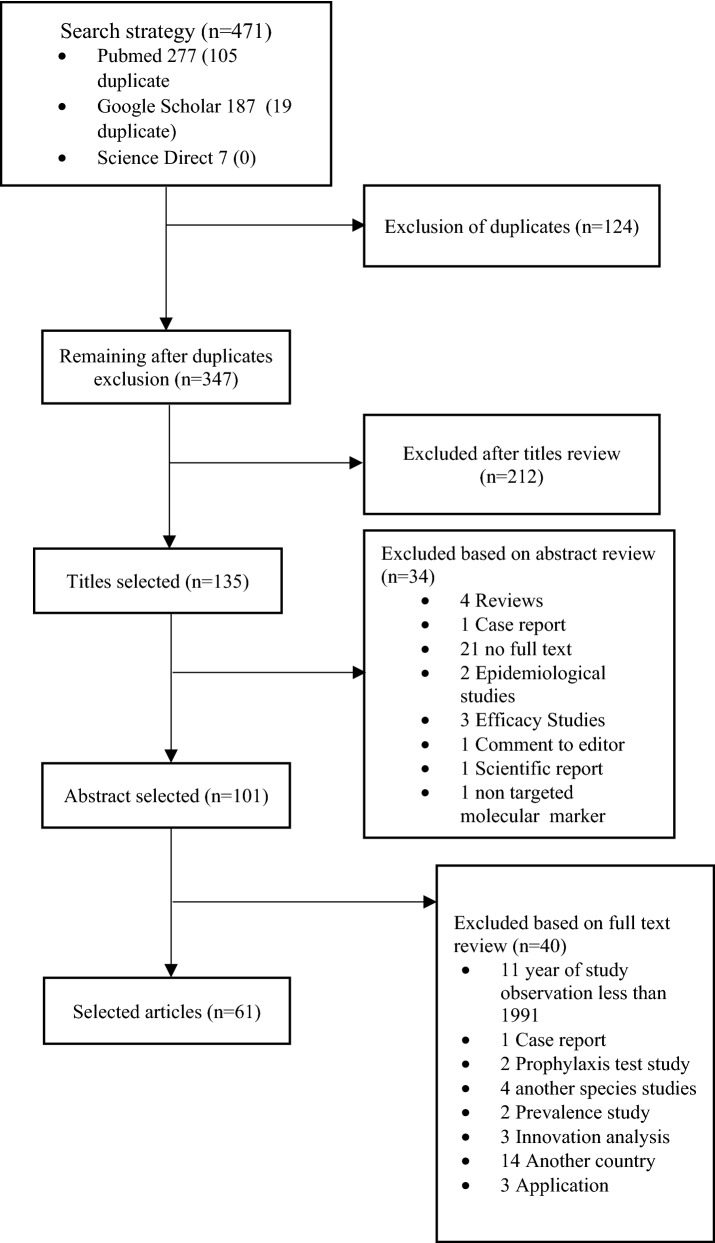
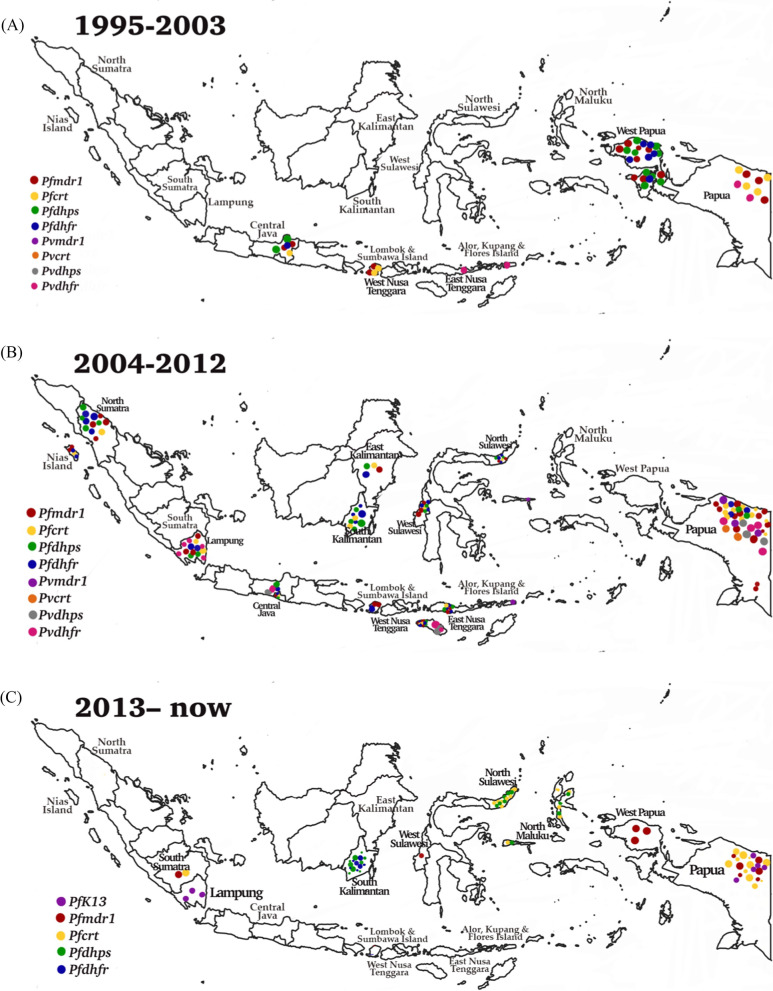
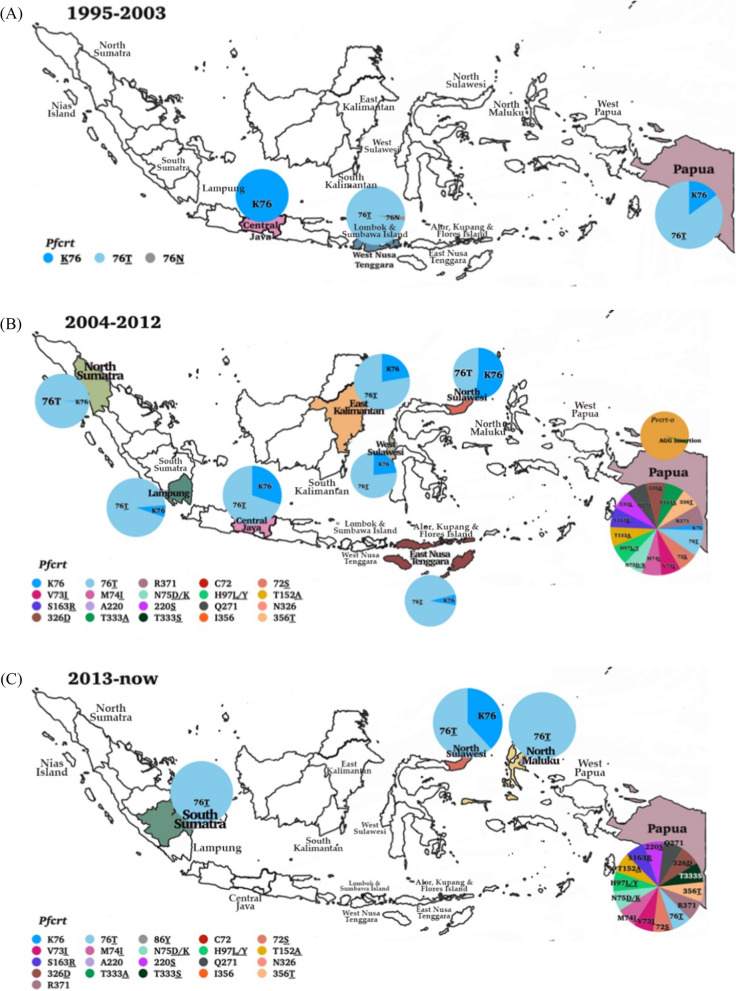
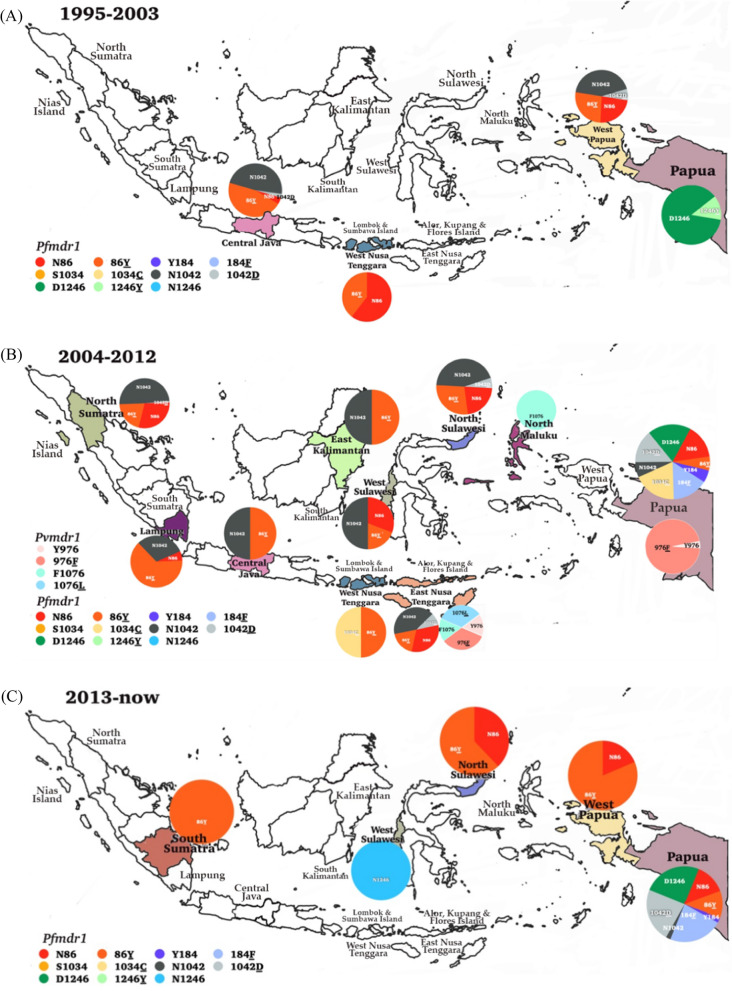
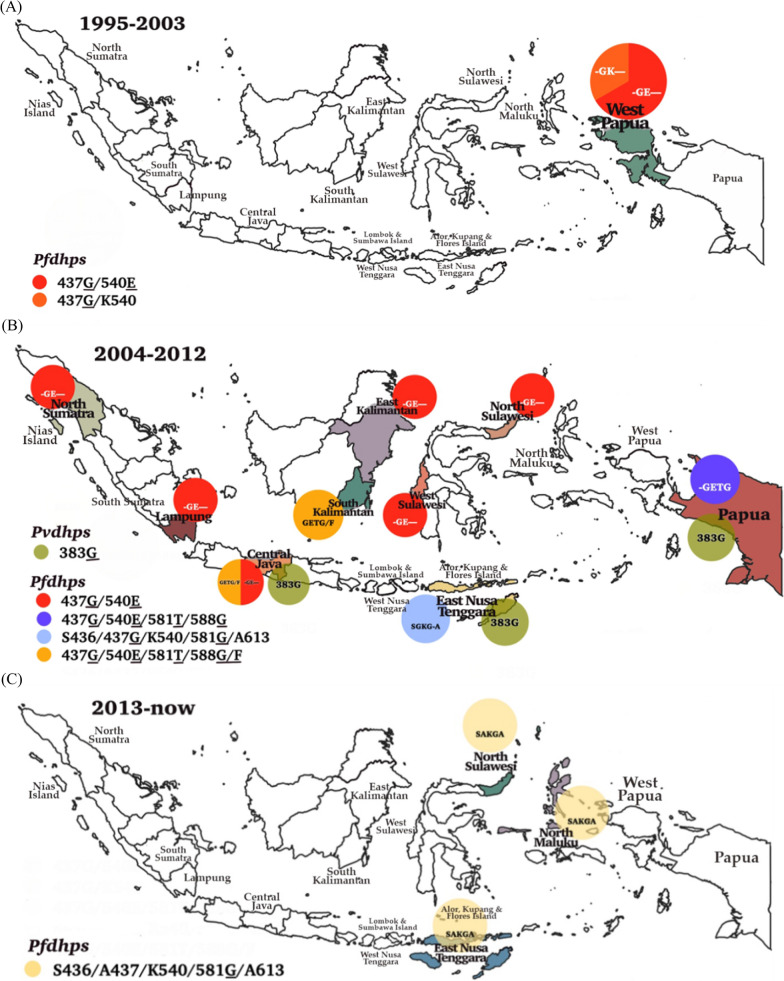
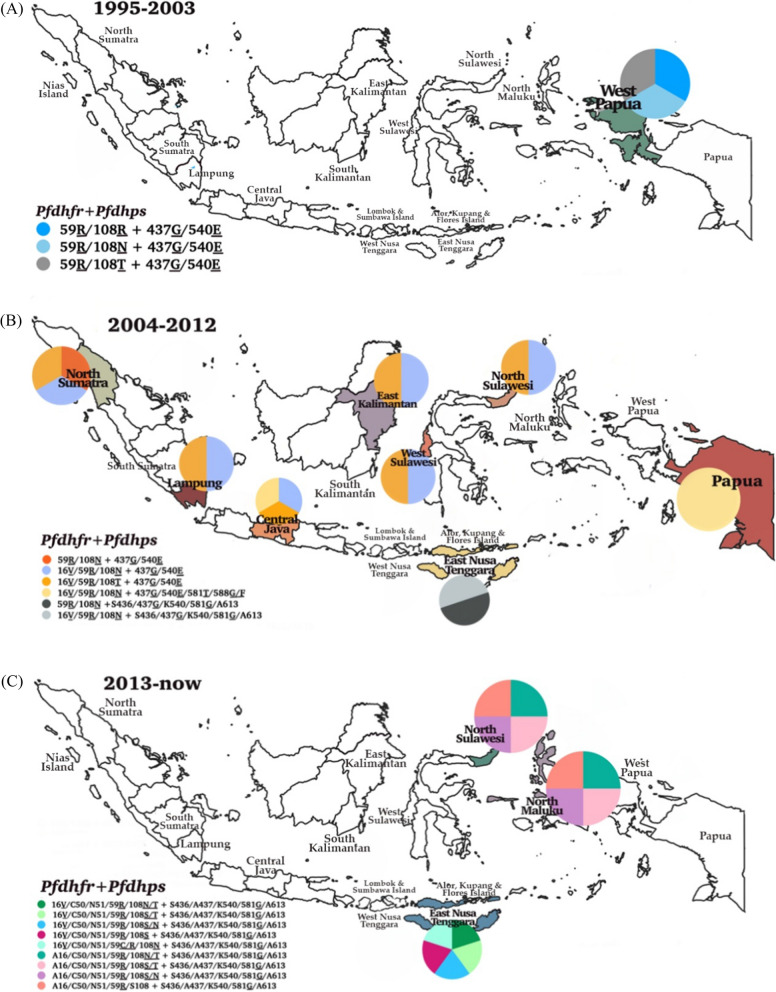
This review article aims to investigate the genotypic profiles of Plasmodium falciparum and Plasmodium vivax isolates collected across a wide geographic region and their association with resistance to anti-malarial drugs used in Indonesia. A systematic review was conducted between 1991 and date. Search engines, such as PubMed, Science Direct, and Google Scholar, were used for articles published in English and Indonesian to search the literature. Of the 471 initially identified studies, 61 were selected for 4316 P. falciparum and 1950 P. vivax individual infections. The studies included 23 molecular studies and 38 therapeutic efficacy studies. K76T was the most common pfcrt mutation. K76N (2.1%) was associated with the haplotype CVMNN. By following dihydroartemisinin-piperaquine (DHA-PPQ) therapy, the mutant pfmdr1 alleles 86Y and 1034C were selected. Low prevalence of haplotype N86Y/Y184/D1246Y pfmdr1 reduces susceptibility to AS-AQ. SNP mutation pvmdr1 Y976F reached 96.1% in Papua and East Nusa Tenggara. Polymorphism analysis in the pfdhfr gene revealed 94/111 (84.7%) double mutants S108N/C59R or S108T/A16V in Central Java. The predominant pfdhfr haplotypes (based on alleles 16, 51, 59,108, 164) found in Indonesia were ANCNI, ANCSI, ANRNI, and ANRNL. Some isolates carried A437G (35.3%) or A437G/K540E SNPs (26.5%) in pfdhps. Two novel pfdhps mutant alleles, I588F/G and K540T, were associated with six pfdhps haplotypes. The highest prevalence of pvdhfr quadruple mutation (F57L/S58R/T61M/S117T) (61.8%) was detected in Papua. In pvdhps, the only polymorphism before and after 2008 was 383G mutation with 19% prevalence. There were no mutations in the pfk13 gene reported with validated and candidate or associated k13 mutation. An increased copy number of pfpm2, associated with piperaquine resistance, was found only in cases of reinfection. Meanwhile, mutation of pvk12 and pvpm4 I165V is unlikely associated with ART and PPQ drug resistance. DHA-PPQ is still effective in treating uncomplicated falciparum and vivax malaria. Serious consideration should be given to interrupt local malaria transmission and dynamic patterns of resistance to anti-malarial drugs to modify chemotherapeutic policy treatment strategies. The presence of several changes in pfk13 in the parasite population is of concern and highlights the importance of further evaluation of parasitic ART susceptibility in Indonesia.
Keywords: Drug resistance; Indonesia; Molecular; P. falciparum; P. vivax.
© 2022. The Author(s).
Conflict of interest statement
The authors declare no competing interests.
Figures

References
-
- WHO. World Malaria Report 2021. Geneva, World Health Organization, 2021.
-
- MoH. Informasi Malaria Indonesia. Jakarta; 2021.
-
- WHO. Zero malaria starts with me”: history of malaria elimination in Indonesia helps to shape a malaria-free future. Geneva, World Health Organization, 2020.
Publication types
MeSH terms
Substances
LinkOut - more resources
Full Text Sources
Research Materials
