


Predictive model for long COVID in children 3 months after a SARS-CoV-2 PCR test
- PMID: 36447237
- PMCID: PMC9708506
- DOI: 10.1186/s12916-022-02664-y
Predictive model for long COVID in children 3 months after a SARS-CoV-2 PCR test
Abstract
Background: To update and internally validate a model to predict children and young people (CYP) most likely to experience long COVID (i.e. at least one impairing symptom) 3 months after SARS-CoV-2 PCR testing and to determine whether the impact of predictors differed by SARS-CoV-2 status.
Methods: Data from a nationally matched cohort of SARS-CoV-2 test-positive and test-negative CYP aged 11-17 years was used. The main outcome measure, long COVID, was defined as one or more impairing symptoms 3 months after PCR testing. Potential pre-specified predictors included SARS-CoV-2 status, sex, age, ethnicity, deprivation, quality of life/functioning (five EQ-5D-Y items), physical and mental health and loneliness (prior to testing) and number of symptoms at testing. The model was developed using logistic regression; performance was assessed using calibration and discrimination measures; internal validation was performed via bootstrapping and the final model was adjusted for overfitting.
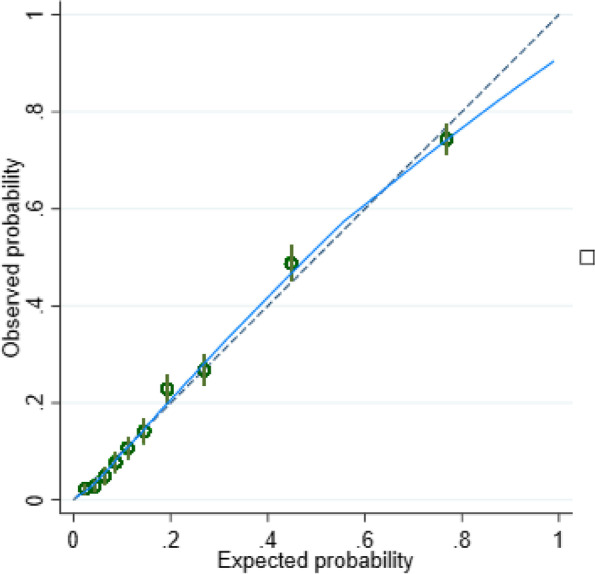
Results: A total of 7139 (3246 test-positives, 3893 test-negatives) completing a questionnaire 3 months post-test were included. 25.2% (817/3246) of SARS-CoV-2 PCR-positives and 18.5% (719/3893) of SARS-CoV-2 PCR-negatives had one or more impairing symptoms 3 months post-test. The final model contained SARS-CoV-2 status, number of symptoms at testing, sex, age, ethnicity, physical and mental health, loneliness and four EQ-5D-Y items before testing. Internal validation showed minimal overfitting with excellent calibration and discrimination measures (optimism-adjusted calibration slope: 0.96575; C-statistic: 0.83130).
Conclusions: We updated a risk prediction equation to identify those most at risk of long COVID 3 months after a SARS-CoV-2 PCR test which could serve as a useful triage and management tool for CYP during the ongoing pandemic. External validation is required before large-scale implementation.
Keywords: COVID-19; Children and young people; Long COVID; Predictive model; Public health; Symptoms.
© 2022. The Author(s).
Conflict of interest statement
Sir Professor Stephenson is the Chair of the Health Research Authority and therefore recused himself from the research ethics application. All other authors declare no competing interests.
Figures
References
-
- Stephenson T, Pinto Pereira SM, Shafran R, de Stavola BL, Rojas N, McOwat K, et al. Physical and mental health 3 months after SARS-CoV-2 infection (long COVID) among adolescents in England (CLoCk): a national matched cohort study. Lancet Child Adolesc Health. 2022. 10.1016/s2352-4642(22)00022-0. - PMC - PubMed
Publication types
MeSH terms
Grants and funding
LinkOut - more resources
Full Text Sources
Medical
Miscellaneous
