


Mental health services in Ukraine during the early phases of the 2022 Russian invasion
- PMID: 36458514
- PMCID: PMC10964280
- DOI: 10.1192/bjp.2022.170
Mental health services in Ukraine during the early phases of the 2022 Russian invasion
Abstract
Background: In February 2022, Russia began its invasion of Ukraine. War increases the demand for mental healthcare among affected populations, but with devastating losses across the nation, it is unclear if Ukrainian mental health services are able to meet the needs of the people.
Aims: We aimed to evaluate the state of Ukrainian in-patient mental health services, which remains the backbone of the nation's psychiatric services, early in the 2022 Russian invasion.
Method: We conducted a nationwide cross-sectional study on Ukrainian in-patient mental health facilities during the 2022 Russian invasion. Using an online questionnaire, we obtained responses from the heads of 32 in-patient mental health facilities across Ukraine, representing 52.5% of all in-patient mental health facilities in the nation. We gathered information on hospital admissions, staff, humanitarian aid received and the additional needs of each facility.
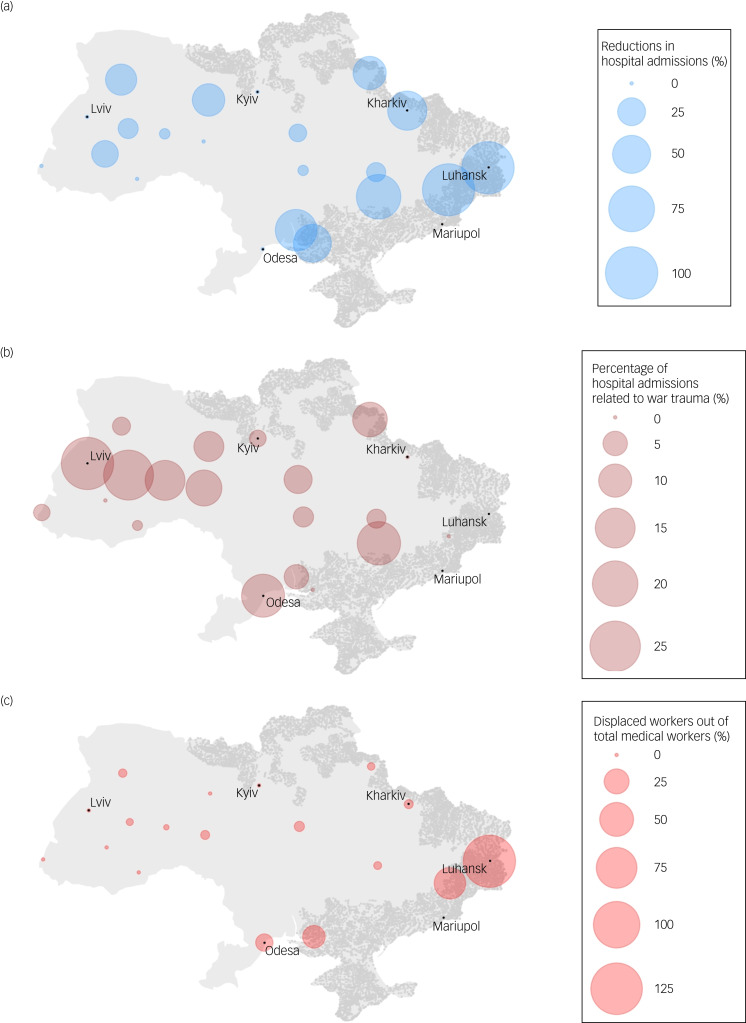
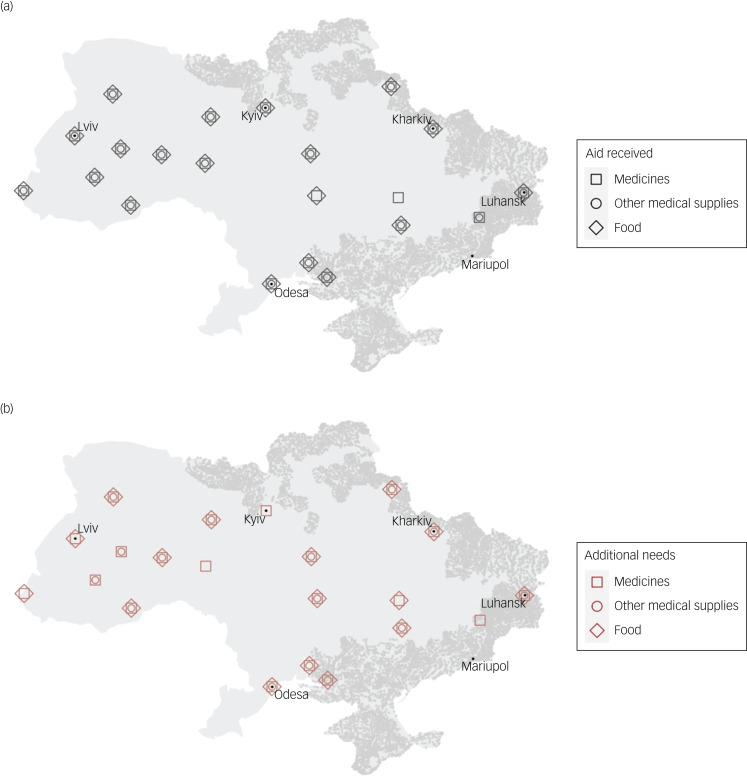
Results: Hospital admissions were reduced by 23.5% during the war (April 2022) compared with before the war (January 2022). Across facilities, 9.6% of hospital admissions in April 2022 were related to war trauma, with facilities reporting percentages as high as 30.0%. Facilities reported reductions in staff, with 9.1% of total medical workers displaced and 0.5% injured across facilities. One facility reported that 45.6% of their total medical workers were injured. Although facilities across Ukraine have received humanitarian aid (such as medical supplies, food, volunteers), they reported additionally needing equipment as well as more staff.
Conclusions: The mental health service structure in Ukraine has been severely damaged during the 2022 invasion, with staff shortages despite a significant number of hospital admissions related to war trauma.
Keywords: Epidemiology; human rights; in-patient treatment; low and middle income countries; military psychiatry.
Conflict of interest statement
None.
Figures
References
-
- Goto R, Guerrero APS, Speranza M, Fung D, Paul C, Skokauskas N, et al. War is a public health emergency. Lancet 2022; 399: 1302. - PubMed
-
- Bai W, Cai H, Sha S, Ng CH, Javed A, Mari J, et al. A joint international collaboration to address the inevitable mental health crisis in Ukraine. Nat Med 2022; 28: 1103–4. - PubMed
-
- Goto R, Frodl T, Skokauskas N. Armed conflict and early childhood development in 12 low- and middle-income countries. Pediatrics 2021; 148: e2021050332. - PubMed
-
- Muyinda H, Mugisha J. Stock-outs, uncertainty and improvisation in access to healthcare in war-torn Northern Uganda. Soc Sci Med 2015; 146: 316–23. - PubMed
Publication types
MeSH terms
LinkOut - more resources
Full Text Sources
Miscellaneous
