


Impact of wideband cardiac magnetic resonance on diagnosis, decision-making and outcomes in patients with implantable cardioverter defibrillators
- PMID: 36458878
- PMCID: PMC10226743
- DOI: 10.1093/ehjci/jeac227
Impact of wideband cardiac magnetic resonance on diagnosis, decision-making and outcomes in patients with implantable cardioverter defibrillators
Abstract
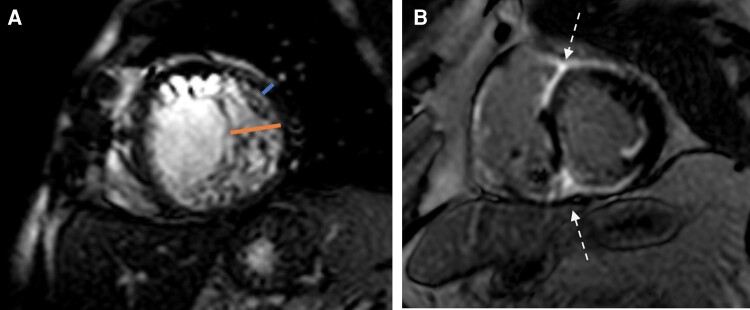
Aims: Although myocardial scar assessment using late gadolinium enhancement (LGE) cardiac magnetic resonance (CMR) imaging is frequently indicated for patients with implantable cardioverter defibrillators (ICDs), metal artefact can degrade image quality. With the new wideband technique designed to mitigate device related artefact, CMR is increasingly used in this population. However, the common clinical indications for CMR referral and impact on clinical decision-making and prognosis are not well defined. Our study was designed to address these knowledge gaps.
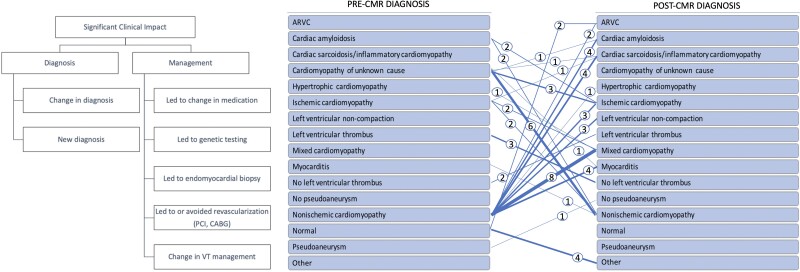
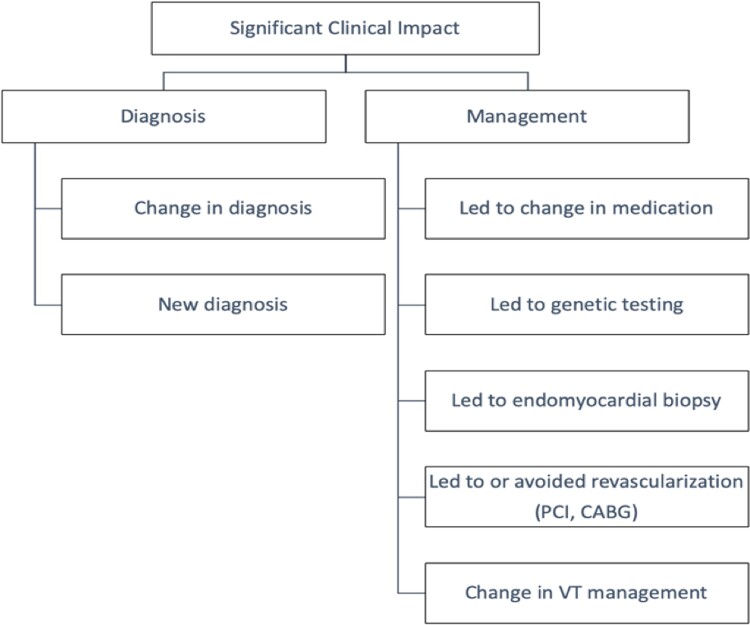
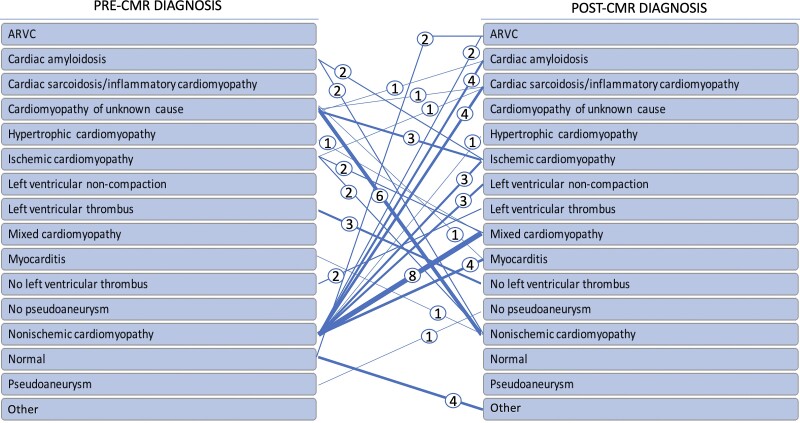
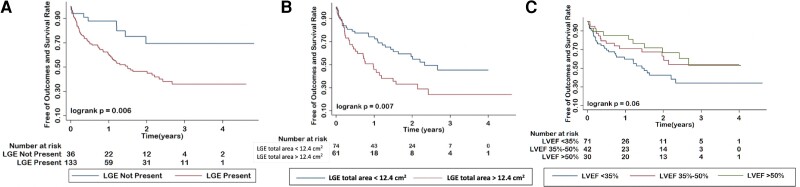
Methods and results: One hundred seventy-nine consecutive patients with an ICD (age 59 ± 13 years, 75% male) underwent CMR using cine and wideband pulse sequences for LGE imaging. Electronic medical records were reviewed to determine the reason for CMR referral, whether there was a change in clinical decision-making, and occurrence of major adverse cardiac events (MACEs). Referral indication was the most common evaluation of ventricular tachycardia (VT) substrate (n = 114, 64%), followed by cardiomyopathy (n = 53, 30%). Overall, CMR resulted in a new or changed diagnosis in 64 (36%) patients and impacted clinical management in 51 (28%). The effect on management change was highest in patients presenting with VT. A total of 77 patients (43%) experienced MACE during the follow-up period (median 1.7 years), including 65 in patients with evidence of LGE. Kaplan-Meier analysis showed that ICD patients with LGE had worse outcomes than those without LGE (P = 0.006).
Conclusion: The clinical yield from LGE CMR is high and provides management changing and meaningful prognostic information in a significant proportion of patients with ICDs.
Keywords: cardiac magnetic resonance; implantable cardioverter defibrillators; late gadolinium enhancement.
© The Author(s) 2022. Published by Oxford University Press on behalf of the European Society of Cardiology. All rights reserved. For permissions, please email: journals.permissions@oup.com.
Conflict of interest statement
Conflict of interest: K.K. and A.R.P. have received research support from Philips. The other authors do not have any relevant disclosures.
Figures
Comment in
-
Wideband cardiac magnetic resonance for myocardial tissue characterization in patients with implantable cardioverter defibrillators (ICDs): comment on Patel et al.'s Impact of wideband cardiac magnetic resonance on diagnosis, decision-making, and outcomes in patients with ICD.Eur Heart J Cardiovasc Imaging. 2023 Jan 23;24(2):190-191. doi: 10.1093/ehjci/jeac230. Eur Heart J Cardiovasc Imaging. 2023. PMID: 36458870 No abstract available.
References
-
- Nazarian S, Halperin HR. Magnetic resonance imaging and cardiac devices. N Engl J Med 2018;378:1652–3. - PubMed
-
- Russo RJ, Costa HS, Silva PD, Anderson JL, Arshad A, Biederman RWet al. Assessing the risks associated with MRI in patients with a pacemaker or defibrillator. N Engl J Med 2017;376:755–64. - PubMed
-
- Padmanabhan D, Kella DK, Deshmukh AJ, Mulpuru SK, Mehta RA, Dalzell CMet al. Safety of thoracic magnetic resonance imaging for patients with pacemakers and defibrillators. Heart Rhythm 2019;16:1645–51. - PubMed
MeSH terms
Substances
Grants and funding
LinkOut - more resources
Full Text Sources
Medical
