


In Silico Modeling Demonstrates that User Variability During Tumor Measurement Can Affect In Vivo Therapeutic Efficacy Outcomes
- PMID: 36465983
- PMCID: PMC9716635
- DOI: 10.1177/11769351221139257
In Silico Modeling Demonstrates that User Variability During Tumor Measurement Can Affect In Vivo Therapeutic Efficacy Outcomes
Abstract
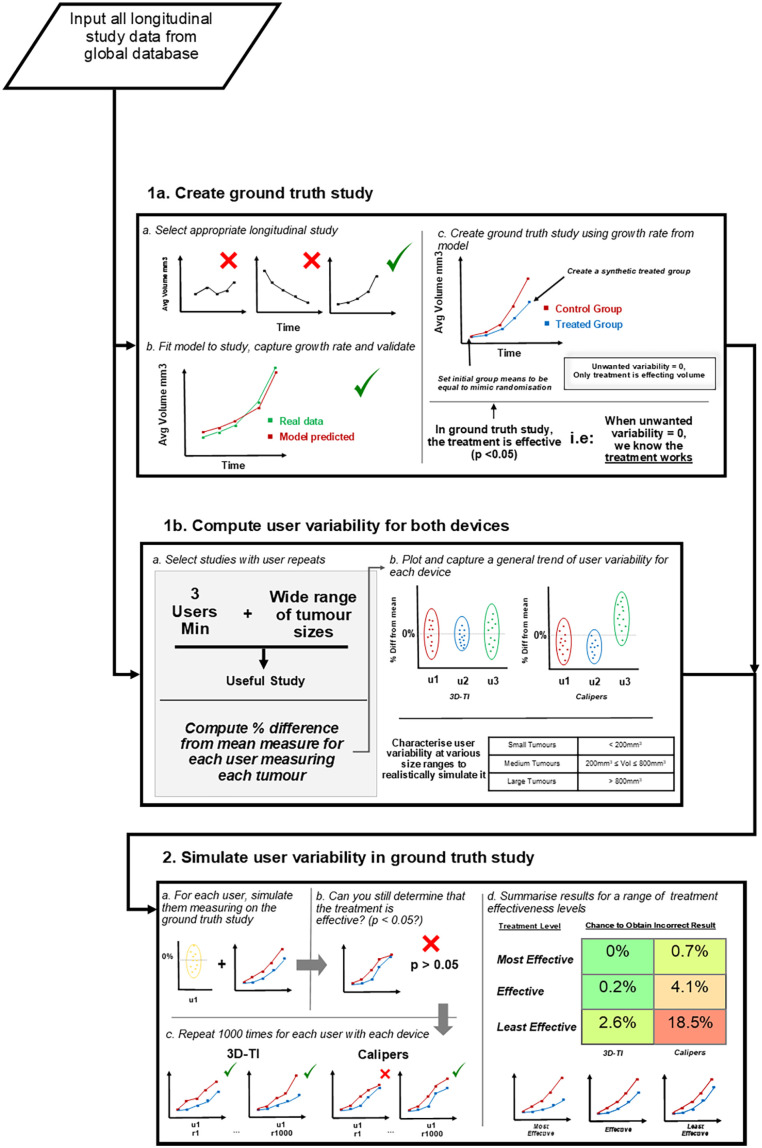
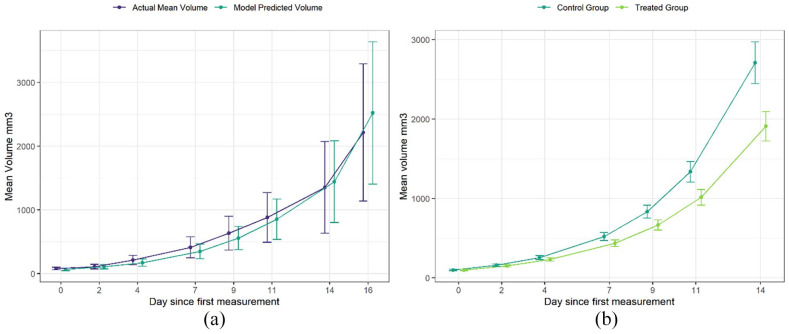
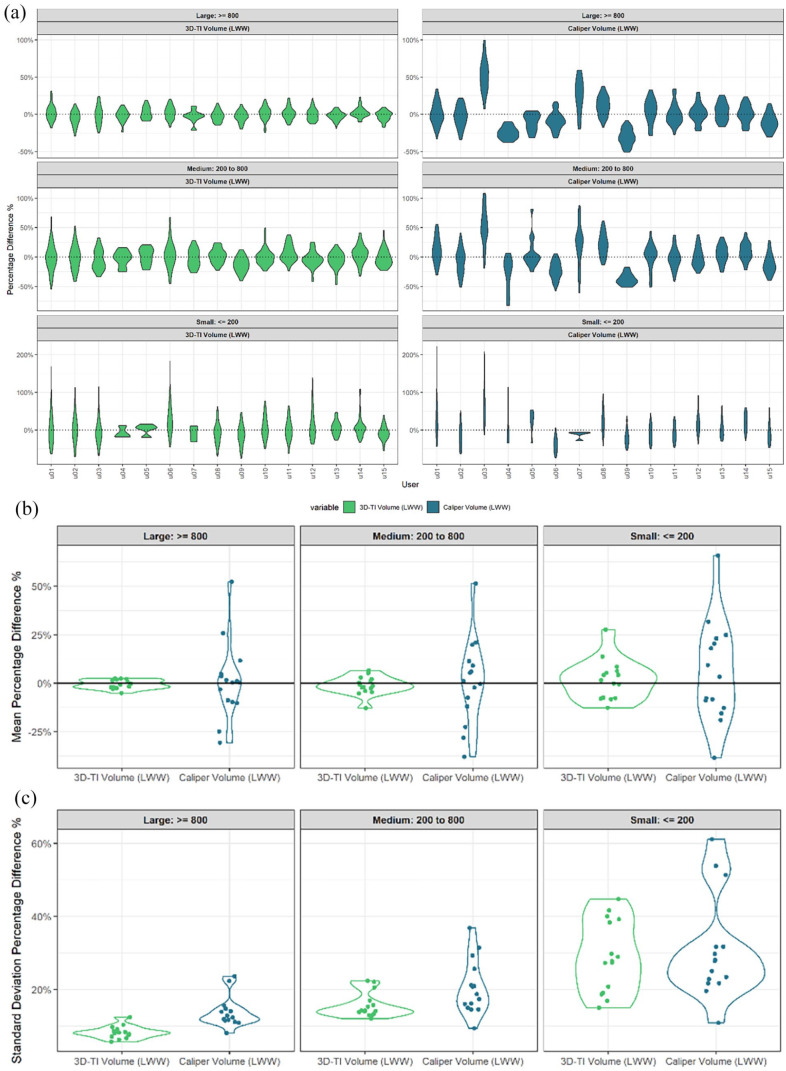
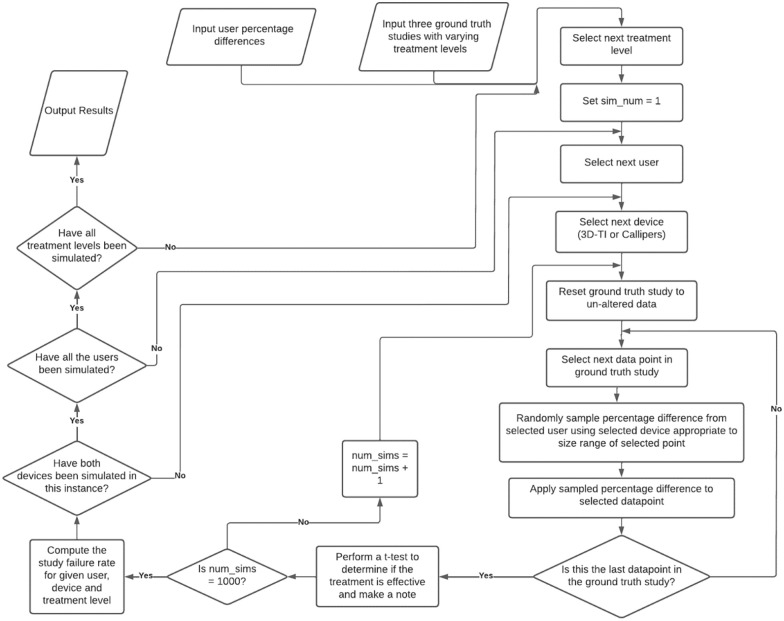
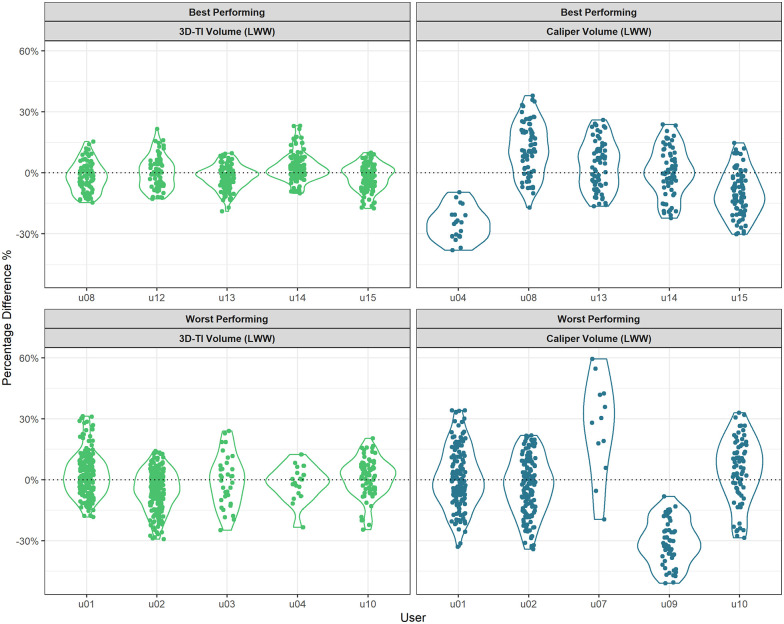
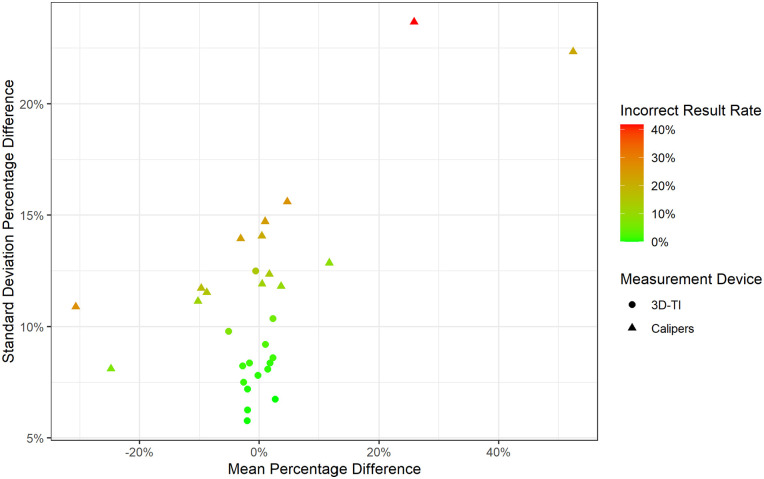
User measurement bias during subcutaneous tumor measurement is a source of variation in preclinical in vivo studies. We investigated whether this user variability could impact efficacy study outcomes, in the form of the false negative result rate when comparing treated and control groups. Two tumor measurement methods were compared; calipers which rely on manual measurement, and an automatic 3D and thermal imaging device. Tumor growth curve data were used to create an in silico efficacy study with control and treated groups. Before applying user variability, treatment group tumor volumes were statistically different to the control group. Utilizing data collected from 15 different users across 9 in vivo studies, user measurement variability was computed for both methods and simulation was used to investigate its impact on the in silico study outcome. User variability produced a false negative result in 0.7% to 18.5% of simulated studies when using calipers, depending on treatment efficacy. When using an imaging device with lower user variability this was reduced to 0.0% to 2.6%, demonstrating that user variability impacts study outcomes and the ability to detect treatment effect. Reducing variability in efficacy studies can increase confidence in efficacy study outcomes without altering group sizes. By using a measurement device with lower user variability, the chance of missing a therapeutic effect can be reduced and time and resources spent pursuing false results could be saved. This improvement in data quality is of particular interest in discovery and dosing studies, where being able to detect small differences between groups is crucial.
Keywords: 3D-TI; Tumor models; efficacy study; in silico; in vivo; study reproducibility; tumor imaging.
© The Author(s) 2022.
Conflict of interest statement
The author(s) declared the following potential conflicts of interest with respect to the research, authorship, and/or publication of this article: Fuel3D is developing BioVolume and claims financial competing interests on the product. There are specific patents granted and filed for this technology or any part of it. Fuel3D provided support in the form of salaries for authors, but did not have any additional role in the study design, data collection and analysis, decision to publish, or preparation of the manuscript. In vivo work was carried out by BioVolume users who were not employed by Fuel3D and who did not receive financial compensation.
Figures
References
-
- Euhus DM, Hudd C, LaRegina MC, Johnson FE. Tumor measurement in the nude mouse. J Surg Oncol. 1986;31:229-234. - PubMed
-
- Brough D, Smith A, Turley K, Amos H, Murkin J. Reducing inter-operator variability when measuring subcutaneous tumours in mice: an investigation into the effect of inter-operator variability when using callipers or a novel 3D and thermal measurement system. MetaArXiv Preprint. Posted online October 8, 2021. doi:10.31222/osf.io/hvfpx - DOI
LinkOut - more resources
Full Text Sources
