


Urban density and COVID-19: understanding the US experience
- PMID: 36465997
- PMCID: PMC9702884
- DOI: 10.1007/s00168-022-01193-z
Urban density and COVID-19: understanding the US experience
Abstract
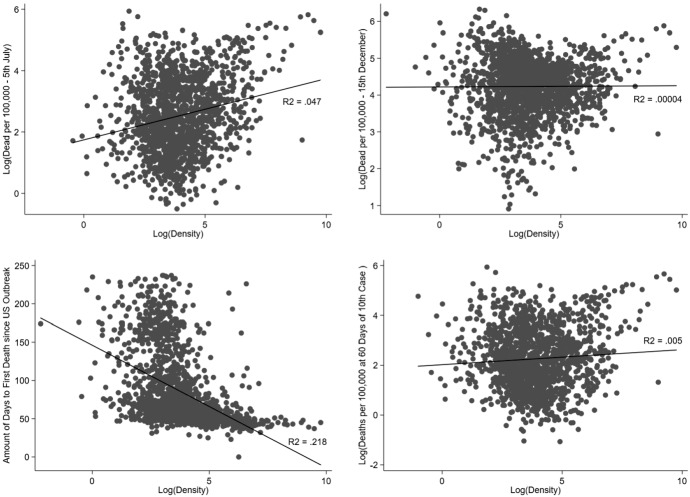
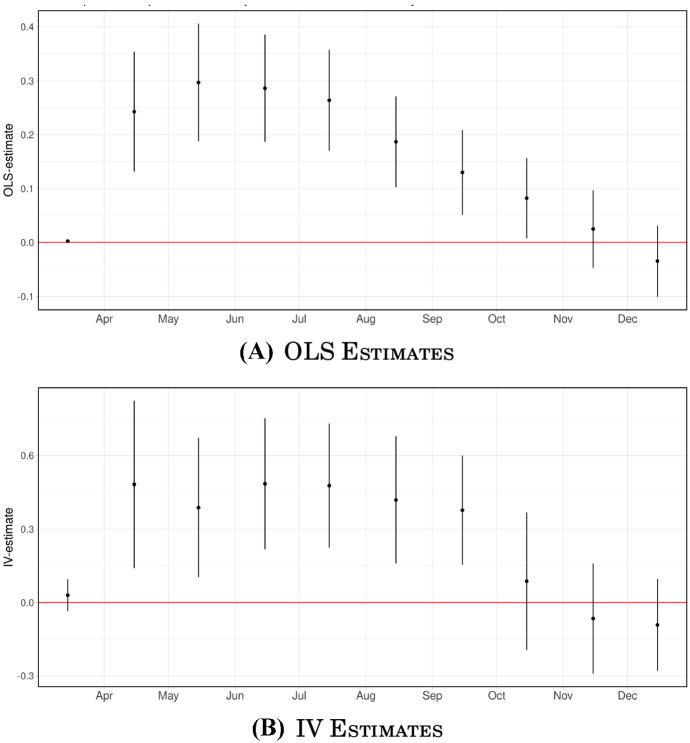
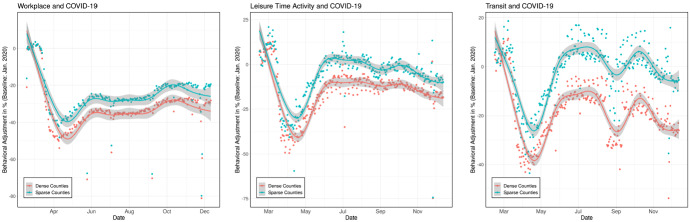
This paper revisits the debate around the link between population density and the severity of COVID-19 spread in the USA. We do so by conducting an empirical analysis based on graphical evidence, regression analysis and instrumental variable strategies borrowed from the agglomeration literature. Studying the period between the start of the epidemic and the beginning of the vaccination campaign at the end of 2020, we find that the cross-sectional relationship between density and COVID-19 deaths changed as the year evolved. Initially, denser counties experienced more COVID-19 deaths. Yet, by December, the relationship between COVID deaths and urban density was completely flat. This is consistent with evidence indicating density affected the timing of the outbreak-with denser locations more likely to have an early outbreak-yet had no influence on time-adjusted COVID-19 cases and deaths. Using data from Google, Facebook, the US Census and other sources, we investigate potential mechanisms behind these findings.
© The Author(s) 2022.
Figures
References
-
- Almagro M, Coven J, Gupta A, Orane-Hutchinson A (2020) “Racial disparities in frontline workers and housing crowding during COVID-19: Evidence from geolocation data.” Available at SSRN 3695249
-
- Angel S, Lamson-Hall P, Tamayo MMS et al (2020) Coronavirus and the cities: explaining variations in the onset of infection and in the number of reported cases and deaths in US metropolitan areas as of 27 March 2020. New York University, Marron Institute of Urban Management
Publication types
LinkOut - more resources
Full Text Sources