


Hypothyroidism Prevalence in the United States: A Retrospective Study Combining National Health and Nutrition Examination Survey and Claims Data, 2009-2019
- PMID: 36466005
- PMCID: PMC9706417
- DOI: 10.1210/jendso/bvac172
Hypothyroidism Prevalence in the United States: A Retrospective Study Combining National Health and Nutrition Examination Survey and Claims Data, 2009-2019
Abstract
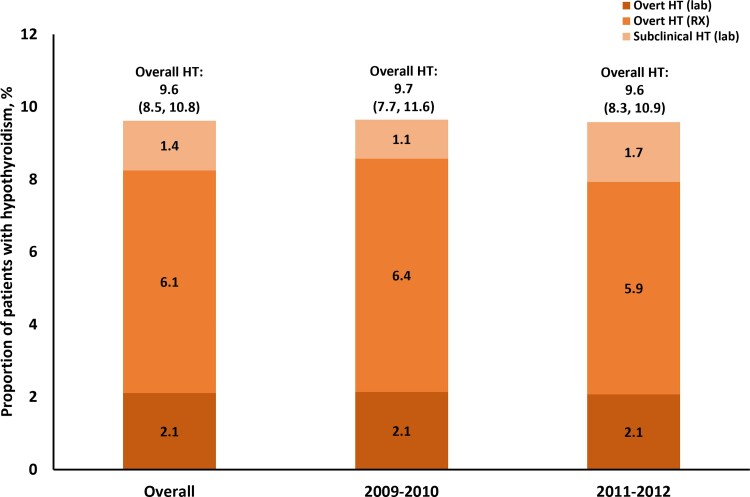
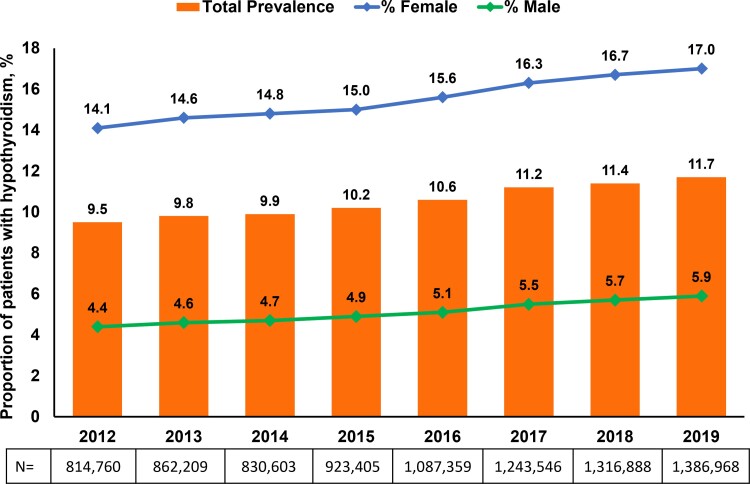
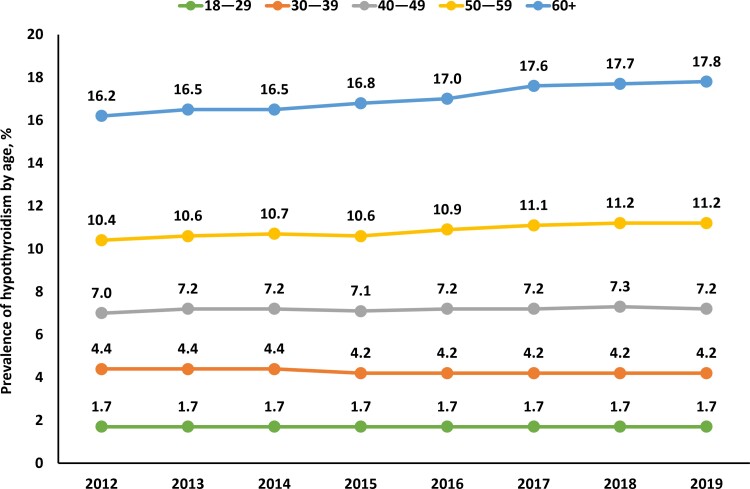
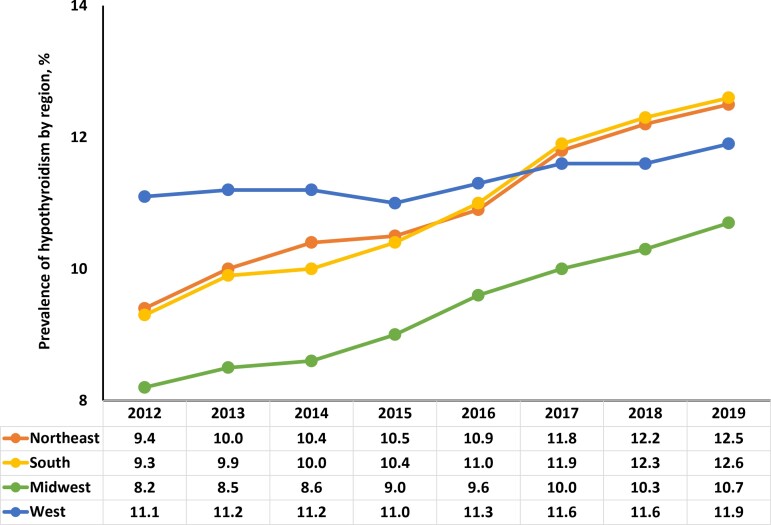
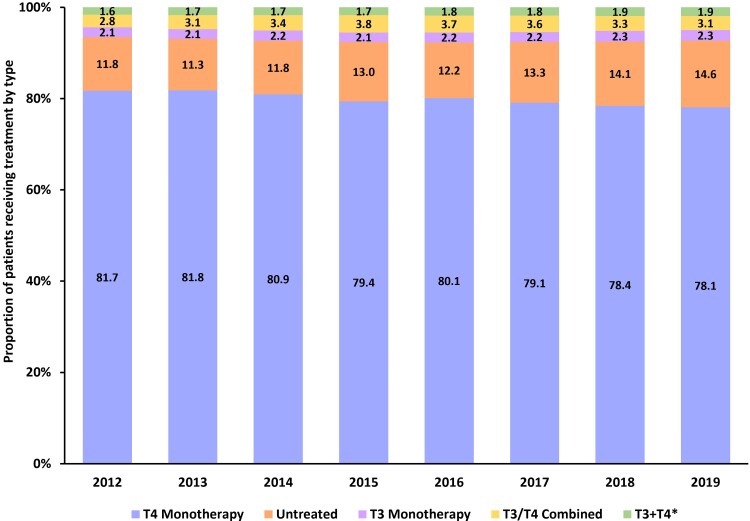
Previous estimates determined prevalence of hypothyroidism (HT) to be 4.6% of the US population. This study aimed to update estimates of HT prevalence in the United States by retrospective analysis of 2 datasets. Data on HT type (overt or subclinical HT) and treatment were collected from the 2009-2010 and 2011-2012 National Health and Nutrition Examination Survey (NHANES) cycles. From the Optum administrative claims database, medical and pharmacy claims were collected between January 1, 2012, and December 31, 2019. Patients were defined as having HT if, per given year, they had >1 prescription for HT treatment, >1 claim indicating an HT diagnosis, or thyroid-stimulating hormone levels >4.0 mIU/L (NHANES arm). For both studies, treatment was defined as any evidence of synthetic or natural thyroid hormone replacement, identified by pharmacy claims or patient surveys. Data are reported as percentage of patients with HT and treatments received. Between 2009 and 2012, HT prevalence remained around 9.6% of the US population. The administrative claims dataset showed that HT prevalence grew from 9.5% in 2012 to 11.7% in 2019 and that >78% of patients received thyroxine (T4) monotherapy. Similarly, the NHANES dataset showed that T4 replacement therapy was the most common treatment for HT. From 2012-2019, patients with untreated HT grew from 11.8% to 14.4%. The prevalence of HT in the United States has steadily increased since 2009. Likewise, the percentage of hypothyroid-diagnosed patients not receiving treatment also increased, suggesting that the increased prevalence may be due to increased cases of subclinical HT.
Keywords: administrative claims database; epidemiology; hypothyroidism; retrospective study.
© The Author(s) 2022. Published by Oxford University Press on behalf of the Endocrine Society.
Figures
References
-
- Patil N, Rehman A, Jialal I. Hypothyroidism. Accessed August 4, 2021. https://www.ncbi.nlm.nih.gov/books/NBK519536/
LinkOut - more resources
Full Text Sources