


Glycemic control and the risk of tuberculosis in patients with diabetes: A cohort study in a Mediterranean city
- PMID: 36466495
- PMCID: PMC9713231
- DOI: 10.3389/fpubh.2022.1017024
Glycemic control and the risk of tuberculosis in patients with diabetes: A cohort study in a Mediterranean city
Abstract
Background: Diabetes mellitus (DM) is one of the leading chronic diseases globally and one of the most common causes of death, morbidity, and poor quality of life. According to the WHO, DM is also one of the main risk factors for developing active tuberculosis (TB). Subjects with DM are at a higher risk of infections, in addition to frequent micro and macrovascular complications, and therefore sought to determine whether poor glycemic control is linked to a higher risk of developing TB.
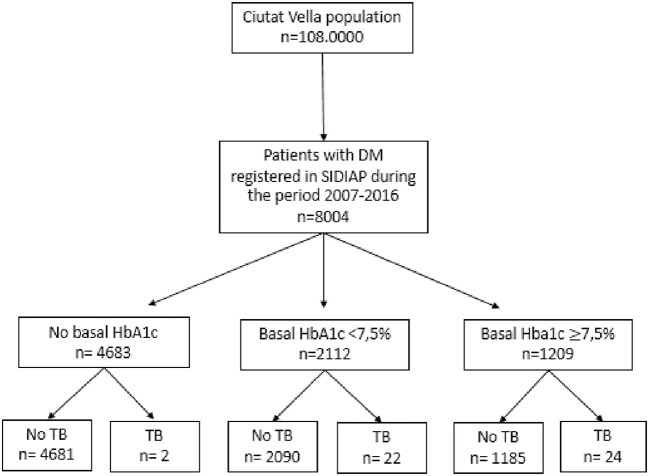
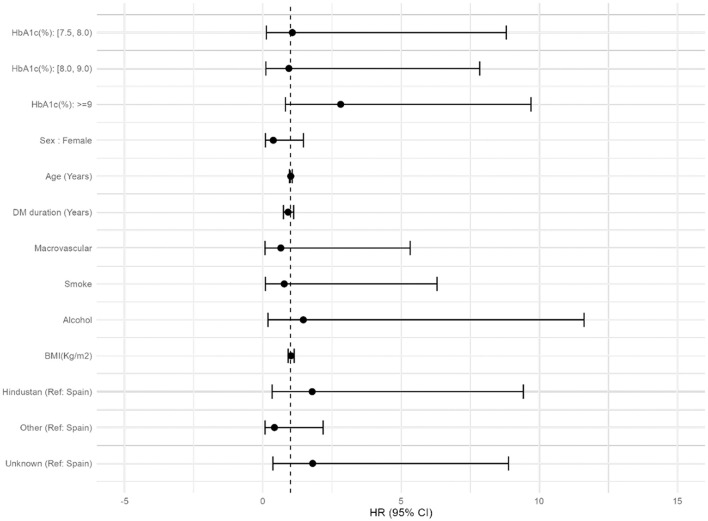
Methods: We used a retrospective cohort of diabetic subjects to predict the incidence of TB. All DM patients were recruited from Ciutat Vella (the inner-city of Barcelona) from January 2007 until December 2016, with a follow-up period until December 2018 (≥2 years). Data were extracted from Barcelona's Primary Care medical record database - SIDIAP, and linked to the Barcelona TB Control Program. The incidence of TB and the impact of glycemic control were estimated using time-to-event curves analyzed by Cox proportional hazard regression. Hazard ratios (HRs) and 95% confidence intervals (CIs), unadjusted and adjusted by potential confounding variables, were also assessed, which included age, sex, diabetes duration, macrovascular and microvascular signs, BMI, smoking habit, alcohol consumption and geographical origin.
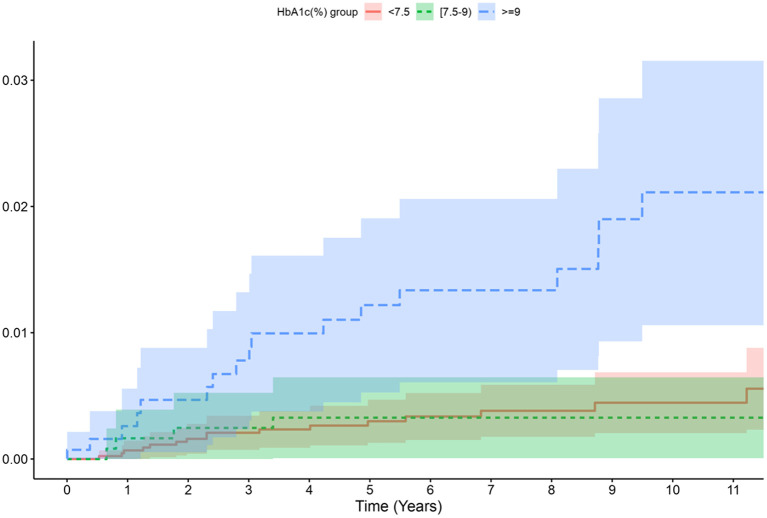
Results: Of 8,004 DM patients considered for the study (equating to 68,605 person-years of follow-up), 84 developed TB [incidence rate = 70 (95% CI: 52-93) per 100,000 person-years]. DM subjects with TB were younger (mean: 52.2 vs. 57.7 years old), had higher values of glycosylated hemoglobin (HbA1c) (7.66 vs. 7.41%) and total triglycerides (122 vs. 105 mg/dl), and had twice the frequency of diabetic nephropathy (2.08 vs. 1.18%). The calculated incidence rate increased with increasing HbA1c: 120.5 (95% CI 77.2-179.3) for HbA1c ≥ 7.5%, 143 (95% CI 88.3-218.1) for HbA1c ≥ 8% and 183.8 (95% CI 105-298) for HbA1c ≥ 9%. An increase in the risk of TB was also observed according to a poorer optimization of glycemic control: adjusted HR 1.80 (95% CI 0.60-5.42), 2.06 (95% CI 0.67-6.32), and 2.82 (95% CI 0.88-9.06), respectively.
Conclusion: Diabetic subjects with worse glycemic control show a trend toward a higher risk of developing TB.
Keywords: Primary Health Care; comorbidities; diabetes complications; diabetes mellitus; glycemic control; social determinants of health; tuberculosis.
Copyright © 2022 Antonio-Arques, Caylà, Real, Moreno-Martinez, Orcau, Mauricio, Mata-Cases, Julve, Navas Mendez, Puig Treserra, Millet, Del Val García, Vlacho and Franch-Nadal.
Conflict of interest statement
The authors declare that the research was conducted in the absence of any commercial or financial relationships that could be construed as a potential conflict of interest.
Figures
References
-
- WHO . Enfermedades No Transmisibles. Available online at: https://www.who.int/es/news-room/fact-sheets/detail/noncommunicable-dise... (accessed May 15, 2021).
-
- World Health Organization . Global Tuberculosis Report 2021. (2021). Available online at: https://www.who.int/teams/global-tuberculosis-programme/tb-reports/globa... (accessed April 28, 2022).
-
- International Diabetes Federation . IDF Diabetes Atlas Ninth. Dunia: IDF; (2019). p. 168. - PubMed
Publication types
MeSH terms
Substances
LinkOut - more resources
Full Text Sources
Medical
