


Nomogram based on spleen volume expansion rate predicts esophagogastric varices bleeding risk in patients with hepatitis B liver cirrhosis
- PMID: 36468077
- PMCID: PMC9709196
- DOI: 10.3389/fsurg.2022.1019952
Nomogram based on spleen volume expansion rate predicts esophagogastric varices bleeding risk in patients with hepatitis B liver cirrhosis
Abstract
Background: We aimed to explore the risk factors for hemorrhage of esophagogastric varices (EGVs) in patients with hepatitis B cirrhosis and to construct a novel nomogram model based on the spleen volume expansion rate to predict the risk of esophagogastric varices bleeding.
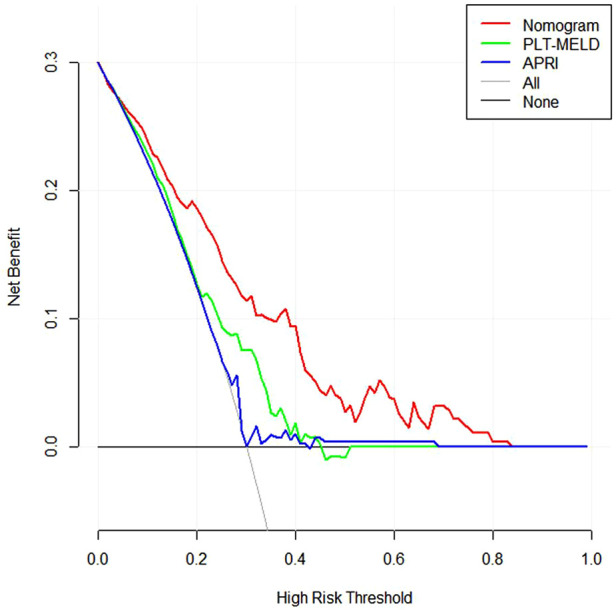
Methods: Univariate and multivariate logistic regression analysis was used to analyze the risk factors for EGVs bleeding. Nomograms were established based on the multivariate analysis results. The predictive accuracy of the nomograms was assessed using the area under the curve (AUC or C-index) of the receiver operating characteristic (ROC) and calibration curves. Decision curve analysis was used to determine the clinical benefit of the nomogram. We created a nomogram of the best predictive models.
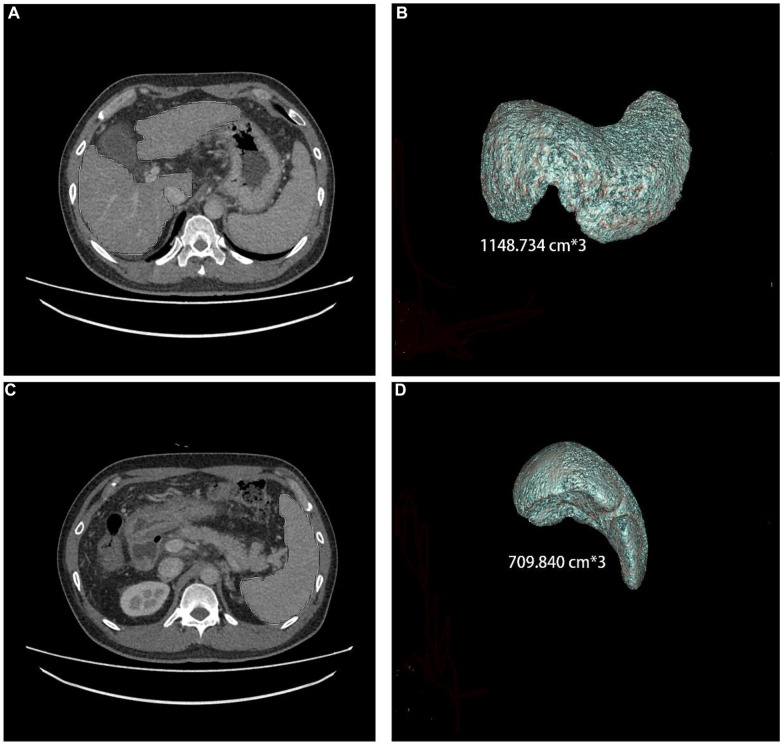
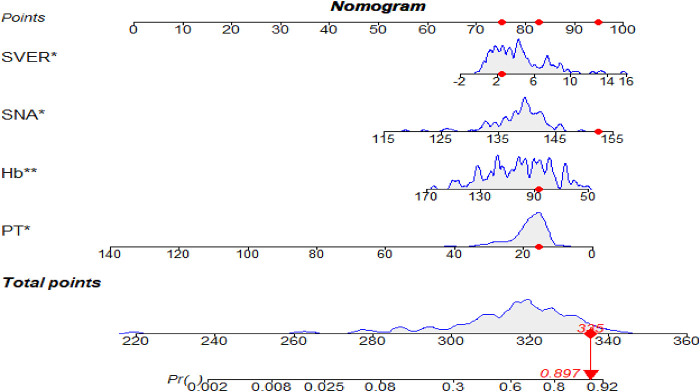
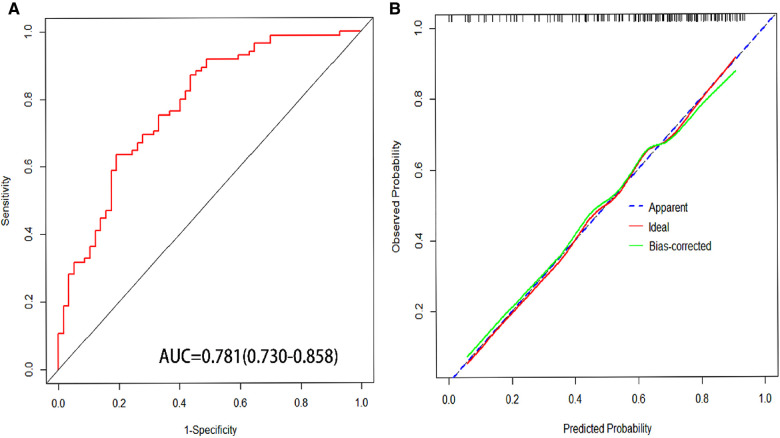
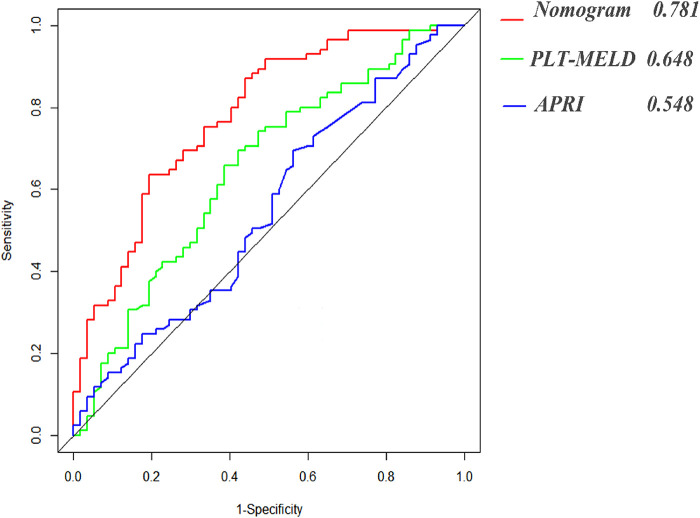
Results: A total of 142 patients' hepatitis B cirrhosis with esophagogastric varices were included in this study, of whom 85 (59.9%) had a history of EGVs bleeding and 57 (40.1%) had no EGVs bleeding. The spleen volume expansion rate, serum sodium levels (mmol/L), hemoglobin levels (g/L), and prothrombin time (s) were independent predictors for EGVs bleeding in patients with hepatitis B liver cirrhosis (P < 0.05). The above predictors were included in the nomogram prediction model. The area under the ROC curve (AUROC) of the nomogram was 0.781, the C-index obtained by internal validation was 0.757, and the calibration prediction curve fit well with the ideal curve. The AUROCs of the PLT-MELD and APRI were 0.648 and 0.548, respectively.
Conclusion: In this study, a novel nomogram for predicting the risk of EGVs bleeding in patients with hepatitis B cirrhosis was successfully constructed by combining the spleen volume expansion rate, serum sodium levels, hemoglobin levels, and prothrombin time. The predictive model can provide clinicians with a reference to help them make clinical decisions.
Keywords: esophagogastric varices bleeding; hepatitis B cirrhosis; liver and spleen volume; nomogram; serum sodium.
© 2022 Li, Li, Ji, Wang, Wang, Zhang, Fan, Wang, Kong, Ren, Zhou, Yang and Zheng.
Conflict of interest statement
The authors declare that the research was conducted in the absence of any commercial or financial relationships that could be construed as a potential conflict of interest.
Figures
References
LinkOut - more resources
Full Text Sources
