


Cecal perforations due to descending colon obstruction (closed loop): a case report and review of the literature
- PMID: 36471445
- PMCID: PMC9721027
- DOI: 10.1186/s13256-022-03674-3
Cecal perforations due to descending colon obstruction (closed loop): a case report and review of the literature
Abstract
Background: Cases of large bowel closed-loop phenomenon with cecal perforation are extremely rare, especially when extracolonic epiploic appendage and peritoneal bands are the cause. However, sporadic cases exist in the literature with various presentations, but very few occur in patients in the abdomen without a previous scar.
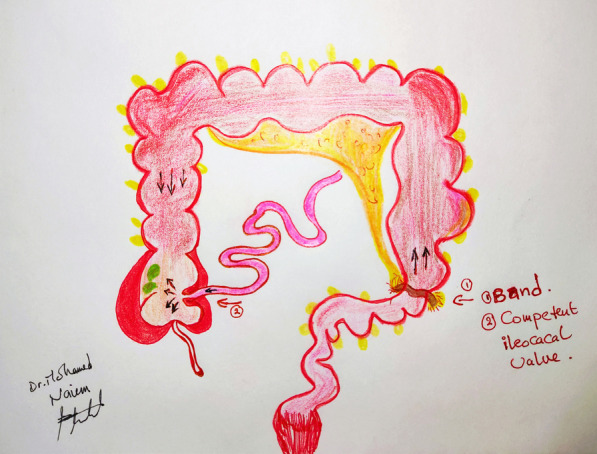
Case presentation: An 89-year-old Sudanese farmer was admitted to the emergency department with 9-day history of generalized colicky abdominal pain, abdominal distension, anorexia, persistent vomiting, and constipation. Given his clinical presentation and assessment, he was diagnosed with peritonitis due to a perforated viscus in a virgin abdomen. Operative exploration revealed an extraluminal left-sided omento-epiploic band that resulted in closed-loop colonic obstruction with secondary multiple cecal perforations. Standard right hemicolectomy with adhesiolysis was done. Postoperative wound infection and hypoalbuminemia were treated, and the patient was discharged on postoperative day 9 on a regular oral diet.
Conclusions: Although this condition is rare, it can be extremely dangerous, requiring prompt investigation and surgical intervention. It usually occurs secondary to raised intraluminal pressure with subsequent ischemia of the cecal wall. Through this case report, we aim to reflect on this rare experience, shedding light on the benign, extracolonic pathologies that can be life threatening or even fatal.
Keywords: Cecal perforation; Closed-loop obstruction; Epiploic appendage; Gastrointestinal tract; Large bowel obstruction.
© 2022. The Author(s).
Conflict of interest statement
All authors declare that they have no competing interests.
Figures


References
Publication types
MeSH terms
LinkOut - more resources
Full Text Sources
Medical
