Comparison of the Clinical Characteristics of Pediatric Poisoning Patients Who Visited Emergency Department Before and During the COVID-19 Pandemic
- PMID: 36472085
- PMCID: PMC9723189
- DOI: 10.3346/jkms.2022.37.e337
Comparison of the Clinical Characteristics of Pediatric Poisoning Patients Who Visited Emergency Department Before and During the COVID-19 Pandemic
Abstract
Background: We aimed to investigate changes in the clinical characteristics of pediatric poisoning patients who visited the emergency department (ED) before and during the coronavirus disease 2019 (COVID-19) pandemic.
Methods: Poisoning cases below age 18 who visited the ED from January 2018 to December 2021 were retrospectively analysed. The study period was then divided into pre-COVID-19 and COVID-19 pandemic to compare poisoning patterns.
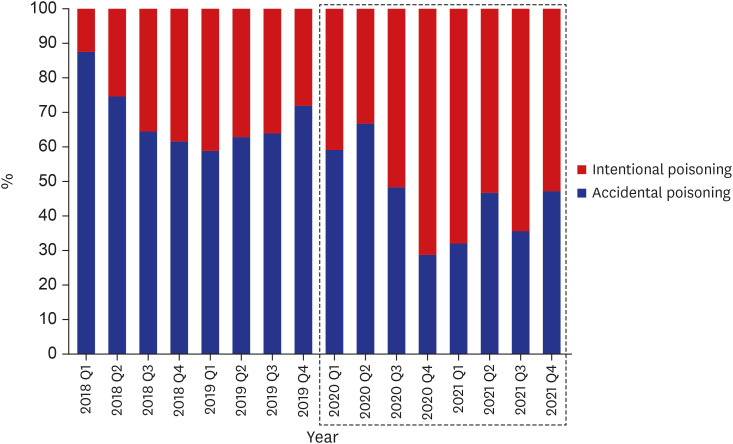
Results: During the study period, 86,153 visits to the pediatric ED had been recorded, with 625 patients being included the final analysis. During the COVID-19 period, the proportion of poisoned patients increased from 0.62% to 0.98%. The average age of the patients was higher in the COVID-19 period, with 53.4% of the cases being intentional (pre-COVID-19, 32.5%; P < 0.001). Moreover, 70.4% of poisoning cases during the COVID-19 period were caused by drugs (pre-COVID-19, 60.6%; P = 0.038). More patients underwent decontamination and laboratory investigation during the COVID-19 period than during the previous period (P = 0.007 and P < 0.001, respectively). The length of ED stay and the proportion of hospitalisation were significantly greater during the COVID-19 period. After analysing accidental poisoning cases, we found that antipyretics/nonsteroidal anti-inflammatory drugs and respiratory drugs were more common in the pre-COVID-19 group, whereas iron/vitamins, cardiovascular drugs and hormones were more common in the COVID-19 group. After analysing intentional poisoning cases, we found that 73.6% and 76.4% of the patients in the pre-COVID-19 and COVID-19 group had a history of psychiatric disease, respectively. Although no difference was observed in the frequency of previous first suicide attempts, 19.0% of the patients in the COVID-19 group attempted suicide more than three times.
Conclusion: During the COVID-19 pandemic, intentional poisoning cases, especially in adolescence, increased and were treated more. Many of the patients with intentional poisoning had a history of mental illness or suicide in the past. Therefore, it seems that policy consideration for mentally vulnerable adolescents during this new pandemic period is necessary.
Keywords: COVID-19; Emergency Department; Intentional Poisoning; Pediatric, Poisoning; Suicide.
© 2022 The Korean Academy of Medical Sciences.
Conflict of interest statement
The authors have no potential conflicts of interest to disclose.
Figures
References
-
- Han CS, Jeon WC, Min YG, Choi SC, Lee JS. Retrospective analysis on the clinical differences of children and adolescents treated for acute pediatric poisoning in an emergency department. J Korean Soc Emerg Med. 2013; 24(6):742–749.
-
- Hon KL, Ho JK, Leung TF, Wong Y, Nelson EA, Fok TF. Review of children hospitalised for ingestion and poisoning at a tertiary centre. Ann Acad Med Singapore. 2005;34(5):356–361. - PubMed
-
- Suh J, Eo E. The differences of clinical aspects in children and adolescents poisoning. J Korean Soc Clin Toxicol. 2006;4(1):17–24.
MeSH terms
LinkOut - more resources
Full Text Sources
Medical
Miscellaneous