


Daytime Napping and Cognitive Health in Older Adults: A Systematic Review
- PMID: 36472580
- PMCID: PMC10562891
- DOI: 10.1093/gerona/glac239
Daytime Napping and Cognitive Health in Older Adults: A Systematic Review
Abstract
Background: Daytime napping may improve cognitive function in older adults. However, the association can be complicated by specific features of napping and the older adult's health. This systematic review aims to synthesize the current literature on napping and cognition in older adults and provide recommendations for future research and daytime sleep practice in older adults.
Methods: Systematic searches for relative research published between January 1995 and October 2022 were conducted at PubMed, MEDLINE, PsycINFO, and Google Scholar using keywords individually and in multiple combinations. Manual searches were performed to identify additional studies. All included studies were critically appraised by 2 authors.
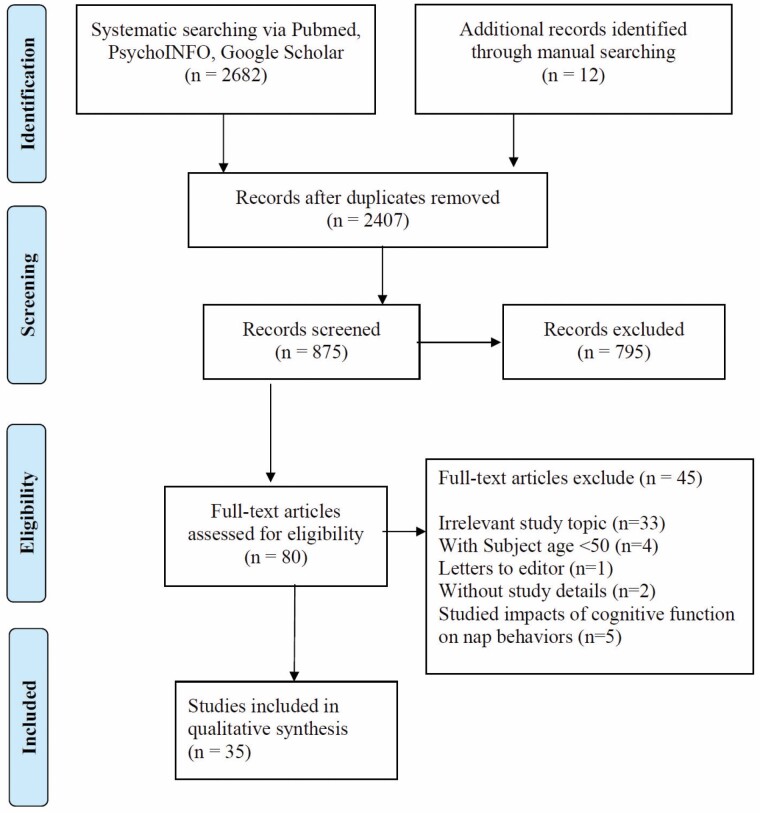
Results: Thirty-five studies, including 23 observational and 12 intervention studies, were reviewed. Findings from observational studies suggest a possible inverted U-shaped association between napping duration and cognitive function: short and moderate duration of naps benefited cognitive health in older adults compared with both non-napping and long or extended napping. Findings from intervention studies suggest one session of afternoon napping might improve psychomotor function and working memory, although with some inconsistency. The effect of multiple nap sessions on cognition was inconclusive due to a limited number of studies.
Conclusion: More rigorous research studies are needed to investigate what causes different patterns of daytime napping, the associations between these distinct patterns and cognitive function, and to determine whether interventions targeting napping patterns can improve cognition in older adults. In addition, future research needs to comprehensively assess daytime napping using a combination of measures such as sleep diary and actigraphy.
Keywords: Cognition; Daytime sleep; Memory.
© The Author(s) 2022. Published by Oxford University Press on behalf of The Gerontological Society of America. All rights reserved. For permissions, please e-mail: journals.permissions@oup.com.
Conflict of interest statement
A.S. received payment for serving as a consultant for Merck and received honoraria from Springer Nature Switzerland AG for guest editing special issues of
Figures
References
Publication types
MeSH terms
Grants and funding
LinkOut - more resources
Full Text Sources
Research Materials
