


Attacks on Health Care Workers in Historical Pandemics and COVID-19
- PMID: 36474406
- PMCID: PMC9947042
- DOI: 10.1017/dmp.2022.275
Attacks on Health Care Workers in Historical Pandemics and COVID-19
Abstract
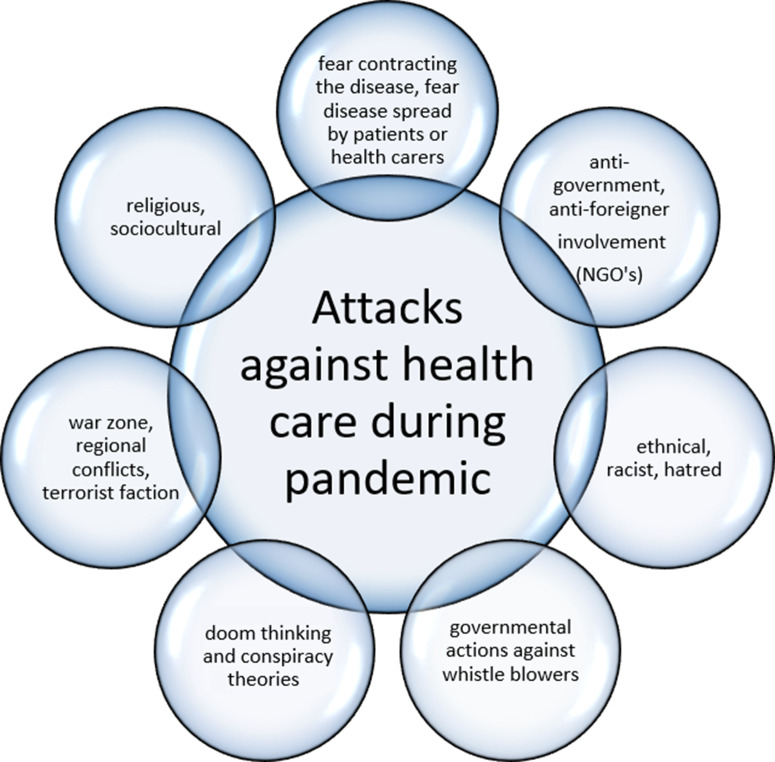
Previous pandemics have been (mis)used for (geo)political reasons, for terrorism purposes, and in times of conflict. Coronavirus disease (COVID-19) has been no exception with populist politicians challenging the relations with China, calling it the "Chinese virus," certain state actors setting up cyberterrorist actions against health care organizations in the United States and Europe, and a reported increase of violent acts against health care workers.Aside from state-driven factors, both left- and right-wing activists and anti-vaccination activists adhering to conspiracy theories are a threat for health care organizations. Furthermore, socioeconomic, religious, and cultural factors play a role in why health care is a possible target of violence. Fear of viral pathogens, fury about financial losses due to the pandemic and governmental measures such as lockdowns, anger because of mandatory quarantines, and the disruption of burial rituals are among the reasons for people to revolt against health care providers.Here, we provide a narrative review of the impact of violence against health care workers during the COVID-19 pandemic and earlier pandemics, and suggest preventive strategies.
Keywords: COVID-19; Ebola; health care workers; pandemic; terrorism.
Figures
References
-
- Roborg S, Fast L. Healthcare workers are still coming under attack during the coronavirus pandemic. The Conversation. Published April 28, 2020. Accessed May 2, 2021. https://theconversation.com/healthcare-workers-are-still-coming-under-at...
-
- The Hidden Danger Behind COVID-19. State Security VSSE. Published April 21, 2020. Accessed November 10, 2020. https://www.vsse.be/sites/default/files/corona-uk-batpdf_0.pdf
-
- Fenomeenanaylse ‘de verschillende gezichten van de coronaprotesten’. NCTV. Published April 14, 2021. Accessed May 2, 2021. https://www.nctv.nl/documenten/publicaties/2021/04/14/fenomeenanalyse-de...
Publication types
MeSH terms
LinkOut - more resources
Full Text Sources
Medical
