


Exploring the impact of selection bias in observational studies of COVID-19: a simulation study
- PMID: 36474414
- PMCID: PMC9908043
- DOI: 10.1093/ije/dyac221
Exploring the impact of selection bias in observational studies of COVID-19: a simulation study
Abstract
Background: Non-random selection of analytic subsamples could introduce selection bias in observational studies. We explored the potential presence and impact of selection in studies of SARS-CoV-2 infection and COVID-19 prognosis.
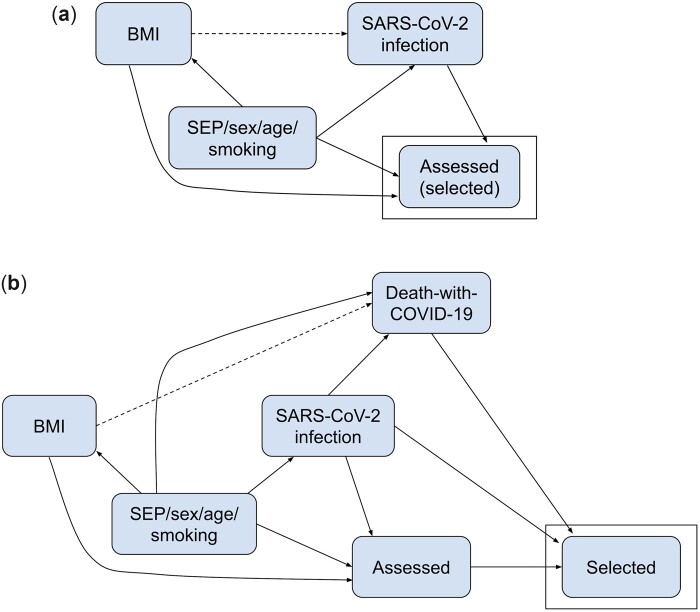
Methods: We tested the association of a broad range of characteristics with selection into COVID-19 analytic subsamples in the Avon Longitudinal Study of Parents and Children (ALSPAC) and UK Biobank (UKB). We then conducted empirical analyses and simulations to explore the potential presence, direction and magnitude of bias due to this selection (relative to our defined UK-based adult target populations) when estimating the association of body mass index (BMI) with SARS-CoV-2 infection and death-with-COVID-19.
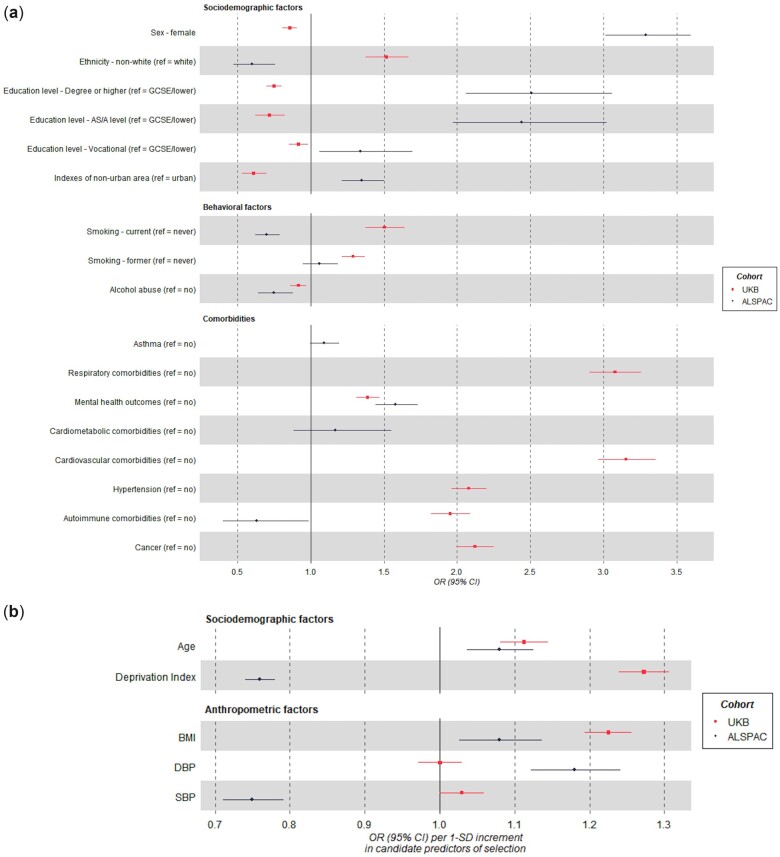
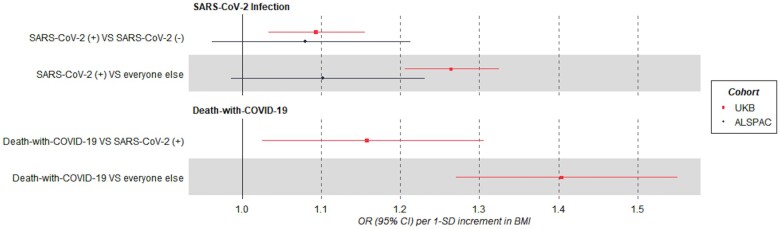
Results: In both cohorts, a broad range of characteristics was related to selection, sometimes in opposite directions (e.g. more-educated people were more likely to have data on SARS-CoV-2 infection in ALSPAC, but less likely in UKB). Higher BMI was associated with higher odds of SARS-CoV-2 infection and death-with-COVID-19. We found non-negligible bias in many simulated scenarios.
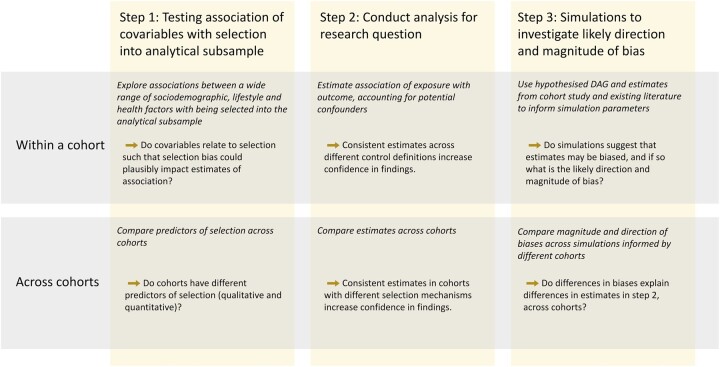
Conclusions: Analyses using COVID-19 self-reported or national registry data may be biased due to selection. The magnitude and direction of this bias depend on the outcome definition, the true effect of the risk factor and the assumed selection mechanism; these are likely to differ between studies with different target populations. Bias due to sample selection is a key concern in COVID-19 research based on national registry data, especially as countries end free mass testing. The framework we have used can be applied by other researchers assessing the extent to which their results may be biased for their research question of interest.
Keywords: ALSPAC; COVID-19; SARS-CoV-2 infection; Selection bias; UK Biobank; misclassification bias.
© The Author(s) 2022. Published by Oxford University Press on behalf of the International Epidemiological Association.
Figures
References
-
- Smith LH. Selection mechanisms and their consequences: understanding and addressing selection bias. Curr Epidemiol Rep 2020;7:179–89.
Publication types
MeSH terms
Grants and funding
- MC_UU_00004/07/MRC_/Medical Research Council/United Kingdom
- MC_QA137853/MRC_/Medical Research Council/United Kingdom
- NF-0616-10102/DH_/Department of Health/United Kingdom
- AA/18/1/34219/BHF_/British Heart Foundation/United Kingdom
- MC_PC_15018/MRC_/Medical Research Council/United Kingdom
- MC_UU_00011/6/MRC_/Medical Research Council/United Kingdom
- 221574/Z/20/Z/WT_/Wellcome Trust/United Kingdom
- MC_UU_00032/1/MRC_/Medical Research Council/United Kingdom
- WT_/Wellcome Trust/United Kingdom
- MC_PC_17228/MRC_/Medical Research Council/United Kingdom
- MC_UU_00011/3/MRC_/Medical Research Council/United Kingdom
- MC_UU_12023/29/MRC_/Medical Research Council/United Kingdom
- MC_UU_00011/1/MRC_/Medical Research Council/United Kingdom
- G9815508/MRC_/Medical Research Council/United Kingdom
- CH/F/20/90003/BHF_/British Heart Foundation/United Kingdom
- MC_PC_19009/MRC_/Medical Research Council/United Kingdom
- 217065/Z/19/Z/WT_/Wellcome Trust/United Kingdom
- 215408/Z/19/Z/WT_/Wellcome Trust/United Kingdom
- MC_UU_12023/21/MRC_/Medical Research Council/United Kingdom
LinkOut - more resources
Full Text Sources
Medical
Miscellaneous
